
News

Erdoğan gov’t abusing regulatory agencies to punish opponents
Pressuring state regulators to abuse their powers, the ruling Justice and Development Party (AK Party) government has mounted an aggressive campaign to punish groups and companies that are critical of the government’s handling of a massive corruption investigation, which has led to questions about the credibility and independence of regulatory agencies in Turkey.

Turkish PM heads to Brussels for tough talks with EU
Although the prime minister argues that an ongoing corruption and graft probe engulfing his own ministers is simply a plot hatched by an “illegal gang” that he describes as “parallel state” operated by Fethullah Gülen, a cleric in self-exile in the U.S., EU officials have made clear that such rhetoric has not been bought in Brussels.

Journalist and Writers Foundation welcomes EP’s transparency calls to Hizmet movement
Most recently, on Dec. 30, 2013, the Journalists and Writers Foundation (GYV), whose honorary president is Mr. Fethullah Gülen, issued a press release calling on those making allegations about the Hizmet movement to provide evidence to prove their claims without delay.

Main opposition brings plans to sink Bank Asya to Parliament
The main opposition Republican People’s Party (CHP) has brought onto Parliament’s agenda claims that some state companies and institutions withdrew massive amounts of money from participation bank Bank Asya in order to push it into insolvency by choking its liquidity conditions.

Turkish authorities purge regulators, state TV employees in backlash against graft probe
Turkey has extended a purge of official organizations to the banking and telecommunications regulators and state television, firing dozens of executives in moves that appear to broaden Prime Minister Recep Tayyip Erdogan’s push back against a corruption investigation.

Reassignments — new mobbing on massive scale by gov’t to silence dissent
According to commentators, the governing Justice and Development Party (AK Party), through these reassignments, is not only putting pressure on those carrying out the graft probes but also sending a message to its critics in state positions that their fate will be no different from that of their reassigned colleagues if they do not desist from their criticism of the government.

Retired ambassadors slam government orders over graft probe
“Will ambassadors tell their foreign colleagues that a corruption investigation started, which includes some members of the government, and that the government found the solution in changing a number of bodies such as the HSYK [Supreme Board of Judges and Prosecutors] and judicial police regulations?” asked former ambassador Deniz Bölükbaşı.
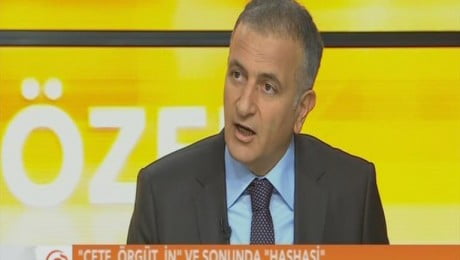
Dumanlı: Accusations directed at Hizmet Movement is a great disappointment
Dumanlı reminded that the government deems Hizmet Movement as an illegal group but until recently the government has had close relationships with the Hizmet. “Did not you want to meet with Gülen in May? And did not you send Bülent Arınç when the meeting did not take place?


Coup Commission members: Now is similar to Feb. 28 coup period
Members of the parliamentary Coup and Memorandum Investigation Commission, set up to investigate past coups, have said a number of anti-democratic moves begun after the launch of a wide-reaching corruption investigation, including the removal of thousands of civil servants and discrimination against members of a faith-based group, have said the practices are similar to what occurred in the run-up to the Feb. 28, 1997 unarmed coup.

MİT to monitor all religious groups as potential parts of parallel state
The National Intelligence Organization (MİT) recently sent a document in which all religious communities and groups within state institutions, described as “parallel state structures” (PDY) in the document, were cited as the main target to be monitored in 2014, the Taraf daily claimed on Friday. Analysts are concerned that the government’s attitude may take the form of a witch hunt that will undermine democracy.

Council of Europe concerned over government’s ‘hasty’ judicial bill
“This was approved in a referendum. To revisit this in a very hasty manner after that long process of consultation and democratization that took place at that referendum raises a lot of questions on why this is being done so quickly and what the aim of it is,” Muiznieks said.

Winds of friendship were enjoyed in different parts of Turkey during the month of Muharram
HIZMET NEWS In relation to month of Muharram, friendship programs were organized in Istanbul and Ankara as well as several cities of Anatolia including Tunceli, Balikesir, Corum and Tokat in November 2013. In Istanbul, government officials and representatives of religions came together at the traditional Muharram iftar (fast breaking) dinner organized by The World Ahlul […]

PM’s order echoes 2004 MGK decision [to undermine the Gulen Movement]
The prime minister’s order that Turkish ambassadors “tell the truth” to their foreign interlocutors about the corruption probe has brought to mind a controversial National Security Council (MGK) document indicating that Turkey’s ruling Justice and Development Party (AK Party) agreed to a planned crackdown on the Hizmet movement led by Turkish Islamic scholar Fethullah Gülen in 2004.


