Turkish-Kyrgyz educator’s abduction shows Ankara’s ruthless disregard for law: HRW
Date posted: July 8, 2021
The abduction, forcible disappearance and extrajudicial transfer of educator Orhan İnandı to Turkey by Turkish and Kyrgyz authorities amount to egregious violations of international and domestic law, Human Rights Watch said in a statement on Wednesday, the Stockholm Center for Freedom reported.
İnandı, a dual Turkish-Kyrgyz national who was the founder and director of the prestigious Sapat school network operating in Kyrgyzstan, went missing on May 31 and was feared to have been abducted by the Turkish Intelligence Organization (MİT) due to his alleged links to the Gülen movement, a faith-based group inspired by Muslim cleric Fethullah Gülen. He is the latest victim of a pattern of cases in which Turkey’s intelligence service has been involved in unlawfully transferring people to Turkey from countries around the world.
“Abducting, forcibly disappearing, and unlawfully transporting Orhan İnandi to Turkey from Kyrgyzstan demonstrates again Ankara’s ruthless disregard for the rule of law in general and most basic norms of international law,” said Hugh Williamson, Europe and Central Asia director at Human Rights Watch. “That İnandı, a dual Turkish-Kyrgyz national, could be abducted and missing for weeks on Kyrgyz soil only to be illegally removed from the country by Turkey’s intelligence services, suggests the Kyrgyz government is either unwilling or unable to stand up to Ankara or directly colluded with them.”
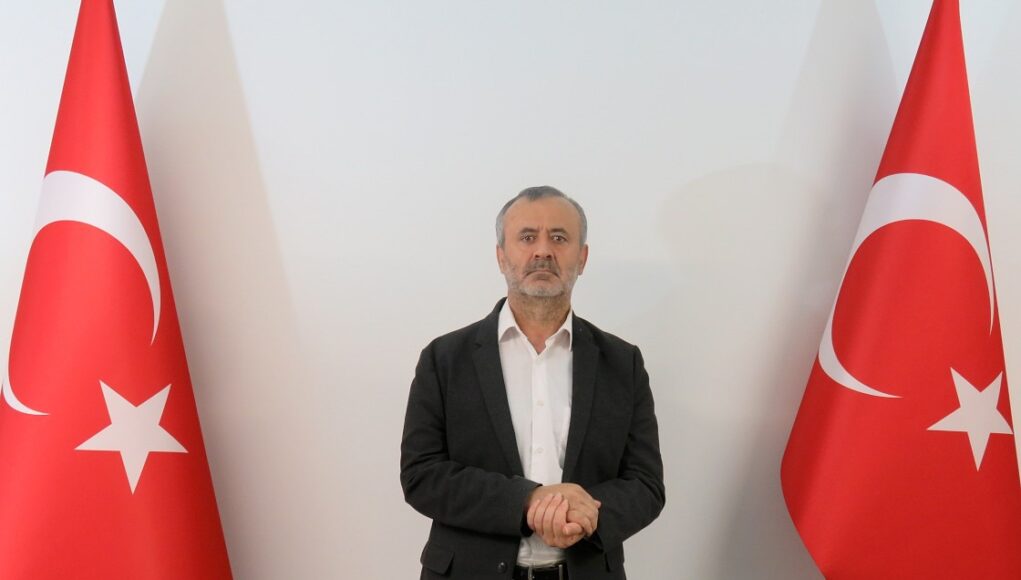
Turkish President Recep Tayyip Erdoğan announced on Monday that Turkey’s intelligence service had brought İnandı to Turkey, where he had been “delivered to justice,” showing video footage of him handcuffed and flanked by Turkish flags.
Erdoğan has been targeting followers of the Gülen movement since the corruption investigations of December 17-25, 2013, which implicated then-Prime Minister Erdoğan, his family members and his inner circle.
Dismissing the investigations as a Gülenist coup and conspiracy against his government, Erdoğan designated the movement as a terrorist organization and began to target its members. He intensified the crackdown on the movement following an abortive putsch on July 15, 2016 that he accused Gülen of masterminding. Gülen and the movement strongly deny involvement in the coup attempt or any terrorist activity.
On Tuesday, Kyrgyz President Sadyr Japarov said in an interview that the government would demand İnandı’s prompt return to Kyrgyzstan. He also stated that since 2016 there had been three attempts to kidnap İnandı, the most recent in early 2021 prevented by the Kyrgyz State Committee on National Security. The Kyrgyz Foreign Affairs Ministry, also on July 6, submitted a diplomatic note to Turkish Ambassador Ahmet Sadık Doğan asking Turkey to return İnandı to Kyrgyzstan and to ensure that he is not ill-treated in detention, in accordance with the norms of international law. While there has been no official response, Ambassador Doğan has been quoted in the media stating that İnandı is a Turkish citizen.
Civil society groups and others have expressed shock at İnandı’s forcible transfer to Turkey amid concern that the Kyrgyz government failed to thoroughly investigate his disappearance. There have been questions over the impartiality of Kyrgyz law enforcement in this case, specifically the State Committee on National Security, following allegations by Turkish media that Kyrgyz authorities were complicit in İnandı’s enforced disappearance.
This was complicated by news on June 16 that the State Committee had not been investigating İnandı’s abduction, but rather his Kyrgyz citizenship. Although on June 1, President Japarov instructed Kyrgyz police and the State Committee on National Security to intensify the search for İnandı, on June 24 the Bishkek Prosecutor General’s Office confirmed to the legal team for İnandı’s wife, Reyhan İnandı, that the committee had not been part of the investigative working group.
“Over the past five years, scores of men alleged by the Turkish authorities to have links with the Gülen movement, living in countries around the world, have been arbitrarily detained and forcibly returned to Turkey,” the rights watchdog said. “There they are incarcerated on bogus terrorism charges in violation of due process rights and international law protecting basic rights including to liberty and security, a fair trial, and freedoms of opinion, expression, and association.”
In several of these cases the UN Working Group on Arbitrary Detention (WGAD) concluded that the arrest, detention and forced transfer to Turkey of Turkish nationals were arbitrary and in violation of international human rights norms and standards.
In an enforced disappearance, a person is deprived of their liberty by or with the acquiescence of, agents of the state but their detention is either denied or their whereabouts is concealed, in violation of legal protections against such egregious forms of arbitrary detention. As has happened in the other such cases, there are serious and credible concerns that İnandı, already arbitrarily detained, will face prolonged unlawful pretrial detention and an unfair trial.
“The Turkish government should immediately disclose where İnandı is held in Turkey and secure his immediate release,” Williamson said. “So long as he remains in detention, he should receive a full and thorough medical examination from an independent medic in a hospital without the presence of security officials and be granted urgent access to a lawyer of his choice with a view to his prompt appearance before a judge. Kyrgyzstan should take steps to ensure the safety and protect the human rights of its citizen and hold accountable all those who bear responsibility for his abduction, enforced disappearance, and unlawful removal to Turkey.”
A recent report by Freedom House on global transnational repression also revealed the intensity, geographic reach and suddenness of the Turkish government’s campaign targeting dissidents abroad, noting that Turkey has become number one among countries that have conducted renditions from host states since 2014.
According to recent official statements by its interior ministry, Turkey has sent 800 extradition requests to 105 countries since the attempt, and more than 110 alleged members of the movement have been brought back to Turkey as part of the government’s global campaign.
Source: Turkish Minute , July 7, 2021
Tags: Asia | Education | Hizmet-inspired schools | Kyrgyzstan | Persecution of Hizmet by Erdogan |