
Keyword: Hizmet (Gulen) movement

Opposition leader Destici: Since when has exposing graft been a crime?
Allegations previously dismissed by judicial authorities are being raised again. People in the bureaucracy are being profiled. Officers have been removed from their posts in some ministries. Furthermore, mayoral elections are scheduled for March, and campaigning is becoming tenser.


Retired ambassadors slam government orders over graft probe
“Will ambassadors tell their foreign colleagues that a corruption investigation started, which includes some members of the government, and that the government found the solution in changing a number of bodies such as the HSYK [Supreme Board of Judges and Prosecutors] and judicial police regulations?” asked former ambassador Deniz Bölükbaşı.

‘Mission impossible’ for Turkey’s ambassadors
Erdogan has placed an extremely heavy burden on Turkey’s ambassadors. The same ambassadors for many years have been under instructions to promote the schools and activities of the Gulen movement as Turkey’s “biggest and most effective lobbying operation” and to support them.

Coup Commission members: Now is similar to Feb. 28 coup period
Members of the parliamentary Coup and Memorandum Investigation Commission, set up to investigate past coups, have said a number of anti-democratic moves begun after the launch of a wide-reaching corruption investigation, including the removal of thousands of civil servants and discrimination against members of a faith-based group, have said the practices are similar to what occurred in the run-up to the Feb. 28, 1997 unarmed coup.

Council of Europe concerned over government’s ‘hasty’ judicial bill
“This was approved in a referendum. To revisit this in a very hasty manner after that long process of consultation and democratization that took place at that referendum raises a lot of questions on why this is being done so quickly and what the aim of it is,” Muiznieks said.

Attempting to discredit Gülen by linking him to Israel
A typical example of black propaganda is the “anti-reactionaryism action plan” prepared in cosmic rooms with the intention of destroying the ruling Justice and Development Party (AK Party) and the Gülen community in 2009, which was initially denied and passed off as a “piece of paper,” but which led to the trial and sentencing of those who prepared it.

Ambassadors uneasy over Erdoğan’s orders concerning graft probe
Turkey’s ambassadors have expressed displeasure over Prime Minister Recep Tayyip Erdoğan’s remarks that called on them to “tell the truth” to their foreign interlocutors, saying that defending the government against corruption allegations in not the ambassadors’ business.


Damage assessment report for Erdoğan
The wounds Prime Minister Recep Tayyip Erdoğan is suffering as a result of a war waged against the Gülen movement in connection with the corruption and bribery probe are becoming clear. Whether or not Erdoğan has become more authoritarian is now less debatable; it is a concrete fact rather than a perception.

Erdoğan, Hizmet, assassins
Former Interior Minister Idris Naim Şahin stated that “the government is run by a small oligarchic elite in a way that excludes broad segments of the party constituency and the Turkish people” is very explanatory vis-à-vis Mr. Erdoğan’s shockingly undemocratic and increasingly authoritarian performance over the last two years, since he received 50 per cent of the vote in the 2011 general elections.
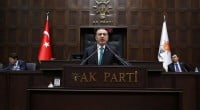
Rule of law casualty of AKP-Gulen conflict
The AKP government thinks that by labeling corruption investigations and operations as a “coup” and calling those behind them as “parallel state” that it has found a justifiable way to interfere with the judiciary. Otherwise the government would not have submitted a draft bill to the parliament that totally eliminates the functional independence of the judiciary bureaucracy and promotes the minister of justice, who represents the executive branch, to the status of single decision-maker.

Six heads of organized crime unit dismissed as hundreds relocated in new police purges [just after an operation against al-Qaeda]
The new relocations come as two heads of anti-terror units who conducted an operation against al-Qaeda and raids against a local branch of the Humanitarian Relief Foundation (İHH) charity were dismissed on Jan. 14.

Turkish anti-terrorism police carried out raids in six cities, detaining at least five people with alleged links to al-Qaida
The police raid “is a deliberate attack on the IHH,” said Yasar Kutluay, the group’s secretary general. “They are trying to portray the group as an organization with links to terrorism.” He blamed Israel and Gulen’s supporters, for the operation — a charge Gulen’s movement immediately rejected as “slander and false incrimination.”


