
News

Turkish cleric calls for international body to examine coup charges
Gulen, who has lived in self-imposed exile in the U.S. state of Pennsylvania since 1999, told the German broadcaster ZDF in an interview broadcast on Friday that there was no evidence linking him to the thwarted putsch, which he has denounced. He accused Turkish President Tayyip Erdogan of using the coup to silence opponents.


Turkey’s failed coup has spread to the classroom in EU states
What really annoyed the Dutch government, however, was when the Turkish consul general sent a letter to local authorities in the Netherlands advising them how to curb public protests opposing the government in Ankara. That brought a coldly dismissive response from foreign minister, Bert Koenders: “The Netherlands deals with Dutch society and that has nothing to do with the Turkish government.”

Gülen: Burden of proof rests with those who claim we plotted the coup
Turkish Islamic scholar Fethullah Gülen, who is held responsible for everything that goes wrong in Turkey including a failed coup on July 15, said in an interview that those who accuse him of plotting the coup bear the responsibility of providing evidence.

Fethullah Gulen says will return to Turkey if US backs extradition
Calling for an international probe into the accusation, Gulen told ZDF that he would be ready to answer to such an investigation. “If their accusations stand, then I will accept what they want. But they have neither succeeded in showing any concrete proof nor given an answer to my suggestion. Therefore, these are all just mere assertions,” he said.

Terrorism: Why Obama, Others Ignored Turkish President Erdogan
Turkish President Erdogan on Tuesday called on world leaders to fight against US based Islamic scholar Fethullah Gulen over what he (Erdogan) described as an act of terrorism orchestrated by Gulen against Turkey. Addressing Presidents and Prime Ministers of civilised regimes of the world at the 68th UN General Assembly, Erdogan demonstrated before his colleagues very high level of incapacitation and inability to stick to simple ratified conventions to which Turkey is signatory.

Crackdown on journalists leaves void in post-coup Turkey
That is down in large part to the gutting of Turkey’s independent press. More than 115 journalists have been imprisoned and hundreds more fired since the July 15th coup attempt, while 130 media outlets have been shuttered. That, in addition to the sacking of more than 1,000 media workers in the previous 12 months, has left crucial questions unanswered. Put simply, there is no one left – or willing – to overturn the stones on which the failed military takeover was built.

Turkey as a “serial” human rights derogator
The past couple of months have been tumultuous in Turkey. In short order, an ill-conceived military coup was followed by popular mass protest, the quick return of President Recep Tayyip Erdogan to power, and a wave of repression ranging from military and judicial purges, to state restrictions on a panoply of basic human rights protections, to allegations of “widespread human rights abuses” by state actors.
Fear Grows in Turkey as Crackdown on Gulen Followers Continues
The Turkish authorities are continuing their crackdown on followers of Islamic cleric Fethullah Gulen, who is being blamed for a failed military coup attempt. With tens of thousands of people arrested, opposition parties are starting to voice concern that the crackdown is turning into a witch hunt.

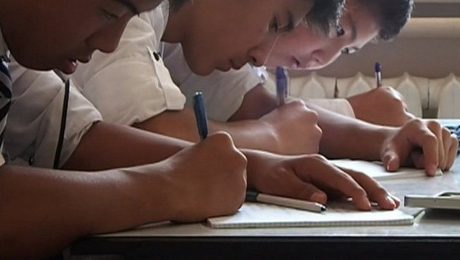
Turkish school threatens students who refuse to write poems on coup attempt
The Education Ministry distributed “Attempt to invade Turkey with coup” brochures at all state schools across Turkey. Some 19 million students also watched a video of President Recep Tayyip Erdoğan reciting the Turkish national anthem along with footage from the night of July 15, when an abortive coup took place in Turkey.

Liberal Turkish Journalists Champion Freedom of Expression, to a Degree
It’s precisely opposition journalists who have been criticized by colleagues who until recently worked for the newspapers of U.S.-based Fethullah Gulen. These colleagues accuse the opposition journalists of betraying freedom of expression. One of them is Sevgi Akarcesme who was editor-in-chief of the Turkish English-language daily Today’s Zaman. There is a great deal of truth in Akarcesme’s claims. But who today would dare defend journalists identified with Gulen?

72-year-old Turkish man detained over coup charges
Gülen movement has been accused of masterminding the coup attempt on July 15 despite its successive statements that denied any involvement. Failing to back up its accusations with credible evidence, the government has detained more than 40,000 people and arrested 24,000 over their alleged links to the coup attempt since July 15.


