
News

Approval rate of Turkish schools abroad at 78 percent
Research company Veritas conducted a survey in July 2013 with 4,296 people in face-to-face interviews in 42 provinces in an effort to measure the approval rate of the Turkish Olympiads that are organized annually.
Accordingly, 67 percent of the respondents expressed a positive opinion of these language olympiads while only 8 percent expressed a negative view.

Gülen’s lawyer says claims of luxury homes part of smear campaign
Gülen’s lawyer, Orhan Erdemli, denied the allegations, saying the claims are fabricated and were made up as part of a smear campaign against his client. According to Erdemli, Gülen adopts a modest lifestyle and pays rent for his room in a house in Pennsylvania where he lives.


Islamic scholar Gülen says Turkey’s graft scandal can’t be covered up
Turkish Islamic scholar Fethullah Gülen has said a recent graft scandal that has rocked Turkey for nearly five weeks cannot be covered up despite massive efforts by the authorities to weather it down and crush those who speak out on the matter.

Powerful but reclusive Turkish cleric (BBC Interviews Fethullah Gulen)
Speaking to the BBC’s Newshour, Fethullah Gulen said: “It is not possible for these judges and prosecutors to receive orders from me.” Fethullah Gulen has been called Turkey’s second most powerful man. He is also a recluse, who lives in self-imposed exile in the US.

Ministerial bureaucrats being purged over their alleged affiliations with Hizmet
Radikal said the only criteria in these purges is the “parallel state,” a term the government uses to define those bureaucrats known to favor the Hizmet movement, which is a grassroots movement based on voluntary participation to spread interfaith dialogue and tolerance with a particular emphasis on education.

Bank Asya says raising capital, set for growth
“Bank Asya expects to raise its total capital by TL 300 million to TL 1.2 billion. … We sold an 18 percent stake in the retail chain A101 as part of this plan,” the bank said. Bank Asya said its capital adequacy ratio is 14.8 percent — well above the conventionally accepted minimum level of 12 percent — and that it expects to enjoy further growth in 2014. The bank said it expects the capital adequacy ratio to reach 17 percent, making it one of the five strongest (in capital) banks in Turkey. Previously, the bank held 21.84 percent of the shares in A101.
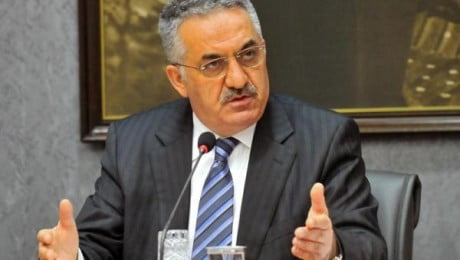
Minister says ‘parallel state’ claims not realistic, cites lack of evidence
Customs and Trade Minister Hayati Yazıcı told reporters on Saturday in the Black Sea town of Rize that there is a lack of evidence to substantiate claims of a “parallel state,” recalling the government’s motto of “one state, one flag, one homeland, one nation.”

Van NGOs: Calling Hizmet movement ‘virus’ and ‘hashhashin’ unnaceptable
Non-governmental organizations (NGOs) active in the eastern province of Van said in a press conference that the tension experienced in Turkey recently has ruined the country and that any remarks or behavior against the Hizmet movement will not be tolerated.

Unaffected by tension, TUSKON promotes Turkish economy
The Turkish Confederation of Businessmen and Industrialists (TUSKON) has had its share of these provocative media reports. Regarding the recent media reports criticizing TUSKON’s lobbying efforts for Turkish firms abroad, TUSKON President Rıza Nur Meral told Sunday’s Zaman that allegations against TUSKON “do not make sense” and that the confederation has always supported Turkish businessmen who want to branch out into global markets. “We will continue our support [for Turkish entrepreneurs],” Meral added.

Kimse Yok Mu continues to care for needy Pakistanis
The foundation gave away sewing machines to 125 women, mainly widowed. The volunteers currently provide fabric backup and thus enable the families to make their living. The foundation will also offer 3-month-long sewing training on demand. Additionally, a total of 50 wheelchairs were delivered to those in need in Khyber Pakhtunkhwa. The donations were well-received by the locals, putting a smile on the faces.

Gov’t pins hope on division in Turkey as Erdoğan resorts to hateful speech
In an attempt to divert pressure from public opinion from him, Erdoğan is waging a war against the Hizmet (Service) movement, which has openly called on the government to clamp down on the wrongdoers and clean politics of dirt.

Swoboda accuses Erdoğan of using Hizmet movement as a pretext
Socialist leader Hannes Swoboda asked “You were still supporting the Hizmet movement a year ago. Now you use the movement as an excuse for halting reforms. Why do you see them as a danger to Turkey now?”
Sources said Swoboda made it very clear that the EU was very concerned about the state of the rule of law in Turkey. “We are very concerned about the rule of law and the separation of powers, especially the independence of the judiciary,” he stressed.

TUSKON says systematic campaign of defamation under way
The Turkish Confederation of Businessmen and Industrialists (TUSKON) has criticized what it calls a “systematic campaign of defamation against the business conglomerate,” stressing that its business activities, which help contribute to the Turkish economy, should be welcomed.


