An Armenian from Turkey in Los Angeles…

Date posted: May 22, 2013
Markar Esayan
Last week I visited Los Angeles to attend the fourth Anatolian Cultures and Food Festival, held between May 16 and 19. I wanted to write about my impressions before the effects of jet lag took hold and while my memories were still fresh. I was enthusiastic as this was my first visit to Los Angeles. I wasn’t enthusiastic just because I was making my first visit to a place or because I would see all the major historic or religious landmarks of Anatolia within a 60,000-square-meter area in Orange County. I also have many relatives and friends living in this city and across the state, most of whom I hadn’t seen for years.
Perhaps it would be possible to catch up with some of them on everything during my tight schedule. When I accepted the invitation from the Pacifica Institute, I didn’t know that Deputy Patriarch Archbishop Aram Ateşyan and Bishop Maşalyan from Turkey were to be in attendance, and it was a nice surprise. Esteemed Ateşyan is a close relative and is my father’s namesake. I also have had a very long friendship with Bishop Maşalyan. I hadn’t seen them for a long time due to my busy schedule. In addition, I was happy as I would see many journalist friends of mine thanks to this opportunity.
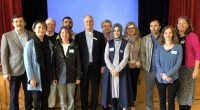
As a result, there were many Armenians in attendance, and I contributed to the political and daily debates in my own way. I must note that the group was very cheerful during the trip. With Turkish, Armenian and Kurdish songs and jokes made by Mr. Cemal Uşşak in his unique Laz accent, we once again had a sense of living together and brotherly feelings, albeit while being far from home.
From the first moment of the trip to the last minute, everything went smoothly particularly with respect to the organization of the festival. I was very impressed to see the discipline and sincerity with which people worked to make this festival happen. When I arrived at the festival area, I was glad to witness that many Americans had come to see a giant replica of Turkey and taste 99 varieties of Anatolian cuisine.
The organizing committee had worked day and night to come up with a spectacular event. As I entered the festival area and went through the Hittite, Urartian, Greek, Roman, Byzantine, Ottoman and Turkish gates, I realized that visual elements play an important role in human memory. It was a really interesting experience for me to understand once again miles from home that we come from a very rich historic background and that this is a very precious asset.
The giant replicas of Ephesus Theater, Sümela Monastery, Mardin, Cappadocia, the House of the Virgin Mary, Zeugma, the Double Minarets Madrasa, Topkapı Palace and the Fountain of Ahmet III — located at the very center of the festival area and offering different drinks from its faucets — all took people through a time tunnel. What impressed me the most was Akhtamar Church. After years of neglect, this church had been renovated and reopened to visitors, and I had attended the opening ceremony in Van, feeling happy for the ongoing change in Turkey. We Armenians have a painful past. We were not only dispersed around the world as the diaspora, but those who remained in Turkey are also treated like foreigners in their home country. Those who have long carried their identity, religion, race and language as a dangerous burden can really appreciate the beginning of this change in the state’s mentality.
Now, we have the opportunity to exhibit our rich culture in the biggest state of the world’s mightiest country. I believe that we have a right to understand that it is an asset to live together, stand together, cherish our differences and enjoy this awareness. Not long ago, we would have to whisper to each other in Armenian and we would have concealed our true names. This festival was a good testimony of the big change in Turkey. Thank you to everyone who contributed to make this happen. I will pen my other observations later.
Source: Today’s Zaman May 22, 2013
Tags: Armenian issue | North America | USA |