
Infiltrating or contributing?
Date posted: November 2, 2010
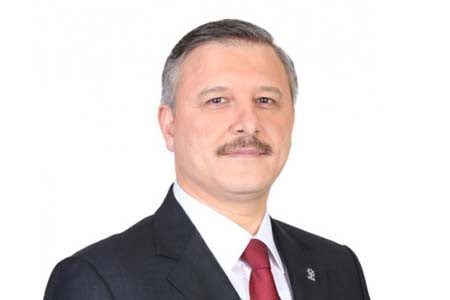
MUHAMMED ÇETİN
Over the past few days Muslim scholar and social activist Fethullah Gülen has given a measured and straightforward response to accusations that the Gülen movement, or as it is often called, the “volunteers’ service” or hizmet, is engaged in a conspiracy to infiltrate state institutions. Gülen replied that all citizens have a right — in accordance with the law — to be employed in their own country within the ranks of state institutions, including the police and military.
Indeed, it seems to me that since the participants and supporters of the movement number in the millions within Turkey, their presence within such institutions is a statistical certainty given that the movement is not a clandestine organization or cult.
This latest public discussion first started to develop around Police Chief Hanefi Avcı’s accusations against the movement. Apart from accusing the supporters of the Gülen movement of having infiltrated top state posts, Avcı, who is currently in custody, claimed that ongoing criminal investigations of illegal activities within the state — such as the clandestine criminal network Ergenekon that plotted to overthrow the government — lack evidence and are based on illegal wiretapping. However, recent legal probes show Avcı himself not only wiretapped illegally but also tortured dozens of individuals. Avcı was arrested last month on charges of aiding and abetting a terrorist organization.
However, as these events were progressing, researchers taking part in the Mapping the Gülen Movement Conference in Amsterdam, were presenting their research findings to the academic world.
A number of Turkish and non-Turkish academics inside and outside the movement contributed. Most of the speakers were completely independent of the movement. Yet not one of them produced a shred of evidence that could be used in support of Avcı’s accusations.
Thomas Michel, an academic who has years of experience observing the movement, spoke of the centrality to Fethullah Gülen’s thought and teachings on ikhlas (purity of intention). He pointed out this concept includes honesty or freedom from dissimulation and that Gülen stresses “pursuing nothing worldly.”
Ihsan Yilmaz and Sammas Salur presented a joint paper on the compatibility of Islam, democracy and secularism in Gülen’s thought. Today’s Zaman’s own Dogu Ergil, in his capacity as an academic at Ankara University, pointed out that while participants in the movement may have their own political views and even party political affiliations, these are not allowed to affect the activities of the movement.
Pim Valkenberg of Loyola University Maryland made a study of Gülen’s publications over the years and concluded that there has been no change in Gülen’s message. From the beginning of his career as a preacher he has expressed concern for humanity as a whole, not just selected parts of it such as a community or a nation. Only Gülen’s sensitivity to the widening of his audience has developed, as the movement has grown and become transnational, so that later works can be understood by a wider range of people with different educational and cultural backgrounds.
Helen Rose Ebaugh of the University of Houston reported her research on the finances and fundraising of the movement. She investigated 11 major institutions and found the accounting practices were straightforward and transparent and that institutions were very willing to let her inspect their accounts.
My own paper about the structural dimension of the movement described how the movement functions without centralized control. Papers by Johan Leman, on the efforts for social integration by Gülen movement volunteers in Belgium, and by Maria Curtis, who wrote about women’s goals in the movement and how they strive to contribute to society in the United States, also confirmed the characteristics of service to others and decentralization.
None of the academics in attendance reported finding any sign of attempts by movement members to overthrow democracy or even to “grab a bigger share of the pie” for a new elite, shady or otherwise.
Turkish people nowadays are almost used to wild and inaccurate conspiracy theories and weary of the existence of the very real plots of the deep state that have marred the life of the nation for years. We can now spot the use of smoke and mirrors on the stage, while the villain attempts to exit unseen stage left.
The fact-based, peer-reviewed world of academia, though dry to some people’s tastes, has a contribution to make to Turkey’s future. In contrast to the drama and fiction of politics, the requirement for balance and credibility in academic work contributes facts and reveals ulterior motives in the public arena. These can be cooling antidotes to the poison of delusion administered to the public by the politically ambitious.
Source: This article was published on 14 October 2010, Thursday on Today’s Zaman
http://www.todayszaman.com/tz-web/columnists-224345-infiltrating-or-contributing.html
Tags: Defamation of Hizmet | Fethullah Gulen | Hizmet (Gulen) movement | Turkey |


