
To embrace the spirit of acceptance and tolerance
Date posted: April 15, 2016
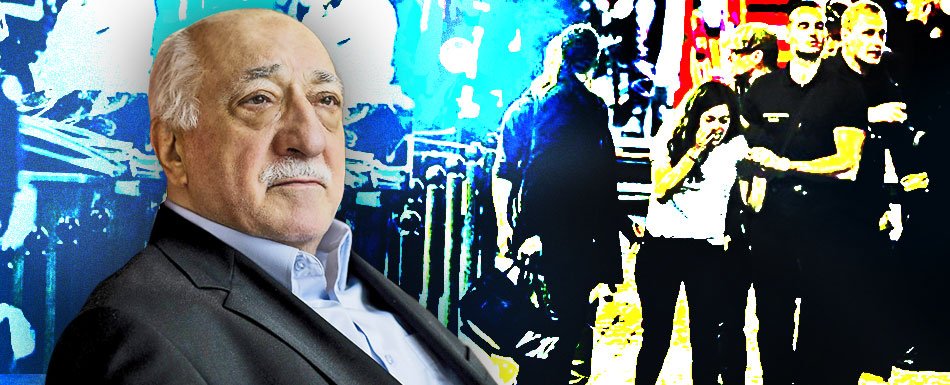
The world has judged the two attacks in Paris and Brussels, which claimed a number of lives and damaged property, as associated with Islamic-inspired terrorism. The attacks also delivered the psychological message that acts of terror and hatred can occur even in the most prosperous and highly secured countries that respect diversity and human rights. But whatever the root causes of terrorism in these countries, it is always wrong to use religion to justify the killing of innocent civilians anywhere in the world.
Those who carried out the attacks in the name of Islam “inflict the biggest damage to the religion’s reputation in the world, lost touch with humanity, and do not represent any religious identity,” according to Fethullah Gulen, a Turkish Islamic scholar, social advocate, and founder of the Hizmet movement. (“Hizmet” means “service” in the Turkish language.)
It is unfortunate that religion has been falsely used to justify one’s act of violence in order to hide one party’s parochial interests, Gulen says, adding that Islam has been wrongly interpreted by Western reporters and commentators alike as a religion that promotes violence.
What the world needs right now is a constructive approach to world peace, which may require a holistic understanding of various issues relating to terrorism, he says.
Gulen has been very critical of using religious ideology in promoting terrorism. He believes that the true measurement of any religious belief is to follow the “core principles shared by all major world faiths, such as upholding the sanctity of life and respecting the dignity of all humans.”
Given the confluence of varying cultural backgrounds present in any country or community, it is highly important to advance a “pluralistic mindset with clarity and confidence,” Gulen says. Such a mindset cannot be taught overnight to our children; it requires a gradual and constant nurturing of young minds to ensure that when they grow up, they will carry with them the values of love, respect, confidence and altruistic service to humanity. The bottom-up approach to world problems should start at home and be promoted by all educational institutions worldwide.
In times where Muslims and Islam are blamed for many terror attacks all over the world, it is only proper that Muslims critically evaluate their understanding of their religion. Government officials and media outlets also have the responsibility to make sure that the information being delivered to the public is validated, so as not to generate a wrong impression of one group.
Thus, Gulen asks: “Do our communities provide recruitment grounds for groups with totalitarian mindsets due to unrecognized authoritarianism within ourselves, domestic physical abuse, and neglect of youth and lack of balanced education? Did our failure to establish basic human rights and freedoms, supremacy of the rule of law, and pluralistic mindsets in our communities lead those who are struggling to seek alternative paths?”
These are important questions that members of not only the Muslim community but also of “religious organizations” should evaluate. These questions are likewise directed at those countries advocating hatred and violence as a form of revenge and short-sighted strategies targeting innocent human beings to advance their parochial interests or to gain world attention.
This is exactly what Gulen and the Hizmet movement want to address through moderated education.
The movement’s structure and organization, inspired by Gulen’s works and ideas, are much decentralized. It is present in more than 160 countries under different organizational names and memberships, and with most of the members sharing the objective of fostering world tolerance and dialogue through moderated education.
Most members of the decentralized global Hizmet movement are volunteer teachers, entrepreneurs, and ordinary Turkish nationals. They are visible in America, Asia, Africa, Central Asia, Europe and the Middle East. They have established schools, business councils and dialogue organizations, and they constantly consult and collaborate impartially with the host government, educational sectors, nongovernment organization and communities in various areas, such as educational promotion, trade cooperation and cultural and dialogue promotion.
In the Philippines, there are three Gulen-inspired schools: Filipino-Turkish Tolerance School in Zamboanga, and Fountain International School (grade school) on Annapolis Street and Fountain International School (high school) on Santolan Street, both in San Juan City. These schools advance the study of sciences and mathematics and follow the Cambridge education.
In addition, Gulen encourages the idea of a multifaith, multiethnic educational institution. A nonsectarian school embraces diversity and quality education for all. Thus, in the Philippines, the schools encourage a mixture of Christians, Muslims and other creeds and cultures. In all times, these schools encourage their students to perform community service, to make sure that they understand well the issues confronting their immediate environment, as well as possible mutually acceptable solutions to societal issues.
Through the encouragement of the spirit of dialogue and consultation at the school and community levels, students are molded in such a way that they gradually embrace the spirit of acceptance and tolerance. The key to tolerance and acceptance is a balanced educational system that promotes moderation and embraces diversity. If we inculcate hatred and violence in our children in the name of false religion and ideology, we cannot claim to love humanity or to have the right to live in stability and growth.
Henelito A. Sevilla Jr. teaches Middle East studies at the University of the Philippines’ Asian Center in Diliman, Quezon City.
Source: Inquirer , April 8, 2016
Tags: Fethullah Gulen | Hizmet (Gulen) movement | Islamic World |


