The Gulen Movement teaches providing service and being tolerant

Date posted: February 28, 2012

Shad Engkilterra, Salt Lake City

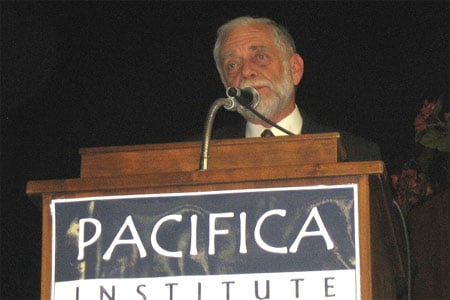
On Feb. 25, 2012, James Harrington, director of the Texas Civil Rights Project, spoke about the Gulen Movement and how to build civil society at the Pacifica Institute for the Salt Lake Interfaith Roundtable’s Interfaith Month celebrations.

Fethullah Gulen started the movement in Turkey in the 1980s as an education and service movement.  He created schools that served as alternatives to the Madrassa schools and allowed girls to get an education.

“It [education] is the great leveler in the United States,” says Harrington.  Teachers have the most important job in our society.

Gulen schools are tolerant, ecumenical and interfaith.  They use the examples of their teachers to teach children how to be good people regardless of the children’s faith.

“The greatest effect that the movement has had in Turkey is democracy,” says Harrington.

Harrington says that the United States could learn from the Gulen Movement to engage in dialogue again.

“We are not engaged right now as a society in dialogue,” says Harrington.  “It is awful what is going on.” It may be hard to engage in dialogue, but we need to compromise.

Harrington also says that the United States needs to develop and teach narratives about the country’s values and leaders.

Stories focus on one detail of a person’s life and philosophy and miss the rest of what that person did to get there and what they believed in beyond that one point.

On Martin Luther King Day, the U.S. focuses on the “I Have a Dream Speech” and doesn’t talk about his stand for peace or his Beloved Community ideal.  Talks about Christ tend to focus on His time on the cross and not his healing and caring that He did during His ministry.

Harrington also talked about spirituality, speaking out against justice and dedicating a specific portion of money and time to charity.

To see Harington talk about Turkey and what the U.S. can learn, click: Video 1 (1 min), Video 2 (3 min).

Source: Examiner.COM , February 25, 2012


Related News

A Rabbi’s meeting with Hocaefendi Fethullah Gülen

This week I was privileged to spend the night at the Pennsylvania compound of Fethullah Gülen, the Sufi influenced Turkish modernist. I had two sessions to ask him questions in front of his followers and was allowed to sit in on his evening meeting with followers as well as attend his two-hour class for his disciples in the morning.

UN and OSCE experts deplore crackdown on journalists and media outlets in Turkey

UN / OSCE: The Government’s purging of personnel and institutions of what it perceives as being dissenting and critical voices, solely on the basis of allegations of membership in the Gülen movement, clearly violates standards of international human rights law.

Turkey’s treatment of dismissed officials reminiscent of Nazis: Luxembourg

Luxembourg’s foreign minister said on Monday that the Turkish government’s handling of civil servants dismissed after a failed coup attempt reminded him of methods used by the Nazis, and that sooner or later the EU would have to respond with sanctions.

Former US envoys to Ankara say Erdoğan doing great harm to democracy

“Whatever his achievements over the past decade, Turkey’s prime minister, Recep Tayyip Erdoğan, is destroying his country’s parlous democracy. That is a profound problem for Turks and Turkey’s Western allies. Staying silent, out of fear that speaking out would harm some short-term interests, risks Turkey’s longer-term stability.”

State Islam versus civic Islam

Using the Hizmet movement, AK party wants to create a common enemy that would be recognized as such by different social groups. It demonizes the movement and makes it a target of the social opposition. But all these tricks and methods do not eliminate one basic truth. There is an unusual experience in Turkey. There is an ongoing war between “state Islam” and “civic Islam.”

Questions we dare not ask: Gülen and the coup

Gareth Jenkins once criticized Turkey’s infamous Ergenekon indictments on the grounds that they were “products of ‘projective’ rather than deductive reasoning, working backwards from the premise that the organization exists to weave unrelated individuals, statements and acts into a single massive conspiracy.” Other than being a far more extreme example of “projective” rather than “deductive” reasoning, how is the Turkish government and its media’s attempt at connecting Turkey’s failed coup with Fethullah Gülen and the Hizmet movement he inspires any different?

Latest News

Sacramento leaders gather for Iftar dinner in celebration of Ramadan

SEO Skill Suite: Tools for Keyword Research, Technical & Backlink Analysis

Turkish inmate jailed over alleged Gülen links dies of heart attack in prison

Message of Condemnation and Condolences for Mass Shooting at Bondi Beach, Sydney

Media executive Hidayet Karaca marks 11th year in prison over alleged links to Gülen movement

ECtHR faults Turkey for convictions of 2,420 applicants over Gülen links in follow-up to 2023 judgment

New Book Exposes Erdoğan’s “Civil Death Project” Targeting the Hizmet Movement

European Human Rights Treaty Faces Legal And Political Tests

ECtHR rejects Turkey’s appeal, clearing path for retrials in Gülen-linked cases

In Case You Missed It

Turks fleeing post-coup reprisals find shelter in Pittsburgh

Kimse Yok Mu sends next party of aid to Syrian refugees

Gülen: Despite differences in method peace process in Kurdish issue should be supported

Islamists’ xenophobic policies threaten Turkey

Are politics and Hizmet from different walks of life?

Mothers, fathers crying and praying due to extensive victimization

Nigerian govt demands immediate resolution from Turkey

Copyright 2026 Hizmet News