Top Three Reasons Why Turkey’s President Erdogan is Obsessed with Gulen

Date posted: February 20, 2017
Yuksel Alp Aslandogan
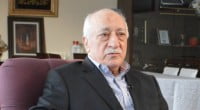
In his first phone conversation with President Trump, Turkey’s President Recep Tayyip Erdogan reportedly brought up the extradition of Fethullah Gulen, a retired preacher and Erdogan critic who has lived in the U.S. since 1999. Erdogan or his proxies have blamed Gulen and his sympathizers for nearly every trouble facing Turkey recently, including the July 15th coup attempt in 2016, the assassination of the Russian ambassador to Turkey in December 2016, the downing of a Russian jet by the Turkish air force in November 2016, and a corruption probe in 2013 implicating relatives of his cabinet members. Despite Gulen’s repeated condemnations of any and all heinous acts, he has become Erdogan’s go-to bogeyman.
Why is the president of a country of 75 million so obsessed with pursuing a retired preacher who has been living in the U.S. since 1999? There are three main reasons for Erdogan’s obsession with Gulen: First, a desire to cover up massive and systemic corruption; second, the need for control over civic leaders and third, his need for a scapegoat to blame the country’s troubles and justify his authoritarian drive. Some have portrayed this as a falling out between two allies, but the reality is they were never that close.
Erdogan’s intellectual roots lie in the Turkish political Islamist movement called “Milli Gorus” (Nationalist Perspective). Gulen’s “Hizmet” (Service) movement, on the other hand, is rooted in the Sufi-influenced civil and cultural school of Islam that does not seek political power for a social agenda. Political Islamists have always had the self-image of the unifying political force of all religiously observant Muslims, and they regarded groups who did not support them politically as traitors. When Erdogan split from his mentor Necmettin Erbakan’s political Islamist party, Erbakan called the new formation traitors. In today’s Turkey, Erdogan is using religious language openly for political gain, using the government’s Directorate of Religious Affairs as a political instrument, and labeling observant Muslim groups who are not aligned with his party as traitors.
The perceived political alignment between the two came from Erdogan’s promise of a pro-European Union (EU), democratic future for Turkey, and Gulen’s principled support for that vision. Gulen met with Erdogan only three times, and all before Erdogan’s party came into power. It’s a myth that Mr. Gulen and Mr. Erdogan were aligned against the secular military. Gulen has never been against a Western, liberal version of secularism or the military as an institution. He historically supported centrist political parties that defended moderate secularism. He has written articles praising the military as an institution providing a vital service to the nation. At the same time, he has consistently been against military coups and the military’s dominating domestic politics, which was also seen by the EU as an obstacle before Turkey’s accession into the union.
Gulen initially supported the democratic reforms promised and partially implemented by Erdogan’s AKP but began to criticize the government after the democratic reforms were stalled and the signs of corruption and authoritarianism increased. In 2005, Gulen-sympathetic news media outlets and civil society organizations strongly opposed a counter-terrorism bill that was open to abuse against civilians and journalists not involved in violence. Due to widespread public opposition, the bill was defeated in the parliament. In 2006, Gulen warned Erdogan about the continued government profiling of citizens, unfounded shuffling of civil servants and reversal of democratic reforms.
In 2010, a Turkish government-supported flotilla attempted to break the blockade around Gaza and was raided by Israeli soldiers, resulting in the death of nine Turkish citizens on board. While Erdogan took full political advantage of the incident, Gulen’s approach was more balanced, criticizing Erdogan government for taking a confrontational approach in its claim to help the Palestinians when non-confrontational approaches were available.
Erdogan’s real intentions became clear after his third election victory in June 2011, when he began pushing for a “Turkish-style” executive presidency[i], which is now close to reality. The proposed system abolishes the office of prime minister, gives the president the power to abolish the parliament, eliminates the parliamentary approval process for his cabinet and does away with parliamentary investigations.
Erdogan began pressuring Gulen to publicly support his executive presidency by repeatedly threatening to shut down Hizmet-affiliated educational institutions in Turkey[ii]. Gulen refused, having realized that Erdogan was not pursuing reforms to enhance Turkish democracy, but rather to enhance his own power.
In 2013, Gulen-linked media criticized Erdogan’s empowering the intelligence service with operational powers and complete immunity, and Gulen refused to side with Erdogan in the brutal suppression of Gezi Park protestors. An infuriated Erdogan shut down all college admission tutoring centers in the country, about a quarter of which were run by Gulen sympathizers.
A public corruption probe involving members of Erdogan’s cabinet became public in December 2013, including details of a $300,000 watch purchased by Iranian-Turkish businessman Reza Zarrab for the former economy minister and $4.5 million in cash at the home of the CEO of state-owned Halkbank, the bank that facilitated payments to Iran for oil and gas. Without merit, Erdogan labeled the probe as a “judiciary coup” against his administration by Gulen sympathizers and their international conspirators. Erdogan started a defamation campaign against Gulen and Hizmet sympathizers, calling them “leeches,” “assassins” and “blood sucking vampires.” The prosecutors were removed from the case, then fired and later arrested. The new prosecutors assigned to the case summarily closed it. Thousands of members of the judiciary were fired and replaced with pro-Erdogan appointments.
Covering up corruption is Erdogan’s a main motivation for obsessively targeting Gulen. The public smear-campaign against Gulen allowed Erdogan to cover up the tracks of an unprecedented and massive corruption case. He used the case as an excuse to transform the Turkish judiciary[iii] into an instrument of political persecution. A new “penal judges of peace” system was established to consolidate arrest warrant decisions in the hands of a small number of judges[iv]. The bar for issuing arrest warrants was lowered and, once issued, could not be appealed to a higher court. In October 2014, an association of judges and prosecutors called YBP (Unity in Judiciary Platform), supported by Erdogan, won the majority of seats in elections to the Higher Council of Judges and Prosecutors (HSYK), the body that decides judge and prosecutor appointments[v].
The next target for Erdogan’s drive for total control was the Turkish military. Unlike the judiciary, Turkish military had resisted his efforts for domination – until the coup attempt of July 15, 2016. Erdogan said the coup attempt was “a gift from God” that allowed him to fire thousands of military officers in the aftermath and reengineer the hiring, training, reporting and organizational structure of the military.
Although Erdogan claimed to have known nothing about the coup attempt up until tanks emerged on Istanbul streets, he was blaming Gulen as its mastermind on TV three hours later. Gulen condemned the coup attempt while it was in progress and has repeatedly and emphatically denied any involvement[vi] but the government’s list of people to purge were ready in advance. 2745 judges and prosecutors were dismissed and then arrested the next day. The government did not even attempt to link individuals with the coup in order to arrest them. Instead, through a process of guilt by association, upwards of 90,000 civilians have been detained, with roughly half arrested, and more than 120,000 have been fired or suspended from their jobs. The government has shut down 35 hospitals; more than 2,000 schools, universities and dormitories; and 180 media outlets. Over 7,000 doctors were fired and 21,000 teachers lost their licenses to teach. The mass purges and inhumane treatment of detainees prompted strong criticism from Western media[vii] and watchdog organizations like Amnesty International[viii], Human Rights Watch[ix], the Committee to Protect Journalists[x] and Reporters without Borders[xi].
Princeton Professor of Politics Jan-Werner Muller, the author of “What is Populism,” points out, populist leaders such as Erdogan cannot stand opposition by civil society groups because this undermines their exclusive claim to represent the will of the people[xii]. In order to discredit them, opposing civil society groups are often portrayed as pawns of a foreign entity, hence the regular labeling of Gulen as an agent of the U.S., the CIA, Mossad or the Vatican, by pro-Erdogan media. Indeed, Erdogan’s desire for control is another drive for his obsession with Gulen. While Erdogan was able to control other powerful Muslim figures in the country, and receive “fatwa”-like opinions justifying his abuse of power, he was never able to turn Gulen, one of Turkey’s most influential preachers, into a mouthpiece for his regime. Without mentioning Erdogan or members of his close circle by name, Gulen has consistently criticized authoritarianism and corruption of public officials throughout Erdogan’s rule. While Gulen did not have a huge impact at the ballot box, his criticism was more stinging for Erdogan because Gulen was a mainstream religious figure, could not be easily dismissed as any other Erdogan critic such as secular, kemalist or communist.
Gulen’s refusal to support Erdogan unconditionally cost him dearly. His fate has many precedents in Muslim history in which religious scholars were pressured by powerful political leaders to provide unconditional allegiance. When this demand was not met, the scholars suffered the consequences in the form of smear campaigns, imprisonment, torture and sometimes execution.
The third reason Erdogan focuses on Gulen is that every authoritarian leader needs a public enemy number one to lay blame for the country’s troubles, to divert attention from serious issues and to justify an authoritarian drive. The kind of domination by a political figure that Erdogan achieved over the media, business, civil society and the judiciary is unprecedented in Turkish history. Erdogan took his authoritarian steps under the pretense of defending the government against the sinister network of Gulen sympathizers who are manipulated by foreign masters. This pattern was evident in Erdogan’s bringing the judiciary under his political control in 2014, civil society and business in 2015, and the military in 2016.
Gulen and the Hizmet movement also constitute a convenient scapegoat. While there are opposition social groups that are well represented in the judiciary, police force and the military, such as the Alevis and Kemalists, none of these groups constitute an easy target for defamation. Alevis are a religious minority, hence their defamation is likely to draw international condemnation. Kemalists are represented by the major opposition party CHP and they have many advocates in the West. The Hizmet movement, however, is an easy target: As an observant Muslim group of only several hundred thousand participants, it is not a major political force and it is viewed with a degree of suspicion in the West.
Erdogan’s Turkey has become a fear-driven nation that contradicts democratic principles endorsed by the EU, the UN and NATO. The atmosphere of rage and anti-Americanism generated by government propaganda does not allow for in-country criticism of human rights abuses or Turkey’s shrinking democracy. The only hope for victims of this witch-hunt is for the international community to demand that Erdogan let go of his obsession with Gulen, restore the independence of the courts and give innocent people back their lives, livelihoods and freedoms.
Notes:
[i] http://www.reuters.com/article/us-turkey-presidency-proposal-idUSBRE8A50VS20121106
[ii] Erdogan publicly announced this in 2014, saying that he forced multiple ministers of education to implement this action but only the latest minister actually carried it out
[iii] http://time.com/7648/erdogan-turkey-parliament-bill-judciary/
[v] http://www.iai.it/sites/default/files/gte_pb_20.pdf
[vii] http://www.nytimes.com/2016/09/17/world/europe/turkey-erdogan-gulen-purge.html
[ix] https://www.hrw.org/news/2016/10/25/turkey-emergency-decrees-facilitate-torture
[x] https://cpj.org/europe/turkey/
[xi] https://rsf.org/en/news/turkey-international-civil-society-condemn-crackdown-freedom-expression
Source: Huffington Post , February 20, 2017
Tags: Fethullah Gulen | Hizmet and politics | Persecution of Hizmet by Erdogan |