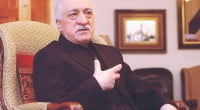
Interview: Professor Greg Barton, counter terrorism expert with Deakin University
Date posted: July 28, 2016
Tony Jones speaks with Greg Barton and asks him what is the likely scenario for security in Turkey following President Erdogan’s announcement of a three month state of emergency.
Transcript
TONY JONES, PRESENTER: Greg Barton is a counterterrorism expert at Deakin University. He was also once an advisor to the former Indonesian President Wahid, sometimes known as “the laughing Sufi”. Professor Barton has also studied the religious underpinnings of the Gulenist movement. He joins us now in Melbourne.
Thanks for being here.
GREG BARTON, DEAKIN UNIVERSITY: Thanks, Tony. Good to be with you.
TONY JONES: Erdogan’s purge, as we’ve heard, is incredibly extensive – 60,000 soldiers, police, judges, teachers, civil servants, sacked, suspended or detailed. Is he trying to tear out the Gulenist movement from the society by its roots?
GREG BARTON: That’s what he says, Tony, but actually what he’s doing goes way beyond anything that makes sense on those grounds. He’s using that as a pretext to cover what he does, but I think he surely knows that his problem is not with the Gulen movement, it’s anyone who dares speak up and dissent, whether they’re Kemalist or they do have links to the Gulen movement. So, this is really a smokescreen for a much bigger operation. He’s made no secret of his desire for executive presidential power. He didn’t have that yesterday. He has that today with emergency rule, and when that expires, if it does, in three months’ time, it’ll probably be permanent as a result of constitutional change.
TONY JONES: Yeah. I mean, we know, however, the Gulenist movement is rooted in the schools, it’s global, as we’ve seen with the schools set up in Australia, Erdogan has now turned the education system on its head. He’s closed down 600 schools, tens of thousands of teachers, Education minister, bureaucrats, university deans, all sacked. Is it possible that he’s just getting rid of every element of the Gulenist movement in the education system along with everything else?
GREG BARTON: Well he certainly seems to be trying to do that. In fact he’s been working on that for three years now. Relations with the Gulen movement went sour three years ago, first with the Gezi Park protest, a very harsh reaction, and then December, 2013 with really serious corruption allegations aired through Gulen-linked media outlets. it’s kind of remarkable he’s got anyone left to purge, but he’s certainly made them his public enemy, but there must be many, many more who have no links. I mean, one third of the general staff of the senior military officers are now arrested or detained, and most of them, given their seniority, would have had no connection with any religious movement because the Turkish military never allowed religious connections. So, common sense suggests there’s something much more than this going on.
TONY JONES: Is there any doubt though how pervasive the Gulenist movement was for example in the police force? I mean, you’ve had, routinely, police being recruited according to anecdotal evidence and stories over a long period of time – recruited. Promotion in the police force was part of being a member of this movement, according to many. I mean, there’s no doubt, is there, that the movement was infiltrating, effectively, some parts of the society?
GREG BARTON: Well Tony, it was a very powerful – still is a very powerful civil society movement in Turkey and around the world. One of the world’s most significant moderate Islamic movements and it had enormous cultural sway in Turkey. It ‘s always hard with Turkey to figure out fact from fiction when it comes to conspiracy theory, but they were the most powerful movement outside of Government control. But cultural civil society’s fear, whether that amounts to infiltration or whether it just is a natural consequence of having an effective education program, you know, is a matter of debate. But they never were a political movement and never aspired to political power, so they’re being painted as being something beyond what they ever were.
TONY JONES: Do pose a philosophical and religious threat of Erdogan’s version of Islam? Is that part of the problem here and are they in fact Sufi in their nature?
GREG BARTON: Look, they certainly are Sufi and the irony is that for a decade, as Erdogan was a successful democratic prime minister and the economy grew and democracy was consolidated, there was a confluence between the same demographic base that voted for AKP, Erdogan’s party, and the democratic base that basically supported the Gulen movement – small-town conservative, socially conservative, but Sufistic moderate Turkish Muslims. That split that emerged in 2013 was entirely for personal reasons and you get the sense that Erdogan is so afraid not just of corruption allegations, but of the sense that his religious legitimacy is being challenged by the most revered religious leader in Turkey that he finds it necessary to demonise that religious leader so that he can maintain his claim to be acting not just for the people of Turkey, but for true religion. He’s very much a religious figure, Erdogan, and he doesn’t want any challenge to his religious authority, although it’s put in political terms.
TONY JONES: So in what way are Sufis actually different in their philosophy, if you like, their religious philosophy to the kind of Islam which Erdogan would espouse and too Islamism or Islamists generally?
GREG BARTON: Well Islamism is very much a here-and-now focus on political power. I mean, commonly the formulation is application of Sharia, if not an Islamic state, so top-down enforcement of religious morality and observance. Erdogan is representing people and has the popular support of people who are basically Sufistically-inclined, but his own inclinations has borrowed a lot from the surrounding Islamism of countries like Egypt, where in many respects he’s always had a sympathy for the Muslim Brotherhood. That doesn’t have a presence in Turkey, but his inclinations run that way ever since he was Mayor of Istanbul in the 1990s and then became this transformational prime minister of a new party. So, there’s an odd tension there. I mean, in theory, the people supporting him actually have the same religious outlook as people in the Gulen network, but this is about personal authority.
TONY JONES: It is interesting to note though when it comes to the Gulenist movement, the Catholic Church, even some leading Zionists in the United States, have described the principles and teachings of Gulen as the antidote to fundamentalism. Is that an accurate assessment?
GREG BARTON: Yeah, I mean, you mentioned Indonesia earlier, Tony. I mean, Gus Dur Abdurrahman Wahid was very different in his personal style than Fethullah Gulen, but I’ve met Gulen a couple of times and he strikes me as a similar sort of moderate, modern Sufistic Muslim. He’s more socially conservative than Abdurrahman Wahid was, but in many ways, very similar ideas and I’ve looked at the ideas of both men very closely. So, yeah, I think that idea that – people often say Islam needs reformation. That’s too simplistic, but all religions need a way of coming to terms with the modern world and with plural society, and in Indonesia and in Turkey, we’ve seen these leaders offer a way forward and it’s basically been a good news story, so it’s a pity it’s mired in political controversy at the moment.
TONY JONES: Well Greg, we’re out of time. We’ll have to talk about this more another time. We thank you very much for coming in to join us tonight.
GREG BARTON: Thanks, Tony.
Source: ABC , July 21, 2016
Tags: Defamation of Hizmet | Fethullah Gulen | Hizmet (Gulen) movement | Hizmet and politics |