Judiciary acts in line with legally unfounded police report to describe Hizmet as terrorist
Date posted: July 12, 2015
A National Police Department report accusing the Gülen movement of being a terrorist organization without any solid evidence is being treated as a document not to be questioned by the judiciary, which apparently views it as an “instruction” by higher-ups, recent investigations have indicated.
Two recently launched judicial investigations contain significant references to the report, which lacks legally valid evidence.
In a display of the witch hunt against the Gülen movement, also called the Hizmet movement, a leading official from a political party will be tried in court for his support of the police officers who were arrested in government-orchestrated operations.
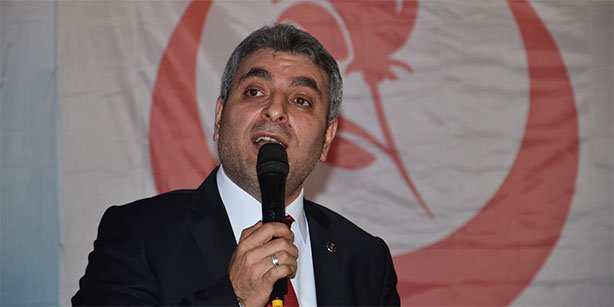
Speaking at an iftar in Gaziantep last weekend, Kaptan Kartal, deputy chairman of the Grand Unity Party (BBP), said he was recently charged with “staging an unauthorized demonstration” and “targeting those who fight against terrorism.”
Kartal said he believes the charges were made against him primarily because of his public support for the imprisoned police officers who are allegedly affiliated with the movement.
The movement is inspired by Fethullah Gülen, a Turkish Islamic scholar who promotes interfaith dialogue.
The National Police Department drafted a secret report in June 2014 mostly based on stories in the pro-government media that claim Gülen is the leader of a terrorist organization and is responsible for the wiretapping of a classified meeting at the Foreign Ministry.
The judiciary became heavily controlled by the government following a comprehensive shake-up that came after two graft probes in December 2013.
Thousands of members of the judiciary and tens of thousands of police officers are estimated to have been purged as part of the government operation following the probes, over which four Cabinet ministers left their posts.
Another case that refers to the report is the judicial investigation launched against Nuri Öztürk, a suspect in an investigation related to alleged cheating on the centralized State Personnel Examination (KPSS) administered in 2010.
In the indictment, Öztürk is accused of being a member of a terrorist organization and of being involved in illegal activities as part of the organization’s targets.
The indictment, in which the Gülen movement is referred to as Fethullahist terrorist organization/parallel state structure, also claims Öztürk is a member of the organization despite the fact that there is no court ruling in which the Gülen movement is described as a terrorist organization.
The reference to the Counterterrorism Law (TMK) in the National Police Department report on the Gülen movement was used as “evidence” to describe the movement as a terrorist organization that is accused in the indictment, among other things, of attempting to change the legal, secular and social nature of the Turkish Republic.
The indictment also claims that the movement is aiming to put the existence of the state in jeopardy, weaken the state authority so as to render it incapable of functioning properly and seizing the state.
Following two sweeping graft probes that went public in December 2013, the government started to demonize the movement and launched a witch hunt against alleged sympathizers of the movement.
Describing the probes as a coup attempt to oust the government, then Prime Minister Recep Tayyip Erdoğan claimed without any solid evidence that members of the movement nested in the state were behind the probes.
Erdoğan, who was elected president last year, accuses Gülen of being the leader of a “parallel structure” nested within the state, i.e., the leader of a terrorist organization.
The prosecutors and police officers who launched the corruption probes are affiliated with the movement, the government claims.
In line with the National Police Department report, the indictment claims the “organization” attempted to oust the government in the Dec. 17-25 graft probes.
The investigation against the BBP’s Kartal came after he read a press statement that protested the detention on Dec. 14 of Zaman Editor-in-Chief Ekrem Dumanlı and Samanyolu Broadcasting Group General Manager Hidayet Karaca in a politically motivated investigation.
The Zaman daily and Samanyolu Broadcasting Group are media outlets sympathetic to the movement.
“If you didn’t file this case out of political anger, then tell us the name of the terrorist organization you are fighting against,” Kartal demanded in his speech at the iftar, underlying he did nothing wrong except support police officers who were unjustly arrested by politically motivated prosecutors.
Samanyolu’s Karaca, who is accused of heading a terrorist organization, is still in prison although he has not been given any reason for his continued confinement.
Dumanlı and Karaca were detained as part of a major media crackdown on Dec. 14, 2014 aimed at intimidating media outlets critical of the government.
The report, written by the National Police Department’s Counterterrorism Unit, claims the “Gülen organization” aims to gain control of the state by infiltrating government institutions by means of young people who are devoted to its ideology.
It further argues the organization does not merely want to become the main decision-making body in domestic and foreign policy decisions but also wants to claim global spiritual leadership of the Muslim world.
Nine of the suspects in the KPSS examination investigation, in which dozens of people have been detained in four waves of operations conducted at different times, were released pending trial by the court in the past week.
In the first two waves of the KPSS operation, 54 people were arrested without any solid evidence. The case was initially opened in 2010 after more than 3,227 people answered most or all of the questions on the KPSS correctly, leading to claims that some of the candidates had either cheated during the exam or obtained the questions beforehand.
Twelve more people were detained in the third wave, while 23 suspects were detained in the fourth wave of operations in the investigation.
The investigation was revived after five years amid complaints from opposition parties that the government is using the operations to further its own agenda. The
KPSS investigation is seen by many as an aspect of the government’s efforts to portray the Gülen movement as a terrorist organization.
One of the most serious allegations in the report refers to the controversial and critical voice recording of a meeting at the Foreign Ministry involving top national security officers of the country that was leaked on the Internet just a few days before the March 30 local elections last year.
Although no concrete evidence was found and no legal investigation has been launched, government officials were quick to put the blame on the so-called “parallel structure” for the leak.
News reports in the past week said the wiretapping of the conversation between the top national security officers was made by a US intelligence agency.
All the accusations in the report mimic the allegations of the pro-government media that has been conducting a smear campaign against the Gülen movement since the graft probes.
In a written order on June 25 of last year to police departments in 30 provinces, the National Police Department asked if the movement, which it accused of working to overthrow the government, is an armed group.
The National Police Department’s order came after an earlier order by Ankara Chief Public Prosecutor Serdar Çoşkun to the Ankara Police Department and its Anti-smuggling and Organized Crime Bureau (KOM) on June 11 of the same year to carry out a secret and unlawful investigation of the Gülen movement.
As part of the investigation, the prosecutor had asked the police to find out exactly what the “parallel structure” is, who its members are, what the objectives of this group are, how it is organized and what its human and financial resources are.
Prosecutor Coşkun also asked KOM to cooperate with the Ankara Police Department Counterterrorism Unit to determine if the movement is an armed group and if it may be considered a terrorist organization.
With regard to Samanyolu’s Karaca, the only evidence supporting his arrest is a fictional TV series that was aired on Samanyolu TV in 2009 that mentions an extremist organization named Tahşiyeciler.
The organization, which is sympathetic to al-Qaeda, was later subjected to a police operation in which its leaders received prison time.
The prosecutor argues Karaca had plotted against this terrorist organization by sending messages to police chiefs through the TV series that aired on his TV station.
The judge used an illegally acquired phone conversation of Karaca in 2013 to arrest him for events that transpired in 2009, although the illegal wiretap was excluded from the case after Karaca’s lawyers objected.
President Erdoğan has also been campaigning for the closure of Turkish schools abroad that are inspired by the Gülen movement during his visits to countries around the world.
Source: Today's Zaman , July 11, 2015
Tags: Defamation of Hizmet | Hizmet (Gulen) movement | Hizmet and politics | Turkey |