
Keyword: Turkey
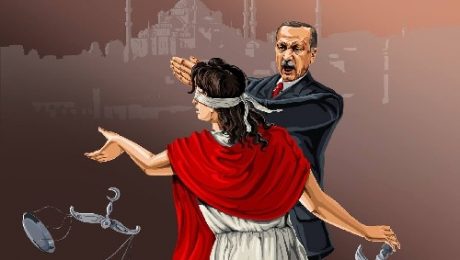
PM Sipilä and FM Soini of Finland: Turkey needs to return to a path that respects human rights
Prime Minister Juha Sipilä and Foreign Minister Timo Soini [of Finland] have responded to a letter from the Finnish Union of Journalists. The Union’s missive asked the ministers to urge Turkey to avoid extreme measures in the aftermath of July’s failed coup.



Erdogan Delivers Ultimatum: Washington Has to Choose Between Gulen and Turkey
Turkish President Recep Tayyip Erdogan said that the United States must make a choice between Ankara and a movement led by US-based dissident Muslim cleric Fethullah Gulen. Ankara has accused Gulen and his followers of playing a key role in the July 15 attempted coup, which claimed lives of over 240 people.

Who was behind the Turkish Coup: Sufi Islamic Scholar Fathullah Gülen or the Regime itself?
Turkish President Recep Tayyip Erdoğan has bluntly blamed it on the Hizmet movement, Gülen’s initiative for intercultural and interfaith dialogue and education in the country expanding across the world today. But for many immensely impressed by Gülen’s global humanitarian, social and Islam-based peace activism, it remains an obscure question as to how the former ally of his country is now blamed for the coup.

What’s Friendship Got to Do With [Mr. Gulen’s] Extradition?
On a visit to Washington to lobby for Gülen’s extradition, Nationalist Action party parliamentarian Kamil Aydin expressed his belief that “America is going to refuse losing Turkey as a good partnership in the region.” But even if Turkish politicians do not believe that America operates according to the rule of law, they should at least be aware that most Americans are proud to think that it does.

Turkey’s crisis deepens
Therefore, it is not surprising the attempted coup in Turkey aroused such concern and reaction. But to use it as an exercise in settling political scores with related or unrelated enemies will only further inflame the situation. There are reports that the Erdogan government had already prepared lists for purges and suspensions, and the failed coup has brought forward the whole exercise.
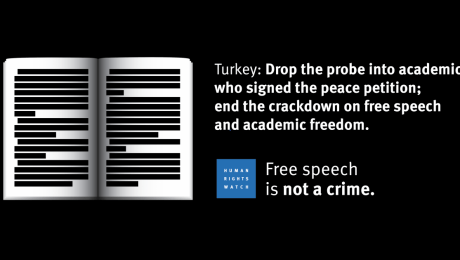
My Father, Academic, Arrested In Turkey Purge
13 days have passed since my father was taken from us by the police and we still did not have a chance to speak with him. His lawyers predict that it may take up to at least six months until he goes to the court. The most painful moment was when I saw in the news that 14 militants linked to ISIS, from whom the police captured AK-47s, were released on the same day. Turkey now views my father and his colleagues more dangerous than ISIS militants.


Scholarly views in the aftermath of the coup attempt: A responsible government would rather support the Hizmet Movement
When the Hizmet Movement or Hocaefendi are mentioned specifically by governmentally influenced press in Turkey, it harms Turkey. Yes, it harms Hocaefendi, but not nearly as much as it harms Turkey. Turkey is hurting itself today when it limits political discussion, when it maligns its political adversaries, when it uses political tools and economic tools to harm social services and educational institutions in Turkey.

Think Twice on Turkey: Erdogan’s Purges Are a Warning to Washington
“Whatever the merits of the government’s claims about the movement’s role in the coup, which Gülen himself denies, the speed and scale of the dismissals make it clear that many of those affected by the purge are caught up in it not because there is clear evidence of their involvement in the coup but merely because of their perceived association with the Gülen movement.”

German Politician: Turkey like Nazi Germany after Reichstag
FDP leader Christian Lindner said he saw parallels between Erdogan’s behavior and the aftermath of the Reichstag fire in 1933 portrayed by the Nazis as a Communist plot against the government and used by Adolf Hitler to justify massively curtailing civil liberties. “We are experiencing a coup d’etat from above like in 1933 after the Reichstag fire. He is building an authoritarian regime tailored solely to himself,” Lindner said.

Questions on a Coup – Did Erdogan engineer it himself?
Now that Erdogan has cleared away all of his rivals from within, he has aggressively demanded that the U.S. extradite his only remaining serious rival – Fethullah Gulen. It would be unconscionable and immoral for the U.S. to comply with the wishes of a power hungry and merciless dictator. When the smoke has finally cleared we may discover that Erdogan himself has engineered the coup as an excuse for a final crackdown on the opposition and to solidify his autocratic rule.

Turkey’s Erdogan takes cue from Hitler, Stalin and Khomeini
There is something deeply disturbing about the direction in which Recep Tayyip Erdogan and his Justice and Development Party are taking Turkey. Writing in this newspaper last week, John Lyons compared the sweeping purges to McCarthyism in the US in the 1950s. That was altogether the wrong analogy.


