
Keyword: Turkey
University of Florida and the failed coup in Turkey
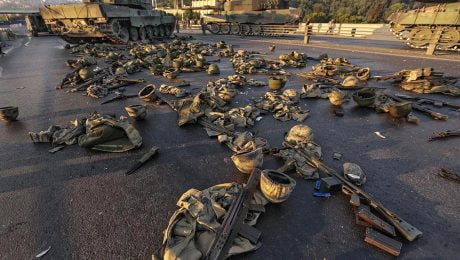
On July 15 in Istanbul, Turkey, soldiers closed the two bridges across the Bosphorus, the first indication that elements of the army were planning to remove the government of President Recip Tayyip Erdogan. In Ankara, the national capital, other soldiers took control of television stations and shelled the parliament building. President Erdogan had to use […]

‘Turkey using political rather than legal pressure against US to get Gulen extradited’
President Erdogan needs a victory so he can prove to the public and supporters that Fethullah Gulen was behind the failed coup and therefore get him extradited, says Ibrahim Dogus, the founder of the Center for Turkey Studies in London.

Turkey’s president is using the failed coup as an excuse to snuff out secular democracy
In the immediate aftermath of the Turkish military’s attempted coup on July 15, the international community responded with relief. While many people within Turkey and outside of it are no fans of Recep Tayyip Erdogan’s authoritarian regime, the bloodshed and chaos that would have resulted from a government overthrow seemed like the worse of two options.

Kyrgyzstan: Antagonism Grows with Turkey Over Gülen Links
In the eyes of the government of Turkey, where Gülen is from, the sprawling building immaculately cast in the bright colors of the red Kyrgyz flag is little short of an incubator of terrorism and plots to subvert the state. Ankara’s antagonism to Gülen’s international influence has deep roots, and the Turkish government’s attempt to link the educator with the recent failed coup is intensifying that animosity. But Kyrgyzstan, which is host to at least a dozen Gülen-linked schools and one university, is holding its ground — up to a point.

Fethullah Gulen: I Condemn All Threats to Turkey’s Democracy
I have been advocating for democracy for decades. Having suffered through four military coups in four decades in Turkey — and having been subjected by those military regimes to harassment and wrongful imprisonment — I would never want my fellow citizens to endure such an ordeal again. If somebody who appears to be a Hizmet sympathizer has been involved in an attempted coup, he betrays my ideals.

A Voice from Africa: Is This Erdogan’s Play For Autocratic Power In Turkey?
Erdogan has unlimited power for the next three months during the state of emergency and he is already thinking of instituting the death penalty (remember the Austro-Hungarian German dictator called Hitler). Here’s to hoping he self-implodes in the next three months, because it is doubtful he will relinquish his hold on power at the end.

Turkey’s anti-Gulen campaign: Strengthening militants and jihadists
The dilemma for the Pakistani government is stark. Turkish prime minister Binali Yildirim has warned that Turkey would be at war with any country that cooperates or aids the Gulen movement. Yet closing down schools that prepare their students for a modern society and economy is something Pakistan’s deeply troubled education sector can ill afford.

[Alleged] “Coup leader” Gülen’s friendships with the Catholic Church
Erdogan’s propaganda channels and instruments have been referring to Hizmet as the “Gülenist Terror Organisation” for years and over the past months, this full-fledged criminalisation campaign has often seen relations between the Hizmet network and the Catholic Church – including the Vatican – being dragged into it. This has primarily been witnessed in the most staunchly nationalist press channels.

Turkey’s president orders closure of 1,000 private schools linked to Gülen
Turkey’s president has signed a decree that allows for the extension of the pre-charge detention period and the closure of institutions linked to Fethullah Gülen, the exiled cleric blamed for masterminding last weekend’s failed military coup.

Turkey: A climate of fear; losers in the aftermath of the coup attempt
Turkey at large will lose as Erdoğan chooses the retaliatory path and purges relentlessly, splitting the country into supporters and adversaries. A climate of fear and indignation will envelop not only the many institutions that were hit hard, but Turkey in general, and the Middle East will suffer even further than it is already suffering.

A Different Kind of Coup? Why You Should Care About A “Reclusive” Turkish Imam in Pennsylvania
We should consider not only what people say about Fethullah Gülen, but what he says himself. Decades of speeches and publications make this possible and reveal certain attributes. For example, Gülen advocates a form of Sufi humanism. He seeks collaborative relationships across religious, cultural, and national borders. He is concerned about the poor and marginalized around the world.

Why should education in Pakistan be held hostage to the politics of other countries, however brotherly?
If Pakistan does indeed give in to pressure from the Turkish government, the move will be ironic, given the number of madressahs currently operating in the country with established links to political, religious or denominational movements that have a more than suspected record of terrorism, violence and spurious religious indoctrination.

Who is Fethullah Gulen? (by National Catholic Reporter)
By blaming Fethullah Gulen and the Gulen movement for the coup attempt, Mr. Erdogan’s authoritarian tendencies have only increased as witnessed by the tens of thousands arrested and detained, and the radical curtailing of free speech. It now appears that in Mr. Erdogan’s hands Turkey’s future and that of the Middle East will be less democratic, less stable and more tumultuous than ever.

Turkey’s Reichstag Fire
President Erdoğan, apparently a firm believer in the adage that a good scandal should never go to waste, authorized an immediate crackdown against so-called Gülenists. The numbers are dizzying. In less than a week after the coup attempt, the government detained 6,823 soldiers, 2,777 judges and prosecutors (including two judges on the Turkish Constitutional Court), and dozens of governors.


