
Keyword: Turkey
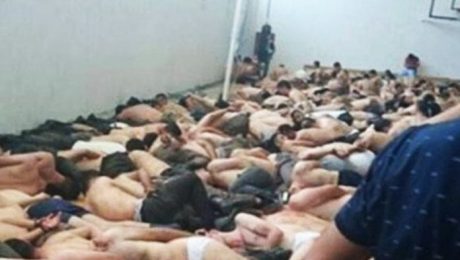
Detainees ‘beaten, sexually abused and threatened with rape’ after Turkey coup, Human Rights Watch claims
In a 43-page report published on Tuesday, the human rights group said a “climate of fear” had prevailed since July’s failed coup against President Tayyip Recep Erdogan and the arrest of thousands under a state of emergency.

Turkey’s trampling of freedoms is Europe’s problem too
Johanna Vuorelma Today’s Turkey is not the same Turkey that I experienced 10 years ago when I first lived there. Those years were filled with optimism, greater civil liberties, significant steps towards democracy, a booming economy and international admiration. Universities had become spaces for critical debates, opening new channels for discussions about some of the […]

Turkey’s Erdogan and unending human rights repression
The judiciary, media organisations, opposition parties, civil servants, charity groups, just to mention a few, are being subjected to a daily dose of massive abuses and suffocation in Turkey under President Recep Tayyip Erdogan. The recent catch to the abuse list is the sacking of medical professionals, scientists, and other academics from universities.

Twelve questions Turkey’s journalists can’t ask
Erdoğan was born to a relatively poor family in Rize, along the Black Sea. His father was in the coast guard and worked at sea. Erdoğan at one point even sold snacks on the street to make extra cash. He graduated from a religious school in 1973, and immediately embarked on a political career, eventually becoming first mayor of Istanbul. So here’s the question: How did a man like Erdoğan become a billionaire several times over?

Erdogan’s Journey – Conservatism and Authoritarianism in Turkey
What happened to Recep Tayyip Erdogan? The Turkish president came to power in 2003 promising economic and political liberalization. But under his rule, Turkey has instead moved in a profoundly illiberal, authoritarian direction, which some feared was Erdogan’s true agenda, given his background in Islamist politics. Rather, Erdogan has become something more akin to a traditional Middle Eastern strongman: consolidating personal power, purging rivals, and suppressing dissent.

Human Rights Watch: Emergency Decrees Facilitate Torture in Turkey
Turkish police have tortured and otherwise ill-treated individuals in their custody after emergency decrees removed crucial safeguards in the wake of a failed coup attempt in July, 2016, Human Rights Watch said in a report released today. The report details 13 cases of alleged abuse, including stress positions, sleep deprivation, severe beatings, sexual abuse, and rape threats, since the coup attempt.

Over 30 Turkish diplomats, families seek asylum in Germany
Nearly three dozen Turkish diplomats and family members have claimed asylum in Germany over alleged affiliation to the network of US-based opposition leader Fethullah Gulen, whom the government in Ankara claims to have masterminded the failed July 15 coup attempt.

Turkey’s New Maps Are Reclaiming the Ottoman Empire
Erdogan, by contrast, has given voice to an alternative narrative in which Ataturk’s willingness in the Treaty of Lausanne to abandon territories such as Mosul and the now-Greek islands in the Aegean was not an act of eminent pragmatism but rather a betrayal. The suggestion, against all evidence, is that better statesmen, or perhaps a more patriotic one, could have gotten more.

Turkey detains Mozambican software developer over links to Gülen movement
Helton Silva Malambane, a software developer from Mozambique who previously worked with the now-shut-down Fatih University, was detained by police at his residence in İstanbul over links to the Gülen movement, whose sympathizers the government accuses of masterminding a failed coup attempt on July 15. Twenty-seven-year-old Malambane was detained after police received anonymous tips about him.

Turkey purge victims unable to find jobs, leave country
“It’s a kind of civil death,” Kerem Altiparmak, a human rights lawyer and political science professor at Ankara University told Los Angeles Times on Wednesday when describing how the lives of thousands of people change after the July 15 coup attempt.


Turkey purge victims unable to find jobs, cannot leave country
“It’s a kind of civil death,” Kerem Altıparmak, a human rights lawyer and political science professor at Ankara University, told the Los Angeles Times to describe how the lives of thousands have changed since a July 15 coup attempt. “You cannot leave the country, you cannot find other jobs, either because of legal or de facto obstacles, because even in the private sector people do not want to employ you.”


