
Keyword: Turkey

Gülen underlines values, rejects alliance with political party or leader
In response to a question on whether “the alliance” between the Justice and Development Party (AK Party) and the Hizmet movement had ended, Gülen said, “If we can talk about an alliance, it was around [the] shared values of democracy, universal human rights and freedoms — never for political parties or candidates.”

MEP: International investigation into Turkey’s rule of law needed
Schaake stated: “The separation of powers is under immense pressure in Turkey and the rule of law is not upheld. This crisis also impacts the relations between the European Union and Turkey, because measures taken, such as political intervention with the judicial branch, are not in line with European rules. The independence of the judiciary has been a concern for Europe for much longer.
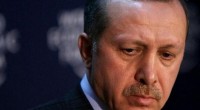
Shocking change and disappointed hearts…
Since Dec. 17, Erdoğan’s discourse has become more and more strict and a major smear campaign has been initiated by the pro-government media against the Hizmet movement, which has been active in education activities all around the world. The Hizmet movement and the followers of Hizmet have never been affiliated with violence or any other crime-related issues. This was proven as a result of a judicial process.

22 businessmen sue PM Erdoğan over Hashishin remarks against Hizmet
Dr. Mahir Şahin, one of the plaintiffs, made a statement in front of the courthouse and argued that the people who follow the Hizmet movement, known as the “Cemaat” (community), are openly being targeted by publicly associating them with the corruption probe that broke out on Dec. 17.

Are ambassadors propaganda officials for the ruling party?
Those who order ambassadors to put their citizens abroad in a difficult position in violation of human rights and national interests do not understand this: The international community is more concerned about whether the government sticks to democratic principles and the rule of law and less about who triggered the recent political crisis.

AK Party’s Islamism
Apparently, Erdoğan has sought not only to be unrivaled within Turkey, but also to create a totalitarian country according to his religious mentality using the resources available to him. The corruption investigations remove the veil over the details of this totalitarian project.

Erdoğan gov’t abusing regulatory agencies to punish opponents
Pressuring state regulators to abuse their powers, the ruling Justice and Development Party (AK Party) government has mounted an aggressive campaign to punish groups and companies that are critical of the government’s handling of a massive corruption investigation, which has led to questions about the credibility and independence of regulatory agencies in Turkey.

Turkish PM heads to Brussels for tough talks with EU
Although the prime minister argues that an ongoing corruption and graft probe engulfing his own ministers is simply a plot hatched by an “illegal gang” that he describes as “parallel state” operated by Fethullah Gülen, a cleric in self-exile in the U.S., EU officials have made clear that such rhetoric has not been bought in Brussels.

Neither Erdoğan nor EU the same after five years
Erdoğan is going to Brussels as the prime minister of Turkey who doesn’t even have ambassadors in three of its region’s important capital; Cairo, Tel Aviv and Damascus. A negotiation chapter was opened in November 2013 after a three-year freeze. Erdoğan had to sack the former EU minister from the cabinet because of the allegations in relation with a major graft probe in December 2013 and appointed Mevlüt Çavuşoğlu to that post.


This is too much! [About the Lies and Slanders directed to Gulen movement]
Prime minister said during the fourth ordinary general meeting of the Turkish Confederation of Businessmen and Industrialists (TUSKON) in March of 2012:
“You are not backed by dark forces. You are not backed by the mafia, gangs, junta regimes. You are not backed by the bankers in Galata. You did not take advantage of the sources of the Treasury or public banks. You did not act according to an ideology. You did not surrender to the pressures and roadblocks. You only trusted in the people. Because you only relied on people, you are great and make this country great.”

Main opposition brings plans to sink Bank Asya to Parliament
The main opposition Republican People’s Party (CHP) has brought onto Parliament’s agenda claims that some state companies and institutions withdrew massive amounts of money from participation bank Bank Asya in order to push it into insolvency by choking its liquidity conditions.

You cannot fool all the people all the time
In a panic to save its future, the Erdoğan government calling it a “parallel state,” an “illegal organization,” a “criminal gang,” a “web of treason” and “raving Hashashins” is attempting to collectively punish the Hizmet movement, whose establishments have significantly contributed to the betterment of the country in the fields of education, business, democratization, social solidarity and international relations.

Turkish authorities purge regulators, state TV employees in backlash against graft probe
Turkey has extended a purge of official organizations to the banking and telecommunications regulators and state television, firing dozens of executives in moves that appear to broaden Prime Minister Recep Tayyip Erdogan’s push back against a corruption investigation.


