
Keyword: Hizmet (Gulen) movement

European Human Rights Treaty Faces Legal And Political Tests
Calls for reform, landmark court rulings, and rising political pressure put the European Convention on Human Rights at a crossroads across the continent. Key Points The European human rights landscape is facing a period of exceptional turbulence, with recent decisions and debates placing the European Convention on Human Rights (ECHR) and its overseeing court at […]

Erdoğan’s Civil Death Project’ : The ‘politicide’ spanning more than a decade
A new book released on October 15 says Ankara pursued a systematic campaign to erase a civic movement from public life. “The book is about the systematic and relentless persecution … to bring about their civil death,” Turkish lawyer and human‑rights advocate Coşkun Yorulmaz, co-author of the book, told Turkish Minute in an interview. “Erdoğan’s […]
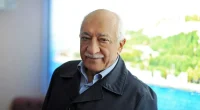
Fethullah Gülen’s Vision and the Purpose of Hizmet
Sait Onal Today marks the first anniversary of the passing of Fethullah Gülen (1941–2024)—a man whose life’s work continues to inspire millions across the world. His vision, rooted in deep faith and universal compassion, gave rise to the Hizmet Movement (“service” in Turkish), a civic initiative dedicated to education, dialogue, and community building. Gülen lived in an era […]

After Reunion: A Quiet Transformation Within the Hizmet Movement
Following the passing of the late Fethullah Gülen, the U.S. leg of the commemorative tour “After Reunion” concluded last weekend with a moving finale at Felician University’s Breslin Center for the Performing Arts in New Jersey. The 1,500-seat hall was filled to capacity. On the surface, it was a memorial; beneath it, a quiet transformation within the Hizmet […]
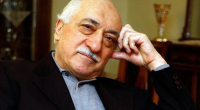
Erdogan’s Failed Crusade: The World Rejects His War on Hizmet
Indigenous African knowledge has it that when you tell a lie, it normally does not take long to dawn. As a warning against cheating, my mother, who died thirty-one years ago this year (1994), used to admonish us: “You do it in my absence, and what happens next is I see it all.” In the […]

Hizmet Movement Declares Core Values with Unified Voice
The Alliance for Shared Values (AfSV), a U.S.-based non-profit representing regional Hizmet organizations, together with many other Hizmet-affiliated nonprofits around the world, published a landmark document that helps define and guide the civil society movement’s activities for years to come.


Chestnut Retreat Center offers a look inside their Saylorsburg facility and its mission
“CRC envisions a society in which everybody is respected for who they are, people live in peace, everybody is included, the poor and needy are taken care of, and people of different background(s) can have friendly conversations in peace,” Ak said. “CRC believes in the importance of celebrating the commonalities and respecting differences.

Hizmet movement demonized by Erdogan regime but loved abroad
South Africa is a good example of a country that has not been pressured into adopting the narrative touted by the Turkish government. Local politicians, students and academics regularly acknowledge the Hizmet Movement’s altruistic activities in the country.


Those not supporting Erdogan regime labelled as Gulen follower, given harsh punishment
M Behzad Fatmi, a Turkish political expert and commentator, has said that Ankara’s crackdown on Gullen followers amounts to “social and economic genocide” and asserted that the self-exiled scholar had no connection in the coup d’etat aimed at overthrowing the Erdogan regime.

Book Review — Fethullah Gülen: A Life of Hizmet
Gülen comes off in the book as a charismatic figure, who is defined by humility. You can understand why some might find him troubling. He has inspired great loyalty. Yet, like the Dalai Lama and Pope Francis, he has used this charisma and loyalty for the good. A biography like this is important because it brings to life both the person, whose vision led to the creation of the movement and the nature of the movement itself.

We must have more empathy for people fleeing for their lives around the world
No individual’s pain is to be underestimated. Thousands of families are being forced to leave their homeland by violence, terror, or fear of political prosecution. I would like to particularly talk about people of Turkey, who has been forced to leave their country since the Turkish Government ordered a massive witch hunt on members of the Hizmet (Gulen) movement after the July 15, 2016 coup attempt.

An Interview with Fethullah Gülen
What caused Erdogan’s to turn against me? Two factors stand out. …. Secondly, there is the issue of Hizmet schools. We operate hundreds of them in Turkey and in some 170 countries around the world, more than 1.400 schools. Erdogan wanted to control our network as a tool to further his aim of dominating the entire Islamic world, as caliph.


