
Civic engagement, success and the Gülen movement
Date posted: January 20, 2011
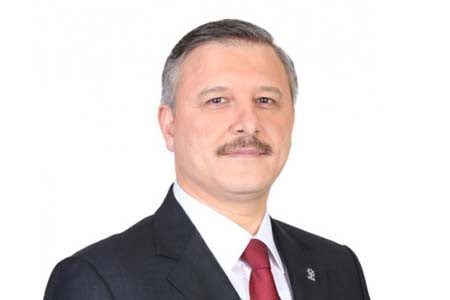
MUHAMMED ÇETİN
The recent extraordinary interest in activities by and related to the Gülen movement leads many to think about civic engagement and its efficacy and success.
Civic engagement is extremely vital for improving and enhancing conditions in any contemporary democracy. It means promoting the quality of life in a community through both political and non-political processes. It means working to make a difference in the civic life of our communities. It develops a combination of knowledge, skills, values and motivation to make that difference.
This kind of empowerment was developed mostly outside of and beyond partisan politics. It helps foster citizens’ learning about democratic cultures, human rights and multiculturalism, especially in divided societies. Also, it brings socially responsible leadership into intercultural and democratic dialogue and engenders peaceful social change. However, judging by the high level of crime, conflict, corruption and violence in most countries, many organizations seem to offer little by the way of a roadmap or leadership. Key terminology and goals remain confined to the intellectual or academic field. They lack the resonance to galvanize a new generation of peaceful activists. So what can be done about this decline?
There are key factors or characteristics that deepen citizen engagement in public life: First, important issues need to be identified by the public. Then, non-contentious, peaceful and non-coercive means must be used for developmental models for citizens’ civic learning, democracy building, respect for diversity and human rights, democratic dialogue, inclusiveness and social change. Also, citizens must know their cultural and political rights. Individual willingness or initiative should be accompanied by organized mobilization for the common good. And lastly the civic engagement needs to be supported by altruistic giving.
Bearing these key factors in mind, let’s turn to the Gülen movement, as it is now mostly described as “hizmet,” altruistic voluntary services to humanity or volunteer services. Many factors contribute to hizmet’s efficacy. Papers presented at international conferences maintain that hizmet defines clearly the organization’s goals. It mobilizes and puts to use effectively the available resources of people, material and ideas. It establishes legal and lawful institutions and so people and society at large take the movement’s aims seriously.
Hizmet is a complex collective actor, composed of many decentralized civil society organizations and institutions pursuing similar goals but different strategies. It is argued that decisions on goals, that is, on what to do, are taken in a process of consultation, locally or in an individual project-network. The consultative process means that no one owns the services and authority in the name of hizmet as a collective actor. The efficiency of decision taking in its service networks is seen to be the constancy and richness of the interaction of many individuals.
The most important factor in its success is that non-contentious, peaceful and non-coercive means must be used for developmental models. In this aspect the Gülen movement really excels. It diffuses a discourse of dialogue, tolerance and a valuing of diversity. It has never shown any inclination whatsoever towards violence or extra-legal tactics of any kind. It has transformed the potential to use coercive means to induce changes in political systems into peaceful efforts to produce beneficial services. Hizmet is successful because of the interweaving of the service-project mentality with integrative peaceful strategies. It has convinced the public to use its constitutionally given rights to serve humanity positively, constructively and through self-motivated philanthropic contributions and charitable trusts.
For this reason, hizmet has become, first, a vital component in providing an alternative and barrier to egoistic interests at the expense of others and a remedy for societal discord, conflict and violence. Second, it has become one of the most significant and leading actors in the renewal process towards a civil, pluralist, democratic and peaceful society.
I feel that an understanding of the Gülen movement can help to reverse the kind of decline in civic engagement that we see in many contemporary societies. It can show activists and other civic society movements how to expand their repertoire of action for societal peace and inter-civilizational cooperation. Very diverse people can come together to achieve very worthy goals. Hizmet has discovered this, reminds people of it and acts on this simple truth. For this reason, I believe that, in spite of opposition from groups that benefit from conflict between people, the Gülen movement, or hizmet, will continue peacefully and successfully in the way it always has.
Source: Today's Zaman , January 20, 2011
Tags: Hizmet (Gulen) movement |


