A time for sacrifice

Date posted: October 19, 2013
Arzu Kaya Uranli
Another Kurban Bayramı (Turkish for Eid al-Adha, the Feast of the Sacrifice) just has past.
It is one of the two most important Islamic festivals. In the words of my 8-year-old son, “it’s like Muslims’ Christmas because children get many gifts and money.” My 10-year-old daughter says, “It’s also like Thanksgiving because families get together over big feasts, but they eat lamb or beef instead of turkey.”
It’s hard to be abroad when it’s an all-out holiday in your native country. Unless your religious holiday is an officially recognized federal holiday in the US, nobody notices it. Even though you may celebrate it with friends, it’s not as exciting as it would be if you celebrated it with everybody in your town. If you are lucky, you may have a day off from your job on the day of your festival, but since most of your friends don’t celebrate it, just taking a day off doesn’t help you turn a regular day into a holiday. Like many other joys of life, holidays are priceless when you have all your loved ones around you to celebrate with.
The sacrificial festival has many social aspects to it: it is all about charity, community and family, as well as the pilgrimage. During this holiday, people visit their relatives and friends; family ties are strengthened, and it gives children an opportunity to bond with the older generation. The sacrificial festival is a time for wishing one another well, exchanging gifts, having big feasts, donating and praying.
It is also a time to ask for forgiveness and mercy from God. Kurban Bayramı takes a place on the 10th day of the last month on the Islamic calendar. It also concludes the annual pilgrimage to Mecca known as the hajj, a journey of dedication and purification.
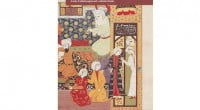
For the sacrifice, an act of appreciation and gratitude for God’s mercy, traditionally lambs, sheep or cows are slaughtered in memory of the ram sacrificed by Abraham in place of his son. The sacrificial festival commemorates the story of Abraham in the Quran. The Prophet Abraham, in a decisive act of obedience to the will of God, prepared to sacrifice his son Ishmael. However, God stopped him and instead sent a ram to be sacrificed in place of Abraham’s son. This is similar to the story of Abraham in the Old Testament and the Bible, except in the Bible, the son is Isaac, not Ishmael.
Even though the Feast of the Sacrifice is not a federal holiday in the US yet, many American Muslims observe it to reaffirm their Muslim identity. Some send money to their motherland to help fund a sacrifice. Some perform the sacrifice in the US. Muslims get together to pray, eat and celebrate together.
According to Ercan Tozcan, the director of the Peace Islands Institute (PII), the sacrificial festival is not as well-known among non-Muslim Americans. Thus, he invites Muslim Americans to be more active in social life to promote Kurban Bayramı. He suggests donating meat to organizations like soup kitchens, which hand out fresh food to the poor.
Tozcan said: “During the holiday of Bayram, from Oct. 15-18, PII paid visits to local food pantries with some respected legislators to donate fresh meat to celebrate the Bayram, and to serve the NJ community.” He emphasized that PII brings together different viewpoints and voices in a spirit of mutual respect and acceptance in order to develop unique, alternative perspectives on vital issues that our society is facing, to generate solutions to these issues, to support successful practices and as such to promote education, friendship and harmony. Hence, it serves as an island of peace for all peoples in society of different ethnic, cultural and religious backgrounds.
With many natural and man-man catastrophic events affecting the lives of so many people in the world, there is no better time to appreciate the spirit of sacrifice and sharing than today. It is a great time to encourage diversity, pluralism and multiculturalism in society and to develop a transcultural generation for the future.
Since Thanksgiving Day is around the corner, let’s share, forgive and be happy for Kurban Bayramı to show our appreciation to the Creator.
Source: Today's Zaman , October 19, 2013
Tags: Humanitarian aid | North America | USA |