Angela Merkel, Meeting With Erdogan in Turkey, Emphasizes Free Speech

Date posted: February 3, 2017

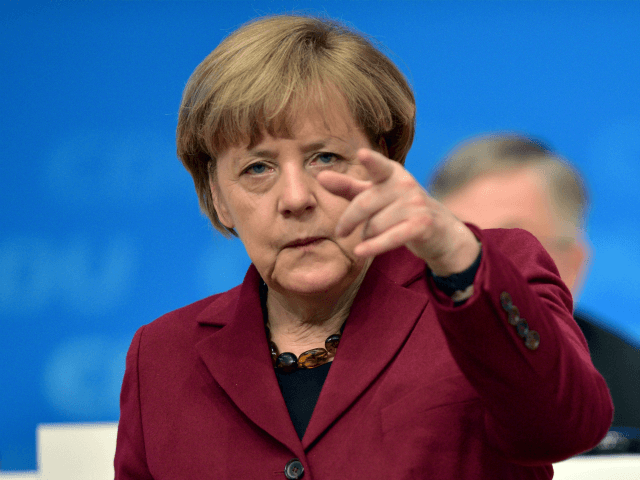
ANKARA, Turkey — Chancellor Angela Merkel of Germany emphasized the importance of freedom of opinion in talks with President Recep Tayyip Erdogan of Turkey on Thursday, during a visit meant to help improve frayed ties between the two NATO allies.

In her first trip to Ankara since a failed military coup in Turkey in July, Ms. Merkel said she had agreed with Mr. Erdogan on the need for closer cooperation in the fight against terrorism, including by the Kurdistan Workers’ Party, or P.K.K.

Germany and Turkey have been at odds over Ankara’s crackdown on dissidents since the abortive July 15 coup, as well as Turkish allegations, rejected by Berlin, that Germany is harboring Kurdish and far-left militants.

“In such a time of profound political upheaval, everything must be done to continue to protect the separation of powers and, above all, freedom of opinion and the diversity of society,” Ms. Merkel said at a news conference when asked about concerns over proposed constitutional changes that would strengthen Mr. Erdogan’s powers. She added that she had also raised the issue of press freedom.

“Opposition is part of democracy,” Ms. Merkel said.

Turkey’s allies, including Germany, fear that Mr. Erdogan is using the coup attempt as a pretext to curtail dissent, and Mr. Erdogan’s opponents fear that his planned constitutional changes will lead to an authoritarian state.

“It is out of the question for the separation of powers to be abolished,” Mr. Erdogan said of the proposals, which would replace Turkey’s parliamentary system with an executive presidency.

Mr. Erdogan also said that Turkey might provide evidence to the German authorities after around 40 mostly high-ranking Turkish soldiers who worked at NATO facilities in Germany were reported to have requested asylum.

Turkey’s deputy prime minister, Veysi Kaynak, said on Wednesday that Berlin was sheltering members of what Ankara calls the Gulenist Terrorist Organization: the network of the United States-based Muslim cleric Fethullah Gulen, which Turkey blames for the coup attempt. Mr. Gulen denies involvement.

“If the Gulenists involved in the coup are fleeing to Germany, the Justice Ministry may send information and documents,” Mr. Erdogan said, adding that the United States should take quicker action on an extradition request for Mr. Gulen.

Turkey’s defense minister has urged Berlin to reject the asylum applications and warned that a failure to do so could damage relations. Berlin has said the applications will be considered case by case.

Ms. Merkel, who later met with Prime Minister Binali Yildirim, said the two countries could do more together to fight the P.K.K., which is considered a terrorist organization by Turkey, the European Union and the United States.

“We talked in particular about how the P.K.K., and everything associated with it in Germany, is being observed,” Ms. Merkel said, “and how we’re also taking action against it, because as I said, the P.K.K. is, as a terrorist organization, banned in Germany, too.”

Source: New York Times , February 2, 2017


Related News

Turkey’s Post-Coup Purge and Erdogan’s Private Army

A year later, Western intelligence officials and top Turkey analysts aren’t nearly so sure of Gulen’s complicity. Earlier this year, German spy chief Bruno Kahl revealed that Ankara has failed to convince the BND foreign intelligence agency that Gulen was behind the ill-planned and executed coup plot. “Turkey has tried to convince us of that at every level, but so far it has not succeeded,” Kahl told the German weekly Der Spiegel in March.

Did Turkey Really Save Democracy On July 15?

The government is yet to renovate that place, preserving the area for foreign delegations as a showcase for the savagery of putschist soldiers. Ankara makes sure that every visiting foreign official is making their pilgrimage to the site, through dust and scattered rocks, so that they see firsthand how the mutineering soldiers attacked the Turkish democracy.

Tentacles of Turkey’s growing autocracy reach Thailand

“After the 2010 election, Erdogan and the AKP failed to politicise the Gulen movement, a civilian Islamic phenomenon,” Erdem says. Power-hungry forces within the AKP reached out to Gulen, intent on tapping this source of mass political support. When the tactic failed, Gulen supporters came to be seen as enemies of the state.

Council of Europe warns against hate speech by senior state officials in Turkey

The human rights body of the Council of Europe, the Commission against Racism and Intolerance, issued a report on Wednesday about the increasing use of hate speech, even by senior state officials. While President Recep Tayyip Erdoğan called the Gülen sympathizers “viruses,” Prime Minister Binali Yıldırım labeled them microbes. The movement is the main target of a massive purge and witch-hunt in Turkey.

Islamist vs. Islamic

The followers of Gülen have opted to vote for and support various center parties freely. Moreover, their support has never amounted to partisanship. Rather, they have tended to back specific policies and the political parties that placed greater emphasis on democratization, demilitarization, transparency, accountability, fundamental rights and freedoms and economic stability.

Gradual transformation of Turkey into an authoritarian entity under Erdogan’s leadership

As Erdogan moved on the Islamic path of authoritarianism with political ambition of becoming of leader of Muslim world, it has adversely impacted the stability of Turkey — both internally and externally. By crushing the Gulen movement it undermined the Islamic ideational resources needed most to fight Islamic terrorism.

Latest News

Turkish inmate jailed over alleged Gülen links dies of heart attack in prison

Message of Condemnation and Condolences for Mass Shooting at Bondi Beach, Sydney

Media executive Hidayet Karaca marks 11th year in prison over alleged links to Gülen movement

ECtHR faults Turkey for convictions of 2,420 applicants over Gülen links in follow-up to 2023 judgment

New Book Exposes Erdoğan’s “Civil Death Project” Targeting the Hizmet Movement

European Human Rights Treaty Faces Legal And Political Tests

ECtHR rejects Turkey’s appeal, clearing path for retrials in Gülen-linked cases

Erdoğan’s Civil Death Project’ : The ‘politicide’ spanning more than a decade

Fethullah Gülen’s Vision and the Purpose of Hizmet

In Case You Missed It

Recruiting based on ‘color lists’ breach of Constitution

Observers: Charging Zaman’s editor-in-chief based on 2 columns, 1 report is ‘unlawful nonsense’

Starting a witch hunt [against the Hizmet movement]

Gülen says many would like to be in detained journalists’ shoes

Ebru TV telethon collects nearly $800,000 for victims of Turkey quake

Çağ Education Company in Azerbaijan held a conference to celebrate the 20th anniversary

Ex-Pentagon advisor says Turkey is heading towards civil conflict, if not civil war

Copyright 2026 Hizmet News