WikiLeaks reveals emails from the son-in-law of President Erdogan, ‘proving his connection to ISIS operation smuggling oil into Turkey’
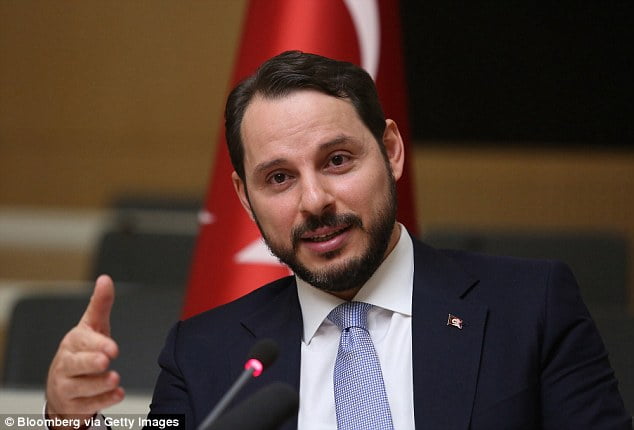
More than 57,000 personal emails from the account of Turkey's Minister of Oil Berat Albayrak have been made public by WikiLeaks.


Date posted: December 7, 2016

Hannah Al-Othman

  • WikiLeaks has released a tranche of personal emails from the account of Turkey’s Minister of Oil Berat Albayrak
  • The emails span a six-year period from 2000 to 2016 and allegedly reveal his level of influence in the country’s political scene
  • The emails appear to have been obtained by Turkish hacktivist group Redhack 

WikiLeaks has released a tranche of more than 57,000 personal emails from the account of Turkey’s Minister of Oil Berat Albayrak.

Albayrak is the son-in-law of the country’s president, Recep Tayyip Erdogan.

The emails span a six-year period from 2000 to 2016 and allegedly reveal his level of influence in the country’s political scene.

The emails appear to have been obtained by Turkish hacktivist group Redhack, and which threatened to make his communications public back in September.

The emails, which allegedly contain details of exchanges between Albayrak and the Turkish ‘ruling elite’ were briefly published earlier this year, before being taken down following a crackdown by the Turkish government.

WikiLeaks alleges that the emails reveal ‘Albayrak’s involvement in organisations such as Powertrans, the company implicated in Isis oil imports’.

The company has been implicated in oil imports from ISIS-controlled oil fields.

Turkey banned oil transportation by road or railway in or out of the country in more than five years ago, but with provision for limited exceptions such as meeting the needs of the military.

WikiLeaks claims that the Turkish government later gave Powertrans the monopoly on the transit of oil.

Julian Assange, WikiLeaks founder, said the emails had been published in response to the Turkish government’s silencing of detractors.

He said: ‘The people of Turkey need a free media and a free internet.

‘The government’s counter-coup efforts have gone well beyond their stated purpose of protecting the state from a second Gulenist coup attempt and are now primarily used to steal assets and eliminate critics.

‘The Turkish government continues to use force to jail journalists, shut down media and restrict internet access to its citizens, depriving them of their ability to access information about their situation including by banning WikiLeaks.

‘This consolidation around the power vertical of Recep Tayyip Erdoğan ultimately weakens Turkish institutionalism, leaving Turkey more susceptible to future coups by those in Erdoğan’s chain of command.’

Source: Daily Mail , December 6, 2016


Related News

Gov’t pins hope on division in Turkey as Erdoğan resorts to hateful speech

In an attempt to divert pressure from public opinion from him, Erdoğan is waging a war against the Hizmet (Service) movement, which has openly called on the government to clamp down on the wrongdoers and clean politics of dirt.

The Erdoğan-Gülen encounter and democracy

It is not normal that the non-political Gülen movement would occupy such a central space in election campaigning; this is why the situation calls for some special scrutiny.

Turkey’s Brain Drain and the Disappearing Academic Freedom

Hasan was the luckiest because he was not in Turkey during the coup. He was studying abroad on July 15th and learned the coup through the Internet. He was supposed to go back to Turkey but he decided not to do so because of the news on the immense purging in mostly the government and some private institutions. Few days after the coup he learned that he was dismissed from his position at a state university.

Turkey builds 50 more prisons for Gülenists: Justice Minister

Turkish Justice Ministry Undersecretary Kenan İpek on Tuesday said more than 50 prisons are under construction for the incarceration of people linked to the Gülen group.

Twitter users protest plan to close prep schools in Turkey

Turkish Twitter users are in an uproar over a report that the government has drafted a law which would close thousands of private preparatory education centres (known as “dershanes”) across the country. The schools are reportedly a point of tension between Prime Minister Recep Tayyip Erdogan’s government and the Gülen movement that runs many of the schools.

Collective punishment [of Hizmet movement]

The problem is not about the failure of the members of the Hizmet movement to obey orders from their superiors in the public service but about the claim that the prosecutors and police chiefs who conducted the graft and bribery investigation are members of the Hizmet movement — a claim which has yet to be proven.

Latest News

Turkish inmate jailed over alleged Gülen links dies of heart attack in prison

Message of Condemnation and Condolences for Mass Shooting at Bondi Beach, Sydney

Media executive Hidayet Karaca marks 11th year in prison over alleged links to Gülen movement

ECtHR faults Turkey for convictions of 2,420 applicants over Gülen links in follow-up to 2023 judgment

New Book Exposes Erdoğan’s “Civil Death Project” Targeting the Hizmet Movement

European Human Rights Treaty Faces Legal And Political Tests

ECtHR rejects Turkey’s appeal, clearing path for retrials in Gülen-linked cases

Erdoğan’s Civil Death Project’ : The ‘politicide’ spanning more than a decade

Fethullah Gülen’s Vision and the Purpose of Hizmet

In Case You Missed It

The tragic story of a Turkish family fleeing to Greece from persecution

Father jailed over Gülen links, 6-months-old paralyzed baby left in intensive care

Handcuffed justice

Saylorsburg protesters focus on Turkish cleric

Today’s Zaman offers condolences to families of mine victims

Gülen’s lawyer rejects ‘letter of alliance’ to PKK

Turkish Twitter war over education

Copyright 2026 Hizmet News