Cemevi next to mosque embraced by residents in Malatya

Date posted: September 17, 2013

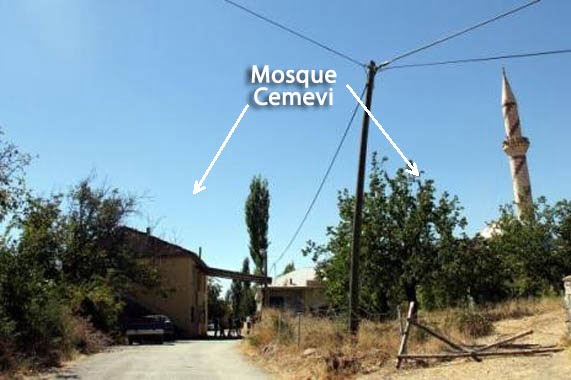
Since the groundbreaking ceremony of the first ever joint mosque-cemevi (Alevi place of worship) culture center was held in Ankara on Sept. 8, there has been an ongoing debate on the presence of joint religious centers, with Cihan news agency reporting on Monday of a site in Malatya’s Doğanyol district that has a mosque and a cemevi standing side by side that is embraced by the residents.

The mosque, which has been in Örmeli village in Malatya since 1978, was joined by a cemevi in 2007. There is only a lane between the mosque and the cemevi, and both of their entrances face each other. The residents of the village, which has a population of 310 people, have not ever found it strange to see a mosque and a cemevi next to each other.

The people of the village told reporters that everyone is free to choose where they wish to pray, the mosque or the cemevi. They think of this practice as a sign of tolerance and a good example of the richness of diversity.

Örmeli Muhtar (village head) Hacı Bayram Türkeri told reporters that a healthcare center near the mosque was later turned into a cemevi by the villagers since no doctors were assigned to the center. “Some of the villagers go to the mosque, while others prefer the cemevi. There has never been a problem with that,” Türkeri said.

Türkeri also stated that the villagers demanded a dede (Alevi cleric) be assigned to the village cemevi, just as one was assigned to the mosque. He added: “We would like to perform our prayers as per our traditions. After all, we are all calling people to the way of God, not anywhere else.”

Turkish-Islamic scholar Fethullah Gülen recently initiated a plan for a cultural center with a mosque and a cemevi together in Ankara’s Mamak district. The project is being financed by six businessmen — three Alevis and three Sunnis.

The project aims to strengthen ties between the Alevi and Sunni communities in Turkey in the face of efforts to ignite sectarian tension in the Middle East.

However, the project has drawn criticisms from some marginal Alevi and Sunni circles and a group of nearly 500 people protested the project, clashing with the police and throwing stones at them during the project’s groundbreaking ceremony on Sept. 8.

Source: Today's Zaman , September 16, 2013


Related News

Bal asks whether Erdoğan is trying to suppress religious communities

Former Justice and Development Party (AK Party) deputy İdris Bal submitted a parliamentary question to Prime Minister Recep Tayyip Erdoğan on Monday, asking whether Erdoğan regards himself the Caliph of the Muslim world and whether the prime minister is trying to suppress religious communities in Turkey.

Turkish Olympiads close with perfect ceremony

A spectacular closing ceremony at İstanbul Atatürk Olimpiyat Stadium in front of 200,000 spectators for the 11th Turkish Language Olympiads has left bittersweet memories, signaling the end of a two-week festival full of poetry, dance, Turkish culture and music. Participants, who came from 130 countries, in this year’s competition wrapped up the two-week long finals […]

Commentary: Abuses rampant in wake of Turkish coup

We don’t know a lot. But what we do know should cause us to ask our elected officials to look carefully at any request for extradition for Fethullah Gulen. We don’t know everything, but we know that the post-coup crackdown has included public appeals “to be protected from the evil things of educated people.” Nearly 60,000 have been detained. Some 1,600 university academic deans have been relieved of their positions.

Kosovo President: Arrest of Gulenists was wrong

Kosovo President Hashim Thaci in a televised interview for T7 admitted for the first time that the arrest and deportation of the six Turkish men suspected of their links with Fetullah Gulen’s movement was wrong. Thaci has earlier publicly endorsed the extraditions, saying the six Turks were a danger to the fledgling country’s national security.

The Hizmet movement, politics and the AKP

Hizmet cannot establish a political party because politics all over the world are mostly based on contention, challenge, belittling opponents and division. Forming a political party would harm the Hizmet movement but similar to Rumi’s compass, it endeavors to establish critically constructive contact with every single human being on the planet. Its main mission is to build bridges across cultures, communities, religions and so on.

Turkey: Post-coup prisoner says threatened with rape, beaten almost to death

In the latest of firsthand letters revealing the re-emergence of torture in Turkish prisons, an Antalya arrestee reportedly said he was beaten so badly that he blacked out for some time and was also threatened with rape.

Latest News

Turkish inmate jailed over alleged Gülen links dies of heart attack in prison

Message of Condemnation and Condolences for Mass Shooting at Bondi Beach, Sydney

Media executive Hidayet Karaca marks 11th year in prison over alleged links to Gülen movement

ECtHR faults Turkey for convictions of 2,420 applicants over Gülen links in follow-up to 2023 judgment

New Book Exposes Erdoğan’s “Civil Death Project” Targeting the Hizmet Movement

European Human Rights Treaty Faces Legal And Political Tests

ECtHR rejects Turkey’s appeal, clearing path for retrials in Gülen-linked cases

Erdoğan’s Civil Death Project’ : The ‘politicide’ spanning more than a decade

Fethullah Gülen’s Vision and the Purpose of Hizmet

In Case You Missed It

Intellectual deviations

Turkey’s Maarif Foundation illegally seized German-run school in Ethiopia, says manager

Lawmakers from various countries call for better protection of female refugees

Elizabeth Munisoglu on Hizmet Movement

UNESCO Global Monitoring Report and Turkish Schools

[Hizmet’s] Prep schools and civilized debate

Alevi problems deeper than they seem, opinion leaders agree

Copyright 2026 Hizmet News