The Guardian view on Turkey’s repression: stop this stalemate


Date posted: November 29, 2016

Editorial

For the past four months, Turkey’s leader has subjected his country to sweeping political purges – but there are few signs of an end soon. The new announcement that 6,000 teachers will be reinstated in their jobs after having been suspended is a welcome gesture but does little to reduce the level of tension.

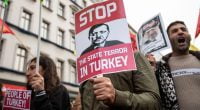
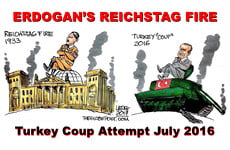
Since the mid-July failed coup attempt against Recep Tayyip Erdoğan’s regime, the president has orchestrated what amounts to a counter-coup. What Mr Erdoğan sees as a clean-up of the Turkish body politic looks like the biggest purge in Turkey’s modern history. More than 125,000 people have been dismissed or suspended and around 40,000 others arrested. Amnesty says there are “credible reports” of detainees being subjected to “beatings and torture, including rape”. Judges, military personnel and professors have lost their jobs.

While democracy should not have been usurped by the military, there are justifiable concerns about where Mr Erdoğan is going. A state of emergency allows him to rule by decree. Those affected are opponents of the ruling AK party. Kurdish activist groups and people suspected of links to the Fetullah Gülen network find themselves bracketed with Isis militants. Media freedom has been dramatically crushed. On 12 November the executive director of the pro-democracy newspaper Cumhuriyet was detained. Nine of its journalists had already been arrested.

Turkey’s western allies are alarmed, but against a complex geopolitical backdrop, they have chosen discretion rather than valour. After the EU parliament last week voted to freeze EU accession talks with Turkey, Mr Erdoğan lashed out by threatening to open the country’s borders to migrants heading to Europe. This is tantamount to blackmail. If the president made good it would collapse the EU-Turkey deal negotiated by Angela Merkel which saw Ankara agree to take back refugees in exchange for billions in aid, ease travel restrictions for Turks and refresh EU membership talks. The hope in European capitals is that Mr Erdoğan will not want to destroy the agreement: visa-free travel to Europe remains a popular prospect for Turks.

By fanning nationalist sentiment, Mr Erdoğan wants to reach his long-held goal of changing the Turkish constitution in a way that would enlarge and concentrate powers in the presidency. One proposal would see Mr Erdogan in office until 2029. But both the EU and Turkey’s strongman appear to suffer from a bout of magical thinking. There is currently no consensus in Europe for further rapprochement with a regime whose authoritarianism is blatantly on the rise. Nor is Mr Erdoğan ready to abandon the leverage he publicly claims to have with European governments. The lifting of visas hinges on Turkey rescinding the anti-terrorism legislation, which Mr Erdoğan uses to repress dissent – and he shows no appetite of giving up. An October deadline came and went, with no progress whatsoever.

No one, whether in Brussels or Ankara, is ready to cut off talks. The stalemate plays to both sides’ interests. This might change if Mr Erdoğan reintroduces the death penalty, as he has threatened to: the EU has said this would end accession talks. Meanwhile, the grinding machine of political repression continues in Turkey, whose rapprochement with Vladimir Putin’s Russia has become a stark new feature of its foreign policy – with western allies left to contemplate their lack of sway.


Source: The Guardian , November 28, 2016


Related News

Who was behind the Turkish Coup: Sufi Islamic Scholar Fathullah Gülen or the Regime itself?

Turkish President Recep Tayyip Erdoğan has bluntly blamed it on the Hizmet movement, Gülen’s initiative for intercultural and interfaith dialogue and education in the country expanding across the world today. But for many immensely impressed by Gülen’s global humanitarian, social and Islam-based peace activism, it remains an obscure question as to how the former ally of his country is now blamed for the coup.

Threats and fear used to intimidate business world

In one of the eastern provinces, members of a business association believed to be close to the Hizmet movement, a CSO, were visited by the managers of another association that the government seeks to promote. They were told that a police operation might be launched against their association and that they would face serious tax audits and commercial problems if they continued their membership in their current association.

Turkey will conduct ‘operations’ against Erdogan’s enemies in U.S.

“This is a blatant and alarming admission by Turkey’s presidential spokesperson Ibrahim Kalin of actions by the Erdogan regime in clear violation of international law and agreements to which Turkey is a party.”

The end of ‘unshakable’ AKP myth

For the last couple of days, the codes and rules, which have been turned upside-down by Turkey’s ruling AKP, have become hard to keep up with since the AKP was forced to fight a self-created “monster.” The option for a snap election call seems the wisest option for his party but stakes are high over there too if he fails in his traditional “victimization” rhetoric, which worked well in many previous crisis, to convince his electorate.

Erdoğan’s aide: Unjust to suggest Hizmet eavesdropped on PM

A political aide to Prime Minister Recep Tayyip Erdoğan said on Monday that it would be “unjust” and “wrong” to associate the Hizmet movement with wiretapping devices found in Erdoğan’s office. Speaking to TV station NTV, Yalçın Akdoğan, an adviser to the prime minister and a deputy of the Justice and Development Party (AK Party), said: “Some people placed those devices there…. This is a grave situation.”

Erdogan’s False Promises To Africa

The main issue Erdogan raises with his African counterparts is not improving economic and political relations, but the closure of the Gulen movement schools or their transfer to the Turkish Maarif Foundation, which was established solely for this purpose. Mr. Erdogan seems to be using official development assistances and “other financial tools” as carrots to convince African leaders.

Latest News

Turkish inmate jailed over alleged Gülen links dies of heart attack in prison

Message of Condemnation and Condolences for Mass Shooting at Bondi Beach, Sydney

Media executive Hidayet Karaca marks 11th year in prison over alleged links to Gülen movement

ECtHR faults Turkey for convictions of 2,420 applicants over Gülen links in follow-up to 2023 judgment

New Book Exposes Erdoğan’s “Civil Death Project” Targeting the Hizmet Movement

European Human Rights Treaty Faces Legal And Political Tests

ECtHR rejects Turkey’s appeal, clearing path for retrials in Gülen-linked cases

Erdoğan’s Civil Death Project’ : The ‘politicide’ spanning more than a decade

Fethullah Gülen’s Vision and the Purpose of Hizmet

In Case You Missed It

The Peace Islands Institute of New Jersey Awards Recognize Excellence

Erdogan’s Hate Speech against the Gulen Movement

The Preventive Role of Culture in Women’s Empowerment: Possibilities and Challenges

Turkish doctors perform 13,000 cataract operations in Sudan, Somalia

Governor asks Turkish organisation to focus on Balochistan

Fethullah Gulen: “If the allegations are proved, I agree to return to Turkey”

The Muslim Way to React

Copyright 2026 Hizmet News