
After The Coup Attempt, A Crackdown In Turkey
Date posted: November 8, 2016
Editorial
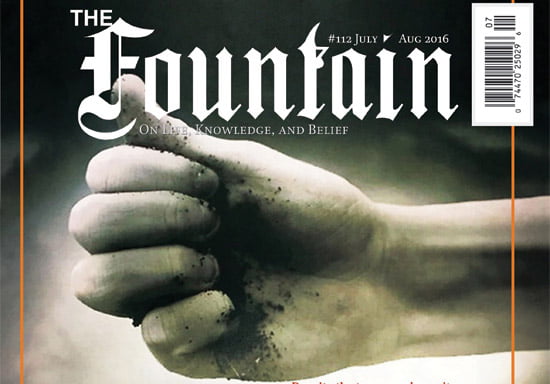
The Fountain has been recently banned by the Turkish government in Turkey. Let us try to explain why:
Once considered a beacon of hope for the Middle East, Turkey has been rapidly backsliding on issues of democracy, freedom of the press, and human rights. One would have thought this downfall hit bottom on July 15, when a bloody coup was attempted, leaving behind more than 250 dead. We mourn with the Turkish nation for those who lost their lives and wholeheartedly condemn this violent action. Yet, many questions are still hanging in the air about this weird attempt, which was, at best, unfavorably démodé and useless on all fronts – and at worst, dangerously foolish. To provide one glaring example, the plotters shut down the state-run TV network and one other private channel while there were still hundreds of other local and national networks broadcasting live. This tactic worked in 1980, when the Turkish chief of staff appeared on the only available network and made the coup announcement, but it failed terribly in 2016, when nearly every country in the world has access to hundreds of channels – not to mention the internet. This failure would have been laughable, were it not for the very real tragedy that followed the amateurish attempt.
Whatever the tactics, the coup is over; democracy, if what Turkey has is a democracy, is back. So, what is the deal with The Fountain?
The coup was followed by an immediate response from Turkish President Erdogan, who announced in the first few hours, while the coup was still underway, that Mr. Fethullah Gülen and the Hizmet movement inspired by his teachings were the actors behind the plot. The President did not present any evidence implicating Mr. Gülen or Hizmet, but Mr. Erdogan has blamed Hizmet for nearly every problem he’s encountered over the previous three years – though he has never once provided any evidence in support of his charges.
There is not space in this editorial to detail all the reasons behind Erdogan’s hatred of Hizmet, but what is clear is that his crackdown on the movement started in December 2013, when he and his close circle of ministers and family members were implicated in a massive corruption scandal. Blaming Hizmet for revealing his own government’s corruption, President Erdogan began cracking down on those he considered to be his enemies – journalists, academics, judges, and more – all under the guise of “purging” Hizmet members from civil service organizations. No evidence of wrongdoing has ever been provided; suspicion, or perhaps a mean Tweet, was enough to ruin a person’s livelihood.
After this most recent coup attempt, the crackdown took a new turn as Erdogan ordered the closure of thousands of schools, hospitals, dormitories, and charities; fired tens of thousands of teachers, doctors, and public servants; and arrested tens of thousands of citizens who, it would seem, had already been listed as associated with the movement before the coup attempt. Many newspapers, TV channels, and other publications have been ordered to close in Turkey, including The Fountain.
The President declared a state of emergency, which will last for at least three months. This has allowed him to suspend universally binding laws and conventions. Already there are reports of torture, disappearances, deaths in custody, and arrests by association. Erdogan’s witch hunt has led to large scale defamation against a group of people, and it has infringed upon the right of thousands, perhaps millions, of people to live their lives freely. Not only have free speech and the rule of law been suspended, but so has the freedom to practice business. Law abiding companies have been seized as “spoils of war.” These are not episodes of a dystopian drama, but what is being “proudly” reported by the Turkish state-run media as “democracy.” This media, like the government, is under the control of one man: President Erdogan.
The government’s crackdown has been as primitive and bloody as the coup attempt was amateurish and anachronistic. Yes, silencing The Fountain and other media outlets in Turkey may serve as another point scored against the Hizmet movement, but what is the cost of that “victory”? It runs completely against the basic principles of democracy – for democracy is not only about elections, but about freedom of speech, the rule of law, and the basic right of all law-abiding citizens to pursue a livelihood of their choosing. This kind of true, healthy democracy is dead in present-day Turkey.
Source: The Fountain Magazine , Issue 112 / July - August 2016
Tags: Defamation of Hizmet | Hizmet and politics | Military coups in Turkey | Persecution of Hizmet by Erdogan |


