The U.S. may face a choice between geopolitical calculation and human decency
Date posted: August 27, 2016
Herb Rothschild
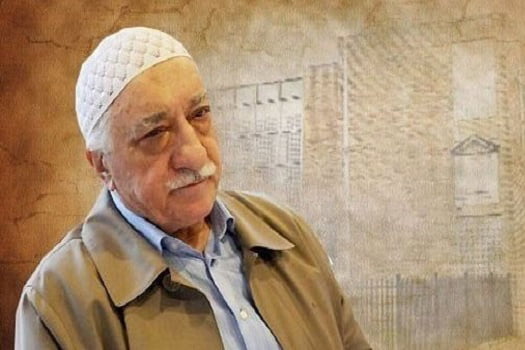
Although he’s been living in the U.S. since 1997, Muhammed Fethullah Gülen isn’t a household name here. He may soon become one. In the wake of the failed coup attempt in Turkey last month, President Recep Tayyip Erdoğan has pressured the U.S. to extradite Gülen to face charges of instigating the coup. Depending on what’s in the 85 boxes of evidence that Turkey has sent to support its request, our government may face a choice between geopolitical calculation and human decency.
Word is that only three of the boxes contain evidence gathered after the coup attempt. Erdogan has been after Gülen since 2013, when Turkish law enforcement officials and prosecutors launched investigations into widespread corruption at the highest levels of Erdogan’s administration. Erdogan’s response was to discharge all the investigators he could and accuse Gülen of being behind a plot to discredit him. That charge was self-serving, and Turkey’s notoriety for torturing those arrested on political grounds taints any post-coup evidence Turkey has sent to us.
So who is Gülen? He’s the leader of a global movement that, relative to most versions of Islam, seems moderate if not liberal. The movement has no official name but is usually referred to as Hizmet (Turkish for “service”). Its followers operate private schools and universities in over 180 countries as well as charter schools in our country. It also has an employers’ association, charities, real estate trusts, student organizations and broadcast and print media.
Such movements, especially if they’re Muslim, attract suspicion in the West. In 2008, the Dutch government began investigating Hizmet. Its conclusions were that the movement isn’t involved in terrorism or a breeding ground for radicalism, nor does it oppose integration of Muslims into secular states. In 2015, MLK’s alma mater, Morehouse College, awarded its Gandhi King Ikeda Peace Award to Gülen for his lifelong commitment to peace among nations and to interfaith dialogue. But Erdogan insists that Gülen is a terrorist and has named his movement the Gülenist Terror Organisation.
Our extradition treaty with Turkey affords Gülen judicial process, so our government can’t just hand him over. But on Aug. 10, Turkey’s state-run Anadolu news agency reported Erdogan as saying, “Sooner or later the U.S. will make a choice. Either Turkey or FETÖ.”
The U.S. has long regarded Turkey, a member of NATO since 1952, as a key military partner. Just last month Erdogan gave us permission to launch airstrikes against ISIS from its two air bases near the Syrian border. That reduces time to target from four hours to 10 minutes.
But all isn’t well with the relationship. The Turkish government views the independence-minded Kurds in their country as a threat, whereas the Kurds have been our allies, first against Saddam Hussein, then against the Sunni insurgency after Saddam’s fall, and lately against ISIS. Erdogan has become increasingly dictatorial and abusive of human rights. Then he stuck his finger in our eye by visiting Moscow this month, the latest in a series of fence-mending actions with his neighbor. The U.S. won’t break with Turkey over any of the above; VP Joe Biden just hustled over to Ankara to calm the waters. But with his demand for Gülen’s extradition, Erdogan has positioned himself to break it off with us whenever he wants.
Among the many burdens of running a global empire is that it’s one damn thing after another.
Herb Rothschild’s column appears in the Tidings every Saturday.
Source: Ashland Daily Tidings , Aug. 27, 2016
Tags: Defamation of Hizmet | extra | Fethullah Gulen | Military coups in Turkey | North America | USA |