Turkish official says 252 companies seized over Gülen links


Date posted: October 9, 2016

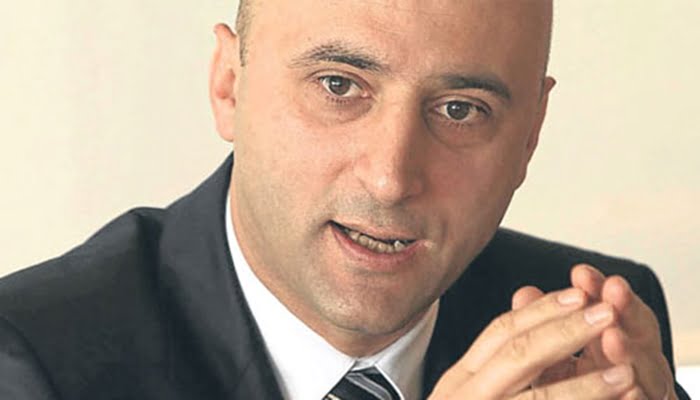
Government-run Savings Deposit Insurance Fund (TMSF) President Şakir Ercan Gül announced on Tuesday that the government has seized a total of 252 companies in Turkey.

The government has been confiscating the private property of non-loyalist businesspeople without due process on unsubstantiated charges of terrorist links.

The companies are alleged to be connected to the Gülen movement, a civic initiative based in Turkey, with the government coining the term “FETÖ” to designate the movement a terrorist organization despite the lack of any court verdict to that effect. A court last week in fact ruled out the existence of such an organization named “FETÖ.”

The government accuses the movement of masterminding a July 15 coup attempt even though the latter denies involvement, demanding credible evidence.

The government’s crackdown against the movement, however, is not limited to the period following the coup attempt since the managements of many institutions affiliated with the movement have already seized by the TMSF over the course of the past three years.

The time that the government publicly declared war against the movement coincided with allegations in 2013 of widespread corruption that implicated four then-Cabinet ministers, which were given extensive coverage by the Gülen-affiliated Zaman Media Group at the time.
Among the large conglomerates that have recently been confiscated by the TMSF are Koza-İpek Holding, Boydak Holding, Dumankaya Holding, Kaynak Holding and Naksan Holding.

In separate investigations, the government also confiscated the assets of many businessmen it considers linked to the movement.

Akın İpek, the CEO of Koza İpek Holding until the confiscation, said 18 of the group’s confiscated companies alone were worth over $10 billion.

The government also seized Turkey’s then-largest Islamic lender, Bank Asya, over its ties to the movement.

Source: Turkish Minute , October 4, 2016


Related News

Ethiopian schools linked to Turkish cleric are sold to German educators

A network of schools in Ethiopia linked to Muslim cleric Fethullah Gulen is changing ownership. The sale of the Nejashi Ethio-Turkish International Schools follows pressure from the government of Turkish President Erdogan, who is urging countries that host institutions inspired by Gulen to close or take them over.

Monday Talk with Michael Rubin on Trump, Iran and Turkey

There is a rule-of-law in the United States and a process which the president simply does not have the power to short-circuit. If Gulen is turned over, however, I suspect relations will get worse because the extradition will convince Erdogan that blackmail and bluster work.

Turkish PM asks citizens for help in witch-hunt against Gülen sympathizers

Describing Gülen movement people as “microbes,” the prime minister told citizens to “cleanse the microbes” from society as they serve the country and the nation no good. President Recep Tayyip Erdoğan had called Gülen sympathizers “viruses” long before Turkey’s massive purge accelerated in the post-July 15 era.

Prof. Nanda: Extraditing Fethullah Gulen to Turkey would erode the rule of law

Turkey’s strategic importance cannot be overestimated. However, Erdogan’s personal friendship with Trump alone cannot resolve the difficulties. Even if Trump may be willing to find a way to extradite Gulen or find another country to accept him in order to placate a NATO partner for geopolitical reasons, he must not. The damage to the rule of law would outweigh any benefit Trump hopes to gain from such an action.

Turkish coup attempt: who is Fethullah Gülen?

The Turkish government, including President Recep Tayyip Erdoğan, has pointed the finger at Fethullah Gülen – also known as leader of the Hizmet movement – as the mastermind behind Friday’s attempted coup by the country’s military. But who is Gülen? We take a look at the Islamic cleric and how he has affected Erdoğan’s presidency

Row between Turkish government and Gulen Movement takes new twist

The row between Turkey’s ruling Justice and Development Party (AK Party) and Fethullah Gulen’s Hizmet Movement, one of the most influential religious communities in the country, has taken an interesting twist after the revelation of a 2004 document. In 2004, the National Security Council proposed a clampdown on the Gulen movement (aka Hizmet), which suggested that harsh sanctions should be enforced on them.

Latest News

Turkish inmate jailed over alleged Gülen links dies of heart attack in prison

Message of Condemnation and Condolences for Mass Shooting at Bondi Beach, Sydney

Media executive Hidayet Karaca marks 11th year in prison over alleged links to Gülen movement

ECtHR faults Turkey for convictions of 2,420 applicants over Gülen links in follow-up to 2023 judgment

New Book Exposes Erdoğan’s “Civil Death Project” Targeting the Hizmet Movement

European Human Rights Treaty Faces Legal And Political Tests

ECtHR rejects Turkey’s appeal, clearing path for retrials in Gülen-linked cases

Erdoğan’s Civil Death Project’ : The ‘politicide’ spanning more than a decade

Fethullah Gülen’s Vision and the Purpose of Hizmet

In Case You Missed It

Farewell of Pak-Turk Teachers: Symbolic Burial of a Heart

Fethullah Gülen calls for ‘bridges of peace’ in Eid al-Fitr remarks

Tamsil: The inadvertent overspill of internalization

The fall of democracy and predicament of political Islam in Turkey

Junior Coalition Partner Demands Explanation Why Bulgarian Govt Turned over Abdullah Buyuk to Turkey

Der Spiegel’s recent strange attack on the Hizmet (Gulen) Movement

Turkey at the precipice

Copyright 2026 Hizmet News