PM Erdoğan continues with insults, threats against Hizmet movement
Date posted: February 18, 2014
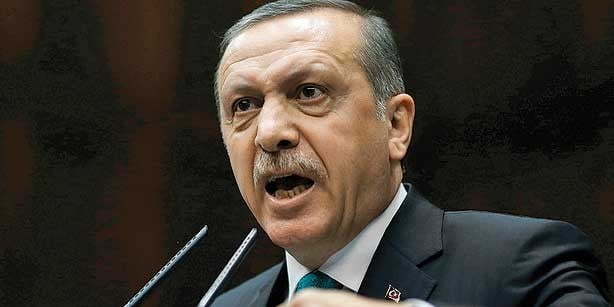
During his speech at the ruling party’s parliamentary group meeting on Tuesday, Erdoğan put the blame for several graft probes that rocked the government on the Hizmet (Service) movement, which he referred to as “parallel structure/state.”
Seeing the Hizmet as responsible for the leaking of voice recordings — which he said was illegal — about government corruption and the government’s manipulation of the media, Erdoğan said: “This is clearly treason,” with the implication that the government may launch a criminal investigation against the Hizmet movement.
In the past couple of months since the graft probe was made public on Dec. 17 last year, Erdoğan has targeted Hizmet, which he clearly saw as the driving force behind the probe. Not only four former ministers of the Cabinet, but also Bilal Erdoğan, son of Prime Minister Erdoğan, is involved in the probe.
Erdoğan put the blame on the “parallel state,” claiming that the whole thing was a plot against the government. Instead of explaining why Süleyman Aslan, manager of public bank Halkbank — who was recently released by the court pending trial as part of the graft probe — had $4.5 million placed in shoeboxes and why Barış Güler, son of Muammer Güler, former minister of interior, had TL 1.5 million ($0.7 million) in safety boxes in his house when police arrived to take them under custody, the prime minister accused media outlets, apparently those which do not follow a pro-government line, of being part of the plot and attacking the government. Erdoğan said: “Whoever has whatever voice records, videos [allegedly reveling corruption in their hand], let them reveal them.”
Referring to police operations against some Syria-bound trucks allegedly carrying weapons to opposition groups in the southern provinces of Turkey in the past couple of months, Erdoğan said: “This is a sheer spying operation. When details of the operations are revealed, people will realize the extent of the treason.”
Turkish gendarmerie forces and police intercepted a number of trucks, which turned out to be under the direction of Turkey’s National Intelligence Agency (MİT) in the past couple of months. The government officials maintained that the trucks contained only humanitarian aid for Syrians and Turkmen in Syria, but opposition parties harshly criticized the government and MİT for having been engaged in an alleged illegal transfer of weapons.
Since Dec. 17, when the graft probe was made public, time and again Erdoğan has invoked the phrase “parallel structure” and hinted that people associated with that structure are engaged in espionage and accused them of working for foreign governments. On the way back from Brussels early this week, he again told a group of reporters aboard the plane that these people “work as agents and spies who disclose state secrets.”
Erdoğan also maintained that the recently passed amendments to the Internet law do not mean the introduction of censorship on the Internet, despite a good many indications of evidence to the contrary.
“[We are not] introducing censorship to the Internet,” Erdoğan said at his party’s parliamentary group meeting on Tuesday, maintaining that the amendments regarding the Internet Law were made, based on the Constitution, to protect young people against possible abuse on the Internet.
“It is just that [with the amendments], measures have been put in place against immoral activity, blackmailing [over the Internet],” the prime minister said.
The new Internet bill, which is currently waiting for President’s Abdullah Gül’s approval, has raised concerns about censorship, because according to the amendments, the Telecommunications Directorate (TİB) head will be authorized to block, without first obtaining a court order, access to a web page on his own initiative in the event there is a request concerning the violation of the right to privacy.
The amendments also include a measure that allows for the recording of Internet users’ browsing histories and saving them for up to two years, thereby raising concerns over the government’s increasing encroachment into people’s private lives.
To refute claims that the government is introducing a ban on the Internet, Erdoğan underlined that it was during the Justice and Development Party’s (AK Party) years in power that wideband Internet access and use of computers in schools largely increased.
Erdoğan also maintained that it would be the opposition parties, main opposition Republican People’s Party (CHP) and the Nationalist Movement Party (MHP), that would most benefit from the new Internet bill. “Because it is the CHP and the MHP which were designed [in the past years] by videos [leaked over the Internet],” the prime minister said, referring to a number of videos about several MHP deputies and one about former CHP leader Deniz Baykal.
Baykal, following the leaking of a sex video in which he appeared shortly before the constitutional referendum, resigned in 2010 and Kemal Kılıçdaroğlu was elected as the new leader of the CHP. Shortly before the general elections in 2011, some sex video footages were posted over the Internet about some leading officials and deputies of the MHP, following which they had to resign from their posts.
Erdoğan also maintained that the AK Party government had blocked, soon after it was leaked, the video footage about former CHP leader Baykal. However, a leading deputy of the CHP at the time and lawyer of Baykal, Şahin Mengü, recently flatly denied that Erdoğan’s version of the story.
“When Mr. Baykal’s video footage was leaked [over the Internet], he [Erdoğan] exploited it in a nasty way right before the constitutional referendum [in 2010],” maintained Mengü. “The prime minister is lying. He [actually] did his best to exploit the video,” he added.
Source: Todays Zaman , February 18, 2014
Tags: Defamation of Hizmet | Democracy | Hizmet (Gulen) movement | Turkey |