Doğan: Gülen stood against anti-cemevi campaigns
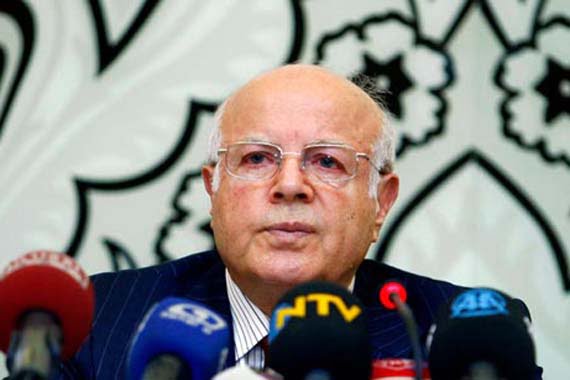
Cem Foundation President Izzettin Dogan


Date posted: April 17, 2011

FATİH VURAL, İSTANBUL

In thankful remarks to well-respected Islamic scholar Fethullah Gülen, Cem Foundation President İzzettin Doğan has said that Gülen supported the construction of cemevis (Alevi houses of worship) when signature campaigns were launched against the cemevis in some regions of Turkey.

Doğan was speaking during a panel discussion on Saturday at İstanbul’s Aydın University. Stating that nearly 2,000 cemevis have been built in Turkey in the past 50 years, he said that signature campaigns were launched to prevent their construction in the early 2000s. Noting that there were places where more than 50,000 signatures were collected, he said an interview with Gülen featured in an American daily played a positive role in slowing down these campaigns. In the interview, Gülen said cemevis should be built next to mosques and that failing to build cemevis for Alevis (Alevites) was unjust. Doğan said he witnessed that “such negative moves decreased following the interview.”

Gülen is a Turkish Islamic scholar well known for his teachings that promote mutual understanding and tolerance between cultures. One of the world’s most influential Islamic scholars, Gülen came out at the top of the list of “The World’s Top 20 Public Intellectuals” by the magazines Foreign Policy and Prospect in 2008. Now residing in the US, Gülen has pioneered educational activities in a number of countries along with efforts to promote intercultural and interfaith activities around the world.

The Alevi community is thought to have between 6 and 12 million adherents in Turkey, which has a population of more than 70 million. Alevis demand that cemevis be officially recognized by the state.

Doğan regrets that no solution has been found for problems faced by Alevis, although politicians have been discussing these issues for years. “I have explained to all political parties that there may be a Sunni-Alevi clash in Turkey, which would put the country in a difficult situation. They all agreed on that, but I failed to bring them together in Parliament to pass a law [to meet Alevi demands],” he said.

He also commented on the new version of a religious course book that includes information about Alevism. He recalled that Prime Minister Recep Tayyip Erdoğan had promised that some shortcomings in these books would soon be resolved.

The government launched an Alevi initiative last year in an effort to address problems faced by Alevis. The government’s initiative consisted of seven workshops in six months, along with the participation of 400 academics, theologians, members of civil society groups, politicians, journalists and Alevi and Bektaşi representatives. The revision of the religious course books was also among the steps taken as part of the initiative.

Source: Today's Zaman , 11 April 2011, Monday


Related News

Future of political islam: lessons from Turkey, Egypt

The eruption of protests across the country in the summer of 2013 were a result of the AKP’s increasingly authoritarian governing style. Rather than reading these protests as a public expression of discomfort — and taking the recent corruption charges seriously before declaring them a conspiracy against the government by the rival Gulen movement — the government is currently pushing legislation within parliament that will not only abolish the separation between the judiciary and the executive but which will completely consolidate the judicial and executive powers at the hands of the government.

University of Florida and the failed coup in Turkey

On July 15 in Istanbul, Turkey, soldiers closed the two bridges across the Bosphorus, the first indication that elements of the army were planning to remove the government of President Recip Tayyip Erdogan. In Ankara, the national capital, other soldiers took control of television stations and shelled the parliament building. President Erdogan had to use […]

The Gülen Movement: a modern expression of Turkish Islam – Interview with Hakan Yavuz

In a way, they [the Gülen movement] represent a new model of Islam in Turkey, at peace with democracy and modernity. This also reflects the Anatolian understanding of Islam, i.e. the Sufi conception of morality is at the centre of the movement. I would consider it as a movement based on the re-imagining of Islam and consisting of loose networks under the guidance and leadership of Fetullah Gülen.

Tamsil: The inadvertent overspill of internalization

Gülen says, “Where you are [your ego], He is not; where you are not [your ego], He is.” In the Naqshibandi Sufi order there are four steps to reaching spiritual enlightenment “forget [forsake] the world, forget the [rewards of] the afterlife, forget your ego, forget [all these acts of] forgetting,” lest being conscious of them risks making one proud. So forgetting, or in the case of tamsil, not being aware of or intending to show or guide from the outset is key.

Debunking The Gülen-Erdoğan Relationship

Yes, at one time, there had been rapprochement and mutual support, but reality and history show that such an alliance has long been overstated. The truth is, Erdoğan and Gülen only came together when Erdoğan’s stated goals reflected deeply held beliefs by Gülen. As is often the case, perception is mistaken for reality. Gülen is not Erdoğan’s biggest threat, nor was he his chief ally.

Gülen movement makes Turkey more noticeable

FATİH VURAL/TUĞBA KAPLAN, İSTANBUL A sociologist who has studied the faith-based Gülen movement of Turkey extensively has said the movement helps other countries in the world to become more aware of Turkey. Helen Rose Ebaugh, the author of “The Gülen Movement: A Sociological Analysis of a Civic Movement Rooted in Moderate Islam,” was in İstanbul […]

Latest News

Turkish inmate jailed over alleged Gülen links dies of heart attack in prison

Message of Condemnation and Condolences for Mass Shooting at Bondi Beach, Sydney

Media executive Hidayet Karaca marks 11th year in prison over alleged links to Gülen movement

ECtHR faults Turkey for convictions of 2,420 applicants over Gülen links in follow-up to 2023 judgment

New Book Exposes Erdoğan’s “Civil Death Project” Targeting the Hizmet Movement

European Human Rights Treaty Faces Legal And Political Tests

ECtHR rejects Turkey’s appeal, clearing path for retrials in Gülen-linked cases

Erdoğan’s Civil Death Project’ : The ‘politicide’ spanning more than a decade

Fethullah Gülen’s Vision and the Purpose of Hizmet

In Case You Missed It

This is too much! [About the Lies and Slanders directed to Gulen movement]

How to Interview Fethullah Gulen

Prep school debate [in Turkey] continues

Ethiopian schools put Turkey on curriculum

That Erdogan’s War With Education In Africa

Kyrgyz president: Those calling Turkish teachers terrorists should see a doctor

Samanyolu news faces cyber attack from abroad

Copyright 2026 Hizmet News