Gulen Movement: An attempt to represent Islam and Muslims positively
Date posted: March 31, 2011
Monami Haque, DHAKA
Many of today’s global problems, particularly related to politics, have been associated with Muslims or Islam. The 9/11 incident along with other acts of terrorism further nurtured feeling of hatred toward Islam and its followers. Such negativities, as portrayed by the Western media in particular, have fostered displeased feelings among the global public. Efforts to patch up such feelings however, have not been as successful in reducing the feelings of hatred and animosity among some groups. While efforts are being taken to explain that such negative actions are un-Islamic, it would probably be difficult to change the negative perceptions if the public are not provided with more convincing pictures that help mend bridges for peaceful co-existence. One such group advocating dialogues among communities and faiths, tolerance and acceptance is the Gülen movement.
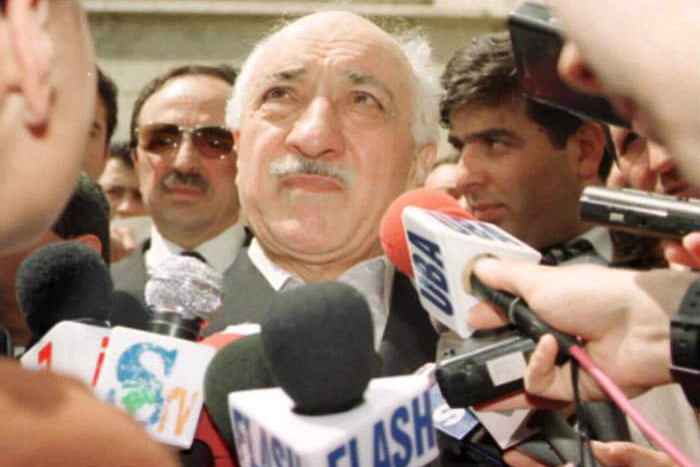
The personality behind the Gülen movement is an individual by the name of Fethullah Gülen, a former Turkish state imam who has risen to become Turkey’s most famous Islamic intellectual. As a religious intellectual and peace activist, Gülen has influenced a whole generation of Muslims globally and inspired them to play an important role in dialogue and educational projects worldwide. The good part of his writings is that it motivates people to put his thoughts into practice: the ideas do not remain theory and inspirations but become a charter or action-plan implemented by members of the movement.
Douglas Frantz of the New York Times said, though he is little known in the United States, for many years Mr. Gülen was an unofficial ambassador for Turkey who promoted a moderate brand of Islam. He preached tolerance, meeting with Pope John Paul II and other religious and political leaders, among them Turkey’s prime ministers and presidents. Gülen’s message is well-received in the West partly because the message from other Muslim networks is often not clear.
Gülen is an outstanding personality with thoughts that are acceptable to the masses. Apart from lectures and speeches, Gülen is a prolific writer who has authored more than 60 books related to Islam. In a paper entitled “What made the Gülen Movement possible” Mustafa Akyol describes Fethullah Gülen as having a vision that would take him and his followers to a point where no other Muslim community even dreamed of.
As a religious intellectual and peace activist, Gülen has inspired a whole generation of Muslims worldwide to play an important role in charitable and educational projects and foundations. At the same time, Gülen is able to create positive relation between the West and the Muslim world for the basic reason that his aim has always been to bring out the universal mission of Islam, which is to serve people regardless of faith, colour, or national origin. According to the Economist Gülen has become one of the world’s most important Muslim figures – not only in his native Turkey, but also in a quieter way in many other places: Central Asia, Indochina, Indonesia and Africa.
The Gülen movement started off in the 1970s with Gülen and his circle involved in community building. Beginning with holiday camps, the group sought ways to provide an Islamic education which would complement the secular education that the state was providing. Beginning with a small circle of members among his mosque congregation in Izmir, Gülen’s ideas have crystallized into a movement that has become a significant phenomenon in Turkey and now globally. Although the movement had only started establishing schools and student hostels in the late 80s in Turkey, the movement has now established more than 500 schools in more than 50 countries covering Europe, Asia, America, Africa and Australia, plus six universities in Turkey and Central Asia. In this part of the world (South East Asia) these Turkish-run schools, or sometimes referred to as Gülen schools has been established in Indonesia, Cambodia, Myanmar, Thailand, and the Philippines.
Following the collapse of the Soviet Union in 1994, the movement began to move abroad by setting up educational institutions and expansion of business into the Turkish speaking ex-Soviet republics in Central Asia. It then moved to other successor states of the Soviet Union, the Balkans and finally the West. The movement expanded its activities into the US in the later part of 1990s. According to the International Herald Tribune, the shift was partly associated with Fethullah Gülen’s decision to move to the US in 1997 to escape harassment at home, and seek treatment, and influence throughout the world.
One of the outstanding aspects of the movement is that it does not only have a huge size of followers and sympathizers but they have very strong attachment to Gülen’s ideas. Hence, the movement is not only very rich in resources but these are administered by fully committed followers and supporters.
Although there is no official figure to support the claim, the Gülen movement community is said to have over six million followers. It can be seen that the movement is now focusing on globalised service projects, especially in the field of education and interfaith and intercultural dialogue.
The strong support by the business circle in Gülen movement is well-reflected in a number of ways. For example, the community controls one of the fastest growing financial institutions in Turkey, Bank Asya (formerly known as Asya Finans). Similarly, affiliates include those in manufacturing enterprises (Akbulut’s textile business, is Turkey’s second largest), and automobile industry. Calik, one of Turkey’s top entrepreneurs, holds the largest share of Bank Asya which belongs to the Fethullah network.
In a recent research poll that sought to find the world’s leading 100 thinkers, Fethullah Gülen has been voted the world’s top intellectual. Gülen, who is considered an Islamic scholar, won a landslide triumph after the survey — which is organized by the British magazine Prospect and Foreign Policy, a US publication — attracted more than 500,000 votes. Prospect’s editor, David Goohart, who admitted to not having previously heard of Gülen said the result flagged up significant political trends in Turkey. “The victory of Gülen draws attention to the most important conflict in Europe, played out in Turkey between the secular nationalist establishment and the reforming Islamic democrats of the Justice and Development Party,” he said. Similarly, a Reuters report described Gülen as an advocate of moderate Islam rooted in modern life although it also raised the question whether he is a threat or benefactor.
Referring to the same poll, the New York Times has this to say about the man: But in contrast to the staunchly secularist Ataturk, Gülen — who has a reported 5 million followers, and is an influence on Turkey’s governing Justice and Development Party — has spent his life promoting interfaith dialogue and preaching the reconciliation of science and modern institutions with religious faith. Gülen’s teachings are generally characterized by his emphasis on religion and science as complementary, not contradictory.
Ehsan Masood writing for Prospect magazine had this to share: What Gülen says is that you can be at home in the modern world while also embracing traditional values like faith in God and community responsibility—a message which resonates strongly in Turkey. Similarly, the movement seemed to be resolved to influence society and politics with a tolerant, conservative and traditional Islamic faith. Anyway, Ataturk, the father of the Turkish Republic, was elected Time Magazine’s Man of the Century back in 2000.
Although a broad spectrum of Gülen’s ideas has been discussed in conferences and forums or made available in a wide range of publications, his peace efforts is still less known. Much of Gülen’s works are actually centered on constructing a culture of harmony and peace by founding institutions that encourage intercultural dialogue and understanding. Yet one major observation that can be made in this movement is that, despite the movement’s apparent achievements globally, media’s positive representation Islam and Muslims is still comparatively modest, but the hope is that it will improve as the Gülen movement gains recognition across the globe.
The writer is Junior Lecturer, Department of Media and Communication, Independent University, Bangladesh (IUB)
Source: Daily Sun , 29 March 2011
Tags: Hizmet (Gulen) movement |