Hizmet movement to address Armenian issue
Date posted: March 29, 2013
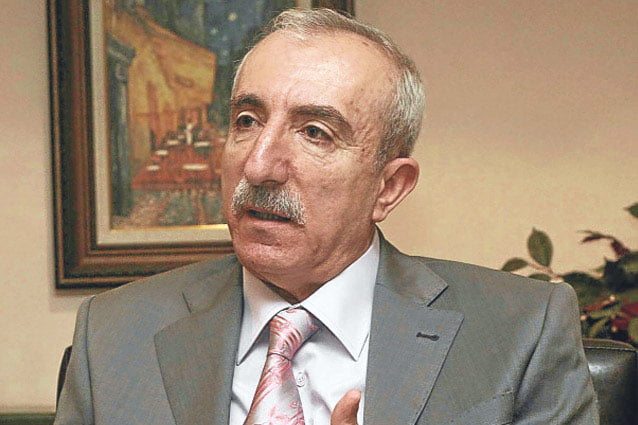
Orhan Miroğlu
it seems the Hizmet movement is the only Turkish civilian movement, which would positively contribute to the normalization of Turkish-Armenian relations in the US, where the Armenian diaspora is considerably strong. The Armenian and Kurdish issues serve as a test for not only new Turkish politics, which aim to shape Turkey’s future, but also the Gülen movement.
The impression I got while speaking with friends who are also members of the Hizmet/Gülen movement and living in Chicago, where I have been invited for the opening ceremony of a new cultural center established by Turkish American Society of Chicago (TASC) on March 24, is that it seems the Hizmet movement is the only Turkish civilian movement, which would positively contribute to the normalization of Turkish-Armenian relations in the US, where the Armenian diaspora is considerably strong.
The Armenian and Kurdish issues serve as a test for not only new Turkish politics, which aim to shape Turkey’s future, but also the Gülen movement.
During the last decade, the efforts of the Gülen movement to solve the Kurdish issue have positively contributed to the solution process.
The Abant Platform, which has since its establishment in 1998 tackled pressing issues facing Turkey, has held meetings in Diyarbakır and Arbil, and brought the many different groups, academics and intellectuals holding different opinions about the Kurdish issue together. The reality that Kurds and Turks follow the same religion and share a common history reinforced the movement’s efforts.
I believe that any assessment of the progress that we have made toward the settlement of the Kurdish issue will be flawed if done without considering the contributions of the Hizmet movement to the settlement of the Kurdish issue. The contribution of the Hizmet movement, which has strong ties with both Turks and Kurds, for the recognition of the Kurdish identity by the state and the establishment of a new vision toward the Kurdish issue cannot be compared to that of any another civil society movement.
The Gülen movement is now preparing to contribute positively to another issue much more complicated than the Kurdish issue: the Armenian issue.
Unfortunately, the official relations between Turks and Armenians have been unable to reach the desired level.
There has been no major change in the Armenian diaspora’s attitude towards the 1915 incidents.
Moreover, the official Turkish thesis about 1915 incidents is still being protected. And this prevents us from confronting our history.
We will probably witness the Hizmet movement, which has already become a global civil society movement, contribute to the solution of the Armenian issue and the establishment of dialogue between the two sides.
I believe the efforts of the Hizmet movement in many countries, and especially in the US, will be mentioned frequently while discussing the confrontation with the incidents of 1915 in 2015.
This will be an important and new development.
Just as we managed to normalize the extremist reactions concerning the Kurdish issue with the help of civil movements, the same can be applied to the Armenian issue. If a movement which has originated from Anatolia and spread to the entire world initiates a process for the settlement of the Armenian issue, we can be optimistic and hopeful about the solution.
The new TASC cultural center reflects the American society’s cultural and religious diversity.
The Niagara Foundation has a special place in the Hizmet movement’s works.
The Niagara Foundation organizes forums which are open to the public and attended by distinguished speakers to shed light on agenda items in the US.
During the last 10 year, the foundation has also invited thousands of people to Turkey and paved the way for the formation of a cultural and social tie between the two societies.
The picture that we witnessed during the opening ceremony of the cultural center was a reflection of this meaningful fusion of the cultures. Among the participants of the ceremony were distinguish politicians, state bureaucrats, and representatives of various religions and beliefs.
It can also be said that young academics who are also members of the Hizmet movement will assume important positions in US media and academic circles and obtain a certain representative power in the future. I believe this is the general direction of the events. This is a great advantage for Turkey.
The Hizmet movement has strong relations with the US society. If they can use their strong relations with the US society to form a basis for dialogue with the Armenian diaspora in the US and outside the US, we can make very important progress in confronting the Armenian issue.
However, we have to show that we are ready to share their pain.
Source: Today’s Zaman March 29, 2013
Tags: Armenian issue | Hizmet (Gulen) movement | Kurdish Issue |