The last of the ‘LASTmen’ and the new constitution
Date posted: March 14, 2012
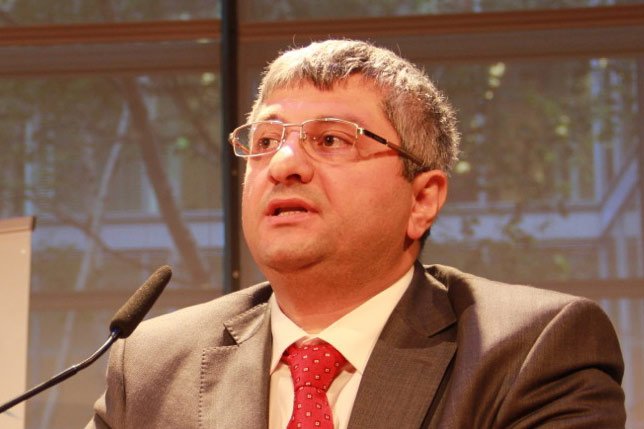
Dr. Ihsan YILMAZ, 14 March 2012
One of the most hotly debated topics of the last Abant Platform was the Directorate of Religious Affairs. There are many sides to the issue. Those who do not care about religion call for the Directorate of Religious Affairs’ total abolishment. Some advocate maintaining the status quo. I understand the Kemalists who are happy with the 1982 Constitution and do not want any change to the Kemalist Constitution. However, some religious people’s staunch advocacy of the status quo requires explanation.
| The Kemalists’ ideal model is encapsulated by the acronym LAST, which is similar to WASP (White Anglo Saxon Protestant). LAST stands for Laicist, Atatürkist, Sunni, Turk. Laicist does not mean a secular minded person, it refers to a person who is aggressively secularist and is not pleased with public manifestations of Islam even though he does not care much about other religions’ public visibility. To be a first class citizen one needs to be Sunni and an ethnic Turk. All others outside of these four parameters are not fully trusted by the Kemalists and their state. Non-Muslims, practicing Muslims, non-Atatürkists such as leftists and liberals, Alevis and Kurds have always been discriminated against by the Kemalist state whenever these identities become manifest in the public sphere. |
The Directorate of Religious Affairs is a remarkable example of strange Kemalist laicism. While on the one hand the Kemalists argue that religion and state issues must be separated, on the other hand they want the state to fully control Islam. The Directorate of Religious Affairs was created on the same day the chief of the General Staff of the military was. This constitutional state institution employs more than 80,000 imams. In Turkey, religious congregations, brotherhoods and communities are not allowed to have “civilian” imams. Until very recently the text for the Friday sermons was written in Ankara, and all the imams in Turkey had to read the very same text. Research has shown that these texts often referred to “love of the country” more than they referred to “love of God.”
The Kemalists’ ideal model is encapsulated by the acronym LAST, which is similar to WASP (White Anglo Saxon Protestant). LAST stands for Laicist, Atatürkist, Sunni, Turk. Laicist does not mean a secular minded person, it refers to a person who is aggressively secularist and is not pleased with public manifestations of Islam even though he does not care much about other religions’ public visibility. Atatürkism is a softer version of Kemalism and as long as you love Mustafa Kemal Atatürk, deeply respect him and do not think he made mistakes, you are considered an Atatürkist. You do not have to be a proactive and ideologically minded Kemalist. To be a first class citizen one needs to be Sunni and an ethnic Turk. All others outside of these four parameters are not fully trusted by the Kemalists and their state. Non-Muslims, practicing Muslims, non-Atatürkists such as leftists and liberals, Alevis and Kurds have always been discriminated against by the Kemalist state whenever these identities become manifest in the public sphere. If you were a “LASTman” or hid your real identity you would be tolerated to a certain extent. The state has worked hard to socially engineer these perfect citizens.
Kemalists have tried to create a certain version of Turkish Islam that I will call “Lausannian Islam.” Lausanne refers to the Lausanne Treaty signed by Turkey and the victors of World War I. It is in a way the founding document of the modern Turkish state. By using this term I do not only underline the fact that the Kemalists tried to create a version of Islam within Turkey as defined by the Lausanne Treaty, I also want to imply that by deferring to the spirit of the Lausanne Treaty, this Turkish version of Islam jettisoned Islam’s transnational dimensions, ranging from an understanding of universal religious brotherhood of the Ummah to having a symbolic caliphate for all Muslims. Lausannian Islam did not care about interreligious dialogue until Fethullah Gülen and the Hizmet movement took the initiative in this area. Lausannian Islam envisaged a Muslim type that was statist, Turkish nationalist and Atatürkist. A good Lausannian Muslim is one who does not have any transnational cultural aspirations, who believes the state, not the ulema [Islamic scholars] or the Sufis, knows best about religion. A Lausannian Muslim practices his religion either privately in his home or in a mosque, but not in the public sphere.
The Directorate of Religious Affairs was an instrument used to create Lausannian Muslims. However, because the overwhelming majority of its staff is not Kemalist, they have resisted Kemalist desires to a great extent. The Directorate of Religious Affairs has of course evolved over time, but it has remained part of the state. It is better to have an independent and civilian Directorate of Religious Affairs. The Justice and Development Party (AK Party) rule will not last for 1,000 years, so imagine what could happen to the Directorate of Religious Affairs if the Republican People’s Party (CHP) comes to power.
I believe that we are all children of “Kemalistan” and we are all “Kemals” in one form or other. Our latent identities are Kemalist, even though our manifest identities may be liberal, leftist, religious or so on. Some practicing Muslims’ staunch defense of the current constitutional position of the Directorate of Religious Affairs reflects that the borders between these identities are fluid. In some rare cases religious Kemals even act and think like “LASTmen”, showing the success of the Kemalist indoctrination.
Source: Today’s Zaman http://www.todayszaman.com/columnist-274316-the-last-of-the-lastmen-and-the-new-constitution.html
Tags: Hizmet and politics | Journalists and Writers Foundation | New constitution in Turkey |