Erdogan’s Failed Crusade: The World Rejects His War on Hizmet
Date posted: February 11, 2025
Indigenous African knowledge has it that when you tell a lie, it normally does not take long to dawn. As a warning against cheating, my mother, who died thirty-one years ago this year (1994), used to admonish us: “You do it in my absence, and what happens next is I see it all.” In the holy books, we read, “Nothing will remain unknown on the Day of Judgment.” God is the Omniscient. In our everyday dealings with others, we are called upon to appreciate that one can cheat people (and get away with it), but one cannot cheat all the people all the time. Lies have got short legs, it is said in some cultures, etc. In other words, truth is neither negotiable nor subject to time. It is absolute and does not change.
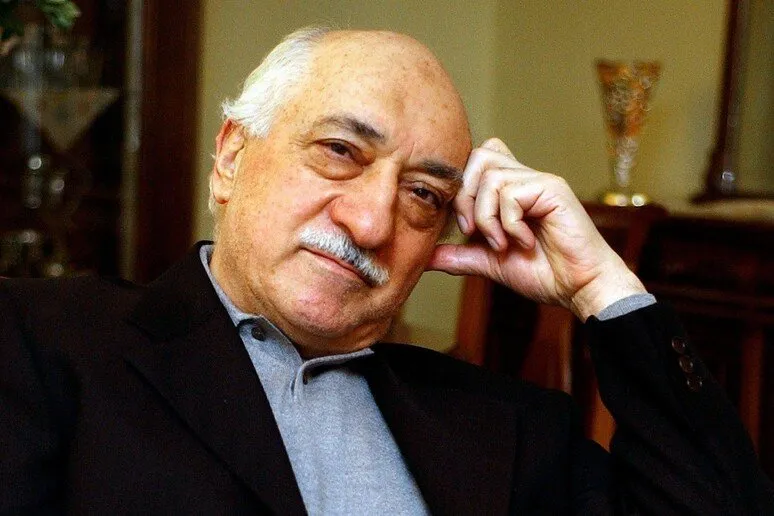
All these aspects rose up in my mind just over three months after the death of pro-education, interfaith dialogue, and non-violence champion, Turkish Muslim cleric Fethullah Gulen, at 83 years in U.S. self-exile, when a report on the Gulen Movement (branded Hizmet—Service) landed on my desk in Dar es Salaam, Tanzania, East Africa, dated Belgium (Europe), January 2025. A product of Solidarity With Others, it was tagged “The Gülen Movement: Challenging Turkey’s ‘Terrorist Organization’ Narrative Through Global Perspectives.” This tallied with my very first observation after I read through one narrative in 2019. I told a friend, then living in exile, that the speed at which victims of arrest had been made could not have been that fast, thorough, and accurate without a list prepared prior to the alleged coup.
This time, thrice from cover to cover, I read through the report—a 37-page, seven-chapter document, accompanied by 66 references and six sites recommended for further reading. The first reading rewound old memories mentioned in the introductory paragraph above. The second summarized what Turkey had all along been working on very hard—to portray the Gulen Hizmet (Service) Movement to the world as terrorist. The third confirmed the world disassociating itself from Turkey’s narratives, leaving one wondering, for example, where Turkey’s President Recep Tayyip Erdogan had plucked the courage from to demonize the life of Gulen in response to his death in exile on October 21, 2024.
This article is not meant to write a review of the report—far from it. Its purpose is to read between the report’s lines and, from the world’s perspective, establish what is or is not terrorist about the Gulen Movement. Between the Gulen Movement and Erdogan’s government, which institution is closer to qualifying for being classified as terrorist? And at the end of the day, judging from what the world observes, between Gulen and Erdogan, who fits in better for the terrorist designation, or, as Erdogan put it himself, a demon in human form?
Reading from the report’s history trail, the Gulen Movement is recorded as an institution of a global network of schools, hospitals, and charitable organizations targeting education and social development. On the ideological front, it advocates Islam well synchronized with modern democratic values, scientific progress, interfaith dialogue, and an emphasis on education for tolerance and addressing social issues through non-political means.
Then follows a development that cannot pass the consequence and subsequence logic test. In May 2016, the Turkish government designated the Gülen Movement as terrorist, giving it the tag name “FETÖ” and blaming it for a coup (planned?) to take place two months later! Furthermore, there is evidence proving that the manhunt, arrest, and dismissal of more than 100,000 civil servants—on top of individuals perceived to be linked with Hizmet—started before the coup. So, it could not have been a consequence.
On good governance, the report zooms in on issues ranging from human rights violations to politically motivated prosecutions, embodying observations from the media and human rights organizations, pinpointing procedural failures and legal flaws that provide the international community’s across-the-board suspicion on Turkey’s squint look at the Gulen Movement.
Whichever way one looks at what is reported happening on the ground globally, Turkey’s baseless campaign for criminalizing the Gulen Movement has no escape tangent. It has failed. The question is: “How?” A global media cross-section reveals both Gulen and his Movement as well-organized and focused on education and interfaith dialogue, besides advocating for democracy and science.
The report makes special reference to what Jon Pahl states in his book “Fethullah Gulen: A Life of Hizmet. Why a Muslim Scholar in Pennsylvania Matters to the World.” He is quoted as saying:
“With reasonable certainty, I can clarify that individuals inspired by Mr. Gülen… collectively known in the most accurate scholarly designation as the Hizmet (service) community, have neither constituted a ‘parallel state’ with aims to overthrow Turkish democracy, nor evidenced the discourses and practices of an armed terrorist organization. In fact, quite to the contrary, the individuals inspired by Mr. Gülen to engage in Hizmet (service) have consistently evidenced factually verifiable activity: to support literacy by building schools around the globe; to engage in the practice of a principled capitalism that lifts people out of poverty; and to sponsor interreligious dialogues to strengthen civil society, the rule of law, and democratic participation. These are the practices of people dedicated to nonviolence and peace-building.”
I participated in a well-attended talk about the book that took place in Dar es Salaam, Tanzania, on a weekend, when most people were supposed to be resting at home instead of coming to the city center. A message that could be appended to the global report’s findings is that Turkey has had its own intentions regarding the real nature of the Hizmet Movement and Gulen, so as to take him for somebody who had the ambition of overturning the Turkish government and yet remained celibate—not even the head of a single family unit. For what?
No wonder, even at the pinnacle of world institutions like the United Nations (UN) per se and its Security Council, there has never been a terrorist scent in Hizmet. These institutions have, instead, mainly been preoccupied with Turkey’s human rights violations and actions against alleged Gülenists, as laid bare by the United Nations High Commissioner for Human Rights (OHCHR) reports. The Council of Europe has expressed concerns over Turkey’s use of transnational repression tactics against alleged Gülen supporters. The Parliamentary Assembly of the Council of Europe (PACE) has also condemned Turkey’s actions, emphasizing the misuse of counterterrorism measures to persecute individuals without substantive evidence. A leaked EU intelligence report in January 2017—six months after the alleged coup—concluded that Islamist forces, including the Gülen Movement, were not behind the attempt, suggesting instead that the Turkish government used the coup to eliminate political rivals. The question that crops up is: “Whose coup was it?” Something that is not the topic of this article.
Contrary to what one would have expected and the way Erdogan presented himself—or would have liked to—global research and analysis found only one resolution from the Organization of Islamic Cooperation (OIC) Council of Foreign Ministers in support of Turkey’s accusations, but depicting the need for further research. Held in Tashkent, Uzbekistan, the resolution strongly condemned the coup attempt (naturally) and, in ‘respect,’ designated the “Fethullah Terrorist Organization” (FETO) as responsible for orchestrating the event. However, Turkey’s persistent efforts to have the OIC officially recognize the Gülen Movement as a terrorist organization were ultimately unsuccessful. Eventually, the OIC chose to abandon Erdogan in favor of the principles outlined in the United Nations Charter and related human rights frameworks.
For those who understand the OIC, this should sound like Roma locuta, causa finita. It’s virtually doors closed for Turkey’s efforts to declare the Gulen Movement terrorist and demonize its founder and leader, Fethullah Gulen. But why is the world not responding accordingly? Why has the world abandoned the interests of the Turkish people in favor of Erdogan? That is the question.
Author: FELIX KAIZA
Source: Politurco , February 4, 2025
Tags: Fethullah Gulen | Hizmet (Gulen) movement |