
Filling the gap left by Gulen
Date posted: October 30, 2017
Ulrich von Schwerin
The crushing of the Islamic Gulen movement has left a gaping void in Turkey that other organisations are now rushing to fill, with people jostling for the tens of thousands of now-vacant jobs. Conservative foundations and religious orders stand to benefit most from the sell-off.
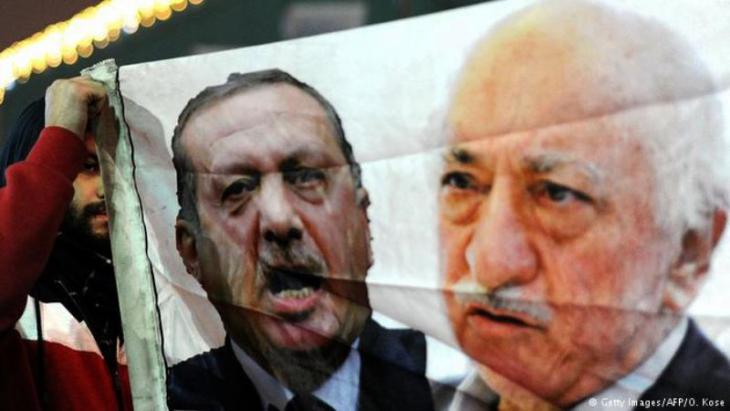
With schools seized, residential homes nationalised, newspapers closed and tens of thousands of supporters behind bars, things do not look good for the movement led by the Islamic preacher Fethullah Gulen, which is being held responsible for the failed military coup against President Recep Tayyip Erdogan over a year ago. This fraternity, which was once so powerful in Turkey that it was simply known as the cemaat (Islamic community or group), has now been branded a terrorist organisation and is banned. Its structures have been smashed, its assets seized and its leaders have either been imprisoned, fled the country, or have had warrants issued against them.
Erdogan and Gulen shared the goal of creating a “devout generation”. Yet despite their similar outlook on life and objectives, the Gulen movement never merged completely with the AKP. However, Gulen was never willing to subordinate himself to Erdogan, which is why the two men fell out in 2013 and the informal coalition with the Gulen movement collapsed.
What remains is a void that other organisations are now rushing to fill. According to Turkish sociologist Mehmet Ali Caliskan, since the smashing of the Gulen movement in Turkey and the banishment of its supporters from the civil service, a race to fill empty posts and grab seized resources has begun. Caliskan says it is still impossible to say how it will all end. Both the nationalists and a range of conservative Islamic fraternities, he says, hope to bring state institutions completely under their control. It is a “very unstable and confusing situation” that cannot last, says Caliskan.
On the one hand, this power struggle is about filling the posts that became available when Gulen supporters were expelled from the civil service. More than 140,000 employees in administrations, the judiciary, the military and the education sector have been relieved of their posts by emergency decree since the failed coup attempt. The government accuses most of these former employees of having links to the Gulen movement. Others are accused of belonging to the PKK guerrillas or other armed, banned groups.
A redistribution of assets
On the other hand, it is about the distribution of the Gulen movement’s assets that have been seized since the attempted coup. In the immediate aftermath of the failed coup, 1,043 schools, 1,229 associations and foundations, 35 hospitals and 15 universities were closed by decree. The newspaper “Zaman” had already been taken over by the state. By July 2017, almost 1,000 companies had been seized, including major companies such as Boydak and Koza-Ipek as well as Bank Asya, which has close links to Gulen.
In total, more than eleven billion dollars in assets passed to the state. These assets are now being managed by the state-run fund TMSF, which has been tasked with selling the companies. The intention is that the proceeds from the sale will flow into the state’s coffers. Before this can happen, however, their seizure must be rubber-stamped, which can take some time – even in Turkey’s politicised judicial system. While the fund is supposed to sell the companies and property to the highest bidders, there are suspicions that companies and foundations that are closely allied with the ruling AK Party will be given preferential treatment.
Rewarding the faithful
Two of the biggest beneficiaries are the Turgev and Tugva foundations, which have considerably extended their network of residential homes and schools since the break-up of the Gulen movement in Turkey. Turgev was founded by Erdogan in 1996, and his son Bilal and daughter Esra are still on its board to this day. Tugva also has close links to the AKP. According to media reports, they have obtained several Gulen residential homes. It is also said that they have purchased land from the state for a very good price.
As Caliskan explains, the ultra-nationalists are not at all happy about the way the orders are penetrating the education sector. Today, says the sociologist, some ministries are already controlled by brotherhoods; others by the nationalists. Dividing up the government between rival groups is not a “sustainable or consistent strategy,” he says. What the outcome of this latest power struggle will be remains to be seen.
Other key players in the wrangling for jobs and resources are conservative orders such as the Menzil and the Suleymanci. While the Gulen movement was the most powerful religious fraternity in Turkey, it was certainly not the only one. Indeed, there are a whole range of other cemaats, which, like the Gulen movement, run their own schools, homes and media. Most of them are offshoots of Naqshbandi-Khalidi, a particularly orthodox Sunni Sufi order.
According to one Istanbul-based sociologist who asked to remain anonymous, the cemaats are the AKP’s natural allies. After all, Erdogan and many other AKP politicians started out in the Iskenderpasa lodge, an offshoot of the Naqshbandi order that has considerable political influence. Since breaking with Gulen, Erdogan has relied on Sufi orders such as the Suleymanci or the Ismailaga cemaat to plug the gaps in the education system.
The dream of a ″devout generation″
Erdogan never had enough of his own people to control the state, explains political scientist Svante E. Cornell in Stockholm. This is why, he adds, when he came to power, Erdogan allied himself with Gulen, who had been building up a network of homes, schools and institutes of private tuition since the 1960s. The graduates of these institutes were devout and had a modern education – the ideal people to fill posts in the administration, judiciary and police in Erdogan’s Turkey.
Erdogan and Gulen shared the goal of creating a “devout generation”. Yet despite their similar outlook on life and objectives, the Gulen movement never merged completely with the AKP. Unlike the AKP, its roots were not in the Naqshbandi, but in the Said Nursi order. Above all, however, Gulen was never willing to subordinate himself to Erdogan, which is why the two men fell out in 2013 and the informal coalition with the Gulen movement collapsed.
Svante E. Cornell believes that the Turkish government has been right to roll back the influence of the Gulen movement. After all, says the political scientist, the Gulen movement is a “sect with a hidden agenda” that demands absolute loyalty from its supporters.
He goes on to say that the problem now is that the fraternities that are now manoeuvring themselves into the gap left by the ousted Gulen movement are even more conservative. If Erdogan wins through, warns Cornell, the mentality of Turkey’s future leadership elite will be “absolutely Middle Eastern and anti-Western.”
A coalition of cemaats
This is particular noticeable in terms of the Ismailaga cemaat, whose influence in the education system is currently growing. Its supporters seek to live their lives according to the example set by the Prophet, which is why the men have beards and wear turbans, cloaks and baggy pants, while the women cover themselves with black veils. In its heartland, the Istanbul district of Fatih, one can buy not only the religious writings of the order’s founder, but also alcohol-free perfume and twigs of the kind the Prophet used to brush his teeth.
Today, the AKP is “a coalition of cemaats”, says the Istanbul-based sociologist who wishes to remain anonymous. Erdogan acts as its senior manager, doling out jobs and resources and trying to maintain a balance of power that will ensure that no single fraternity ever becomes too powerful again. However, the problem is that since his split with the Gulen movement, he has entered into an alliance with the ultra-nationalist MHP in order to shore up his power.
As Caliskan explains, the ultra-nationalists are not at all happy about the way the orders are penetrating the education sector. Today, says the sociologist, some ministries are already controlled by brotherhoods; others by the nationalists. Dividing up the government between rival groups is not a “sustainable or consistent strategy,” he says. What the outcome of this latest power struggle will be remains to be seen.
Source: Qantara.de , October 28, 2017
Tags: Fethullah Gulen | Hizmet (Gulen) movement | Persecution of Hizmet by Erdogan | Turkey |


