Journalist reveals inspiring story of Turkish schools in book

Date posted: January 20, 2015
SERVET YANATMA / ISTANBUL
Ankara-based journalist Mesut Çevikalp has written a book about the little-known stories of Turkish schools opened by Turkish entrepreneurs in various parts of the world, including the moving and hardship-laden stories of education volunteers working at these schools, most of whom left a better life in Turkey with the hope of promoting universal values of peace, dialogue and peaceful coexistence with others.
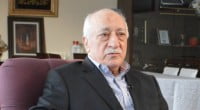
It has been nearly a quarter of a century since the first Turkish school was opened in the Nakhchivan Autonomous Republic in 1991. Now there are more than 1,000 schools in 160 countries. They are funded by generous Anatolians who are encouraged to open these schools by Turkish Islamic scholar Fethullah Gülen.
The Turkish government and President Recep Tayyip Erdoğan declared war on the faith-based Hizmet movement after a graft probe went public in December 2013 because then-Prime Minister Erdoğan saw the probe as an attempted coup masterminded by the Hizmet movement to overthrow his government. The Turkish schools have also received their share of criticism from the ongoing defamation campaign against individuals and organizations affiliated with the movement inspired by Gülen.
Despite the fact that many government figures, and even Erdoğan himself, had earlier praised these schools on multiple occasions for their success and promotion of Turkish culture abroad, Erdoğan last year ordered Turkish diplomats working abroad to lobby against these schools in their host countries.
Çevikalp said as a journalist who closely follows these schools, having attended the groundbreaking ceremony of many, and their self-sacrificing teachers, he was very much offended by Erdoğan’s smear campaign and decided to compile his impressions from his visits to these schools in a book.
Titled “Barış Okulları” (Schools of Peace), the book will be launched this week at the same time as President Erdoğan visits Ethiopia and Djibouti, with his desire to see the closure of Turkish schools in Africa being at the top of his agenda.
Çevikalp’s book will show readers how Turkish schools and teachers have touched the lives of people in foreign lands through education.
How did you come up with the idea to write this book?
I did not actually have such a plan at first but when I listened to then-Prime Minister Recep Tayyip Erdoğan telling a meeting of ambassadors to defame these schools in the countries where they are commissioned and label them as being part of an illegal network, I thought of the Turkish schools I have seen abroad since 2003. I was so heartbroken by these remarks, thinking of the self-sacrificing teachers working at those schools and the generous people of Anatolia who fund them. I took notes about the first teachers who migrated to foreign countries to work at these schools. All of a sudden I thought I should do something to defend those desperate people or at least show the real nature of the schools. The book provides information on schools in 25 countries on five continents. I attended the groundbreaking ceremonies of half of these schools and took notes of my impressions.
It looks like your preparations for the book began long ago. So is it wrong to see the book as a response to Erdoğan’s defamation campaign?
The book does not have such a mission but the heavy accusations about these schools just prompted me to bring the stories of those kind-hearted teachers to people’s attention. My intention was to allow the people to know about their stories, which have so far not been spoken of much. People know that there are 1,200 Turkish schools in 160 countries but they don’t know the human stories behind the schools.
Over the past couple of years, some documentaries and movies have been shot about the schools. What makes your book different from them?
The stories in my book are real life stories — some experienced and told by me while some are by the people involved. The people behind the Turkish schools are very generous and self-sacrificing, so they were not very eager to tell their stories. That’s why not much has been written about them so far. They just sow seeds with an aim to reach out to people and establish schools to this end. They do this only for the cause they believe in.
There is no mention of the accusations in your book. It seems you just did not want the accusations to sully your book.
You are right. Those accusations only reflect the psychological mood of Erdoğan and they reminded me of how [former Turkish Prime Minister Bülent] Ecevit and a former Somali prime minister praised these schools. Until today, no state official has made a single negative comment about these schools either in Turkey or abroad because there is nothing wrong with them. These schools just aim to work for love, dialogue and humanity. Since Erdoğan’s war on these schools hurt me deeply, I want to bring together stories from these schools.
Why did you name your book “Schools of Peace”?
In essence, these schools exist to promote peace, love and dialogue. The first group of teachers who went to Afghanistan tried to spread a message of peace even in the midst of a war. In addition, when I visited these schools abroad, I saw that their names all connote peace, such as light, horizon, dialogue, etc.
Why are these institutions called “Schools of Peace?” What kind of education is offered there to name them this way?
These schools bring together students from various circles, financial situations, ethnicities and colors in the same classroom. This is their main characteristic. Poor students are attracted to these schools thanks to the scholarships being offered, while children of wealthy families are attracted to the high-quality of the education. Classrooms are like the General Assembly of the United Nations; there are various colors and cultures.
How do you think these students will contribute to world peace?
These schools were the subject of a debate at a UN-backed conference in Ethiopia. We are talking about nearly a quarter of a century [since the first of these schools opened]. The graduates of these schools get good positions in their countries thanks to their quality education and language skills. Having internalized dialogue, peace and peaceful coexistence with others at these schools renders them very successful in their jobs. Something noted by the UN at the meeting: Since the schools basically act on values of peace, dialogue and peaceful coexistence with others, their graduates are more peace-loving and open to dialogue in the global sense. This effect of the schools has begun to be seen. This is a fact that has been tested and confirmed for 25 years.
Can you give an example?
Take a look at the strained relations between India and Pakistan, and Afghanistan and Pakistan; the tension normally has repercussions among the peoples of these countries. However, students who study at various Turkish schools in India, Pakistan and Afghanistan say goodbye to each other in tears at the end of the Turkish Olympiads. We also see the same picture in the Science Olympiads. They don’t have any mission to work for a political solution. Since the students raised in these schools are typically against war and weapons, perhaps they will gradually lay the groundwork for the settlement of political crises.
How would you define the graduates of these schools? What are their characteristics?
The common denominator of the schools is universal values, democracy and peace. When you sit and talk to the graduates of these schools, you see these values.
There are many international schools around the world. What in your opinion makes Turkish schools different from the others?
What makes them different is that they equip their students with the needs of this era. In addition to having a good command of English, computer skills and knowledge in science, the students also acquire moral values. This is one of the raisons d’être of the schools. The Turkish schools carry — not in a sense of imposing — Anatolian culture to the world. A parent I met in Laos told me his child was more respectful to his family, cleaner and stayed away from bad habits after going to the Turkish school there.
Although teachers of these schools could live in good circumstances in Turkey, what do you think motivates them to go to the remotest corners of the world to work at those schools?
That motivation is certainly not related to money or any other material thing. It is not related to having a certain post or title either because they experience serious problems in the countries to which they migrate. Their only motivation is to win God’s favor. Influential advice has also been provided by Turkish-Islamic scholar Gülen during his sermons when he says: “Go to those lands and open schools. Stand up for the people living there.” Teachers working at Turkish schools embrace and love the countries they migrate to so much that they begin to see those countries as their home country. They learn the language there. One of these teachers in Papua New Guinea, Yavuz Yardım, said he and his family experienced hard times when they first went to the country as there were security and terrorism problems; his wife was even kidnapped once. Despite this, they did not leave the country but stayed. The teachers migrating to other countries to work at Turkish schools do so with the intention of staying there no matter what happens.
What are the main characteristics of these teachers?
They are the graduates of Turkey’s most prestigious universities such as Boğaziçi or Middle East Technical University (ODTÜ). They received their education in English. They are an army of educators who are above the standards of the era. They are self-sacrificing, generous, kind-hearted, they go to those lands without hesitation. They not only teach Turkish and English there, they also learn the local language of that country. This helps them to communicate better with the parents and be more loved by their students. For instance, there is a century-old American college in Myanmar. Teachers of that school are not willing to learn the local language; they even oppose learning it. Moreover, for instance, the French have a dislike for local languages; they even urge people to speak French. On the other hand, Turks respect local languages. They are aware that learning the local language is the key to winning the hearts of students and parents. I was very impressed when I learned that a teacher from Turkey’s Şanlıurfa province learned to speak Khmer in Cambodia. He will have no benefit in speaking that language while in Turkey. The teachers learn the local languages by mingling with the local people.
What is more, these teachers do not go to other countries with the expectation that there will be a return for their efforts. Their only concern is to make a contribution to world peace. I saw people that live in very difficult circumstances abroad, even eating only once a day, although they come from wealthy families in Turkey. As a person who closely witnessed those circumstances, I could not remain indifferent to the efforts to defame these schools.
These schools receive a lot of appreciation and praise in the countries they are established. Presidents, ministers and parents stand behind these schools. Why?
I also asked the teachers this question. A foreign investment may raise suspicions in a country or be met with some prejudice. In protectionist societies, in countries which are still under the influence of communism, for instance, serious problems were experienced at first. These schools are closely monitored by the intelligence and security units of those countries. Yet, they understand that these schools really do not have any secret agenda. They aim to spread universal values, help humanity, promote peace and raise young generations as more skillful and qualified individuals. They don’t have any financial expectations for their efforts. This is about self-sacrifice and sincerity. When they see this, people send their children to these schools themselves.
I witnessed how some delegations from Turkey recently visited countries asking them to close down Turkish schools as part of the government’s defamation campaign and what response they received. Those countries said: “We have known these schools longer than we have known you and we are following them closely. Since they are of foreign origin, we subjected them to various bureaucratic transactions here and monitored their activities. We have intelligence about them. These schools are never involved in any activity of spying as you claim. They are not part of an illegal or criminal network. We have assurances about this; you just check yourself.” I know that three countries responded along these lines these days. If it had been the opposite, the schools would have been closed long ago.
What story about a teacher or country impressed you the most?
Every country has an impressive example so it is hard to answer this question. I can give an example from Nepal. There is a teacher named Ferhat Doğrutekin there who was among the first Turkish teachers who went to the country. He and his family experienced many problems. In 2002, Turkey did not have an embassy in Nepal, where the crime rate was very high. Doğrutekin experienced many hardships and financial problems but he had a belief in the need for opening a school there. He won the love of the locals and a school was established within a year with local support. He is just one example.
Within two years, the Turkish school in Nepal was one of the top five schools in the country and took part in the Science Olympiads. When then-Foreign Minister Ahmet Davutoğlu went to Nepal, he visited the school because the school was established even before the Turkish Embassy and served as a bridge between the two countries. Doğrutekin managed to do this with only a few people, with several teachers who shared the same goal. What touched me the most is what happened next.
After having done his job in Nepal, Doğrutekin wanted to go to another country. He is now in South Sudan with his wife and children, trying to open a school there. This is an extraordinary thing. Sudan has just been divided and there are serious clashes there. Leaving behind life in Turkey, they are there to open a new school. When they are finished with their work in a country, they go to another country. It is like a marathon.
Source: Today's Zaman , January 18, 2015
Tags: Education | Fethullah Gulen | Hizmet-inspired schools |