
New York Times interviews Mr. Gulen
Date posted: September 29, 2010
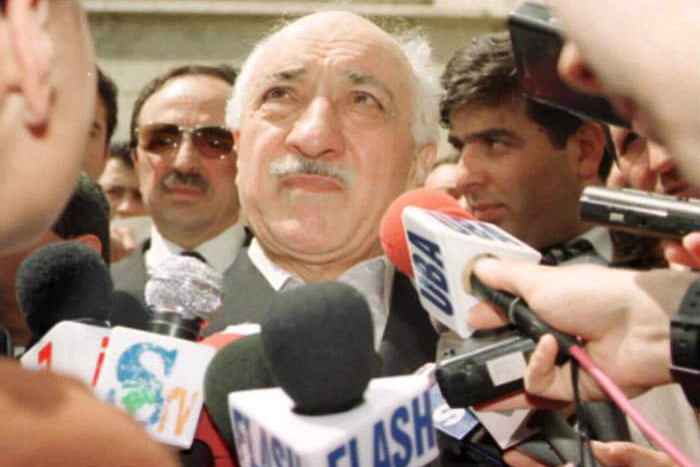
New York Times interviewed Mr. Fethullah Gulen had talked to Wall Street Journal very recently. New York Times says in the headline, “Turk Who Leads a Movement Has Advocates and Critics”.
Turk Who Leads a Movement Has Advocates and Critics
BRIAN KNOWLTON
SAYLORSBURG, PENNSYLVANIA — Here in northeastern Pennsylvania, where fertile farmlands yield suddenly to the hauntingly beautiful foothills of the Pocono Mountains, quietly resides one of the most influential men in Turkey.
And one of the most controversial.
Admirers describe Fethullah Gulen, 69, a soft-spoken Muslim preacher, author and teacher with a huge following, in reverential tones.
John L. Esposito, a Georgetown University professor who has studied Mr. Gulen, said that if he were to compare Mr. Gulen to another public figure it would be the Dalai Lama.
Mr. Gulen’s talk is of peace and tolerance, the strength of U.S.-Turkish relations and the importance of a free-market economy. When he says things like “There is no place for terror in true Islam,” as he did in a rare and recent interview, Western officials take heart.
Both former Secretary of State Madeleine K. Albright and one of her predecessors, James A. Baker III, have spoken at events sponsored by Gulen groups, praising his advocacy of democracy and dialogue.
But his detractors have a darker view. They say that Mr. Gulen’s deeply nationalistic followers in Turkey are moving into positions of power, perhaps with a secret agenda.
As long-secular Turkey, now under an Islamic-friendly government, steps into a larger global role, positioning itself as a key actor in dealing with Israel, Iraq or Iran, more attention has focused on its simmering internal tensions over religion in the public sphere.
Some see Mr. Gulen as part of a slow-motion but powerful backlash against the secularization of Turkey nearly a century ago under Kemal Ataturk, which Muslims saw as a wrenching blow to traditional values but which secularists deemed vital to modernization. Mr. Gulen’s approach seeks, in some ways, to meld the traditional and the modern.
He and perhaps a dozen supporters live in a rural haven, a 25-acre, or 10-hectare, retreat lushly dotted with ferns and blue spruce, with modern residences for visitors, a meeting lodge and a sparkling pond full of orange carp.
Mr. Gulen, in poor health, rarely leaves this bucolic spot.
Speaking over a lunch of classic Turkish food, the insistently modest Mr. Gulen, the son of a small-town imam, did not appear to be to be the type of man to wield the influence he does.
A Koran student from age 5 and preacher at 14, Mr. Gulen gradually built a vast following. He has inspired the founding of an international network of schools, hospitals and businesses. There is an Islamic bank, Asya, with billions in assets; newspapers including Zaman, Turkey’s largest daily; and a television station, EBRU-TV, in Somerset, New Jersey.
All these are part of what others call the Gulen movement but its self-effacing leader refers to as the Volunteer Movement. Mr. Gulen said it had brought him no personal gain, that his only belongings were a quilt, bedsheets and a few prized books. He said he did not know “how many countries this movement is active in, nor do I know how many teachers and students there are.”
Asked at one point about the work of his followers, he replied, “I believe that calling this movement the ‘Fethullah Gulen movement’ is not right, and doing so is disrespectful to many people dedicated to carrying out its activities. My role in this movement is very limited, and there is no leadership, no center, no loyalty to a center, and no hierarchy.”
But others say that there are more than 1,000 schools in more than 110 countries, and perhaps five million members. Emre Celik, a Turkish-Australian who presides over the Rumi Forum, a Gulen-affiliated institute in Washington, recently visited one of the more farflung schools, on the island of Zanzibar, and says more in Africa are likely. The schools are supported by wealthy Muslim businessmen.
There are several such schools in the United States, even one in Burma. They impart Islamic values but, unlike madrasas, employ the official curriculum of whatever state they are in and emphasize modern science and technology. The quality of education is considered high, and competition for spots is keen.
“He’s inspired a lot of people,” said Mr. Celik, who is trained in computer science. “People like myself, second-generation Australian Turks, the Turkish diaspora, we’re moved by his ideas.”
But in the late 1990s, Mr. Gulen’s movement collided with the former secular government of Turkey. Having come to the United States for medical treatment — he suffers from diabetes and heart problems — he stayed on after a Turkish prosecutor accused him of urging the overthrow of secular power.
A taped sermon appeared to have Mr. Gulen telling supporters to “creep silently” into state institutions “until you reach all the power centers.” But he insists his words were manipulated, and the charges were ultimately dropped.
Analysts say some officials in the current Muslim-friendly government are Gulen followers. So are many police officers, according to the authoritative Jane’s Islamic Affairs, which said the influence extends to the police’s powerful domestic intelligence wing. That is a highly sensitive issue at a time when Turks have been riveted by recent wire-tapping scandals.
In Turkey, where the movement is strong, Mr. Gulen’s supporters display a kind of cult-like devotion. A veil of secrecy surrounds the workings and leadership hierarchy of the movement. His opponents allege that his followers in Turkey, having worked their way not only into the ranks of the police but the judiciary, are the driving force behind a sprawling court case against the Islamic-inspired government’s most outspoken enemies. Supporters of Mr. Gulen deny the charge.
“This is not a type of Islam which wants to create protective spaces for the vulnerable and the marginalized, but rather to control, to be in power, like Opus Dei,” said Hakan Yavuz, a political science professor at the University of Utah who has written about the movement. Opus Dei is an ultra-conservative Catholic organization.
But one longtime observer offered a more benign interpretation.
“The Police Academy is one of the best and most prestigious educational institutions in Turkey,” said the Reverend Thomas Michel, a Jesuit priest and former top adviser on Islamic matters to the Vatican who now lives in Ankara. Because Gulen-school graduates frequently do well on entry exams, he said, “a good number of their graduates are getting accepted.”
These people, he said, tend to be “well-motivated, intelligent, enjoyable — not at all fanatic, weird or cult-like.”
Mr. Gulen insists that his movement keeps equal distance from every Turkish government, seeking no office — and also from foreign governments.
But some analysts say American officials have at least tacitly supported the movement as a moderating presence in places like Turkic parts of Central Asia, where Mr. Gulen sent hundreds of volunteer teachers after the Soviet breakup.
“These schools provide alternatives to youths so they don’t have to join terrorist groups,” said Helen Rose Ebaugh, a University of Houston sociologist who studied the movement. She said an administrator of the Gulen-linked Fatih University in Istanbul told her that Mr. Gulen had adamantly opposed the notion of accepting education funds offered by Saudi Arabia, “because it’ll be interpreted as support from the Saudi government.”
At a time when the Turkish government has bitterly denounced Israel over the violent clash with the aid flotilla headed for Gaza, Mr. Gulen instead found fault with flotilla organizers, saying that they should have sought advance Israeli approval instead of “defying authority.” (He said in an e-mail exchange that “the worst state and the worst government are far better than statelessness and chaos.”)
While he might at times support some “positive actions” by Turkish governments, he said, “that does not mean we in any way make policy recommendations to them, nor do we ever act under their influence.”
Nonetheless, any governing party, religious or secular, “cannot ignore the realities in Turkey,” he said, in comments translated by an aide. “There is a huge mass that practices Islam, and the mosques are filling up with people every day.” At the same time, he said, any government has to take religious minorities — whether Nestorian Christians, Protestants or Jews — into account.
Since 1999, Turkey’s heated politics and his own poor health have kept Mr. Gulen restricted to his compound in Pennsylvania, which has a constantly manned gatehouse. He largely keeps to two or three rooms in a large chocolate-brown building.
In a room lined with Turkish art and artifacts, Mr. Gulen reads extensively — from Shakespeare to Kant to the Sufi poets. Health permitting, he emerges every few days to answer visitors’ questions in a large adjoining room. A loft, protected from view, allows women to listen without mixing with men.
“In the U.S.,” he said, “I have hoped not being disturbed or harmed by those who carry radical ideologies from Turkey, Afghanistan, Pakistan or some other countries. I am America’s guest.”
Source: New York Times , June 11, 2010
Tags: Fethullah Gulen | Interviews with Fethullah Gulen |


