Twitter shouldn’t let itself become a tool for tyrants

Date posted: October 7, 2016

Washington Post Editorial Board

PRESIDENT RECEP Tayyip Erdogan of Turkey has announced a three-month extension of the state of emergency imposed after a failed July 15 coup attempt, giving him broad powers to rule by decree. He has launched a massive crackdown against followers of the self-exiled cleric Fethullah Gulen, whom Mr. Erdogan accuses of instigating the attempted overthrow. Mr. Gulen denies it. More than 30,000 Turkish citizens have been arrested and upward of 100,000 people accused, many without due process. On Tuesday, authorities announced that 12,800 police officers had been suspended on suspicion of being part of Mr. Gulen’s network.

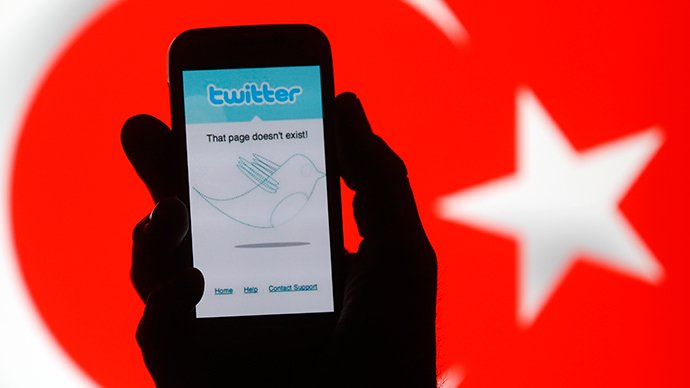
Journalists have been in Mr. Erdogan’s crosshairs, and his campaign is pushing into the digital universe, too. Turkey is pressing Twitter to silence journalists, and Twitter must resist more vigorously. Twitter is a powerful force for free expression. “The tweets must flow,” the company likes to say. But they don’t always flow, as freedom of speech and democracy are in retreat around the globe. Mr. Erdogan briefly banned Twitter in 2014 to block messages about a corruption scandal. After Twitter returned, Turkish authorities submitted long lists of accounts they wanted banned, but Twitter for the most part protected journalists and did not switch them off. After the coup attempt, however, new court orders were issued and Twitter was asked to hush accounts, some belonging to journalists from the newspaper Zaman, close to the Gulen movement, that was seized in March and then shuttered. Twitter has switched off a number of the accounts — by one reckoning, several dozen.

One of them belongs to journalist Mahir Zeynalov, who was deported by Turkey in 2014 for his criticism and now writes for the Huffington Post and Al Arabiya. When a court ordered his English account shut in Turkey and Twitter did so, he and others protested, and it was unblocked. But now Mr. Zeynalov has found that, at the behest of a Turkish court, Twitter has blocked his Turkish-language account inside Turkey.

Twitter says that it follows the laws of a country when it gets a “a valid and properly scoped request from an authorized entity.” But what happens when a law is used to silence political speech? Turkey has asked Twitter to restrict accounts more often this year than any other country in the world, according to Twitter’s transparency reports; Turkey made 2,493 requests covering 14,953 accounts, and Twitter complied 23 percent of the time. Twitter ought to see that in Turkey, as in other closed societies, laws are often used to restrict freedoms rather than protect them. It should keep journalists’ accounts open and not become a tool of repression for Mr. Erdogan.

Source: Washington Post , October 6, 2016


Related News

Turkish woman returned to prison with newborn 4 days after birth

Hatice Şahnaz, in pretrial detention on charges of alleged links to the Gülen movement, was put back behind bars in southern Turkey a few days after delivering a baby.

Hizmet in Context: Societal Islam Versus Political Islam

The Hizmet movement is according to Ebaugh (2010) a civic movement rooted in Islam that is independent from the state. Others see it simply as a faith- based movement (Esposito and Yilmaz 2010). Agai (2004) describes it as an education network and Hendrick (2009) as a global pressure group to promote Turkish interests.

Dismissed policeman detained while applying to post-coup rights commission

I.K., a former deputy police chief in Gaziantep’s Sehitkamil district who was dismissed in the government’s post-coup crackdown, was detained when he visited a local State of Emergency (OHAL) commission in Sivas to reclaim his rights.

Turkey post-coup purges convulse society

President Erdogan says the state of emergency might be needed for another year to crush the “terrorist” threat. More than 130 media outlets have been shut down, the pro-Kurdish IMC TV the latest victim. The authorities have started releasing 38,000 prisoners, to make way for the new arrests.

TUSKON denies mass resignations after corruption probe

Turkey’s leading business conglomerate has denied reports of mass resignations following a recent corruption scandal, vowing to sue pro-government Yeni Şafak for fabricating false information.

Turkey’s Economy Suffering Enormous Post-Coup Purges

Since the attempted military coup on July 15, the government, empowered by a state of emergency, has fired or suspended about 125,000 people, of whom nearly 40,000 have been arrested, and tens of thousands of others taken into custody. As a result, roughly 800,000 people have been completely cut off from any economic safety net.

Latest News

Turkish inmate jailed over alleged Gülen links dies of heart attack in prison

Message of Condemnation and Condolences for Mass Shooting at Bondi Beach, Sydney

Media executive Hidayet Karaca marks 11th year in prison over alleged links to Gülen movement

ECtHR faults Turkey for convictions of 2,420 applicants over Gülen links in follow-up to 2023 judgment

New Book Exposes Erdoğan’s “Civil Death Project” Targeting the Hizmet Movement

European Human Rights Treaty Faces Legal And Political Tests

ECtHR rejects Turkey’s appeal, clearing path for retrials in Gülen-linked cases

Erdoğan’s Civil Death Project’ : The ‘politicide’ spanning more than a decade

Fethullah Gülen’s Vision and the Purpose of Hizmet

In Case You Missed It

Coup in Turkey, Turkish Schools in Nigeria, and Implications for Nigeria’s National Security

Can the EU be blamed for Erdoğan’s authoritarianism?

Ergun Poyraz to pay compensation for slandering Fethullah Gulen in his book

A Permanent Kimse Yok Mu Mission to Be Launched in Jerusalem

Gülen-linked gold firm’s operations halted for second time in two months

Rumi Forum chooses solutions to problems for essay contest

Turkish Islamic scholar Gülen loses 72-year-old brother

Copyright 2026 Hizmet News