
Fethullah Gulen’s Maxim: Live So That Others May Live
Date posted: September 3, 2014
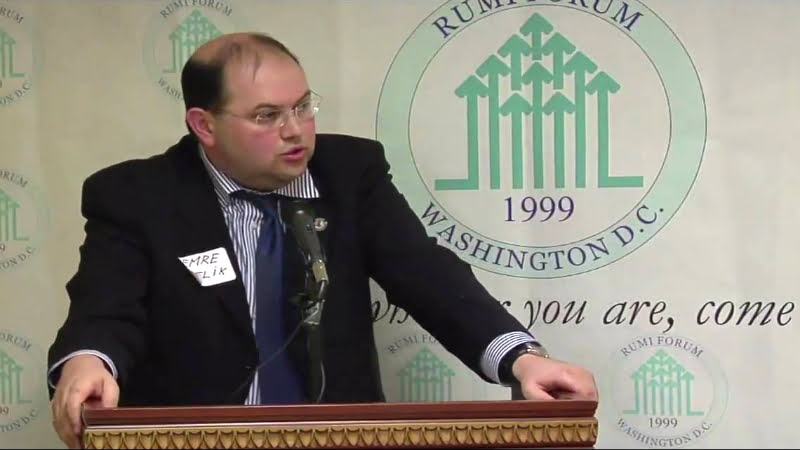
Emre Celik
The above may in fact actually summarize the life meaning for those who participate in the Hizmet (aka Gulen Movement).
This is one of the most fundamental values Fethullah Gulen, preacher emeritus based in Pennsylvania and the figurehead of the Hizmet movement, who has played a role and helped mould the life direction of millions of Hizmet participants serve others across more than 150 countries.
It is also the main theme of a recent book exploring Gulen’s discourse over four decades that has been the inspiration for a global network of philanthropy and positive activism. Its title: So that others may live.
Gulen places a great importance on the interdependence of individuals, communities, nations and systems on one another. Each fundamental unit within any system plays a role and has an inexplicable effect – small or great – on every other unit within such a system (similar to chaos theory in Mathematics).
This leads to a sort of responsibility within those systems. In particular systems that contain conscious beings with intellect have a greater responsibility – vis-a-vis humanity, the most ‘intelligent’ of beings holds the most honored and responsible position. The human being is obliged, if you will, to act in a moral and ethical way in regards to others. It is this ethos that has driven Gulen to personally partake and to also encourage others to take up their social and spiritual responsibility, that is, to assist their fellow human being. He also notes that each and every one of us plays a role in the lives of others and has a moral responsibility, to the degree that we are able and capable, of helping those in need and those in less fortunate social conditions.
In particular Gulen frames this social interdependence within the concept of ‘love’ , taken from the chapter ‘Love of Humanity’ in So that others may live by Fethullah Gulen:
Love is like an elixir that gives us life. We are happy with love, and with love we make those around us happy. For humanity, love is our life, and it is through love that we encounter each other. Love is the strongest bond that God has created among us; it is a chain that links all humanity together…
In order to care for our community, love humankind, and embrace all of creation with compassion, we must first know ourselves… And the more we know of our own inwardness and essence, the more we will appreciate the same inwardness in others… Our appreciation and respect for each other is tied to our recognition of these inner relationships.
A soul that can sense these depths can speak in the language of the heart, saying like Rumi:
Come, come and join us. We are the people of love devoted to God! Come in through the door of love and sit with us in our home. Through our hearts, let us speak one to another….
Elsewhere in ‘The Society of Peace’ Gulen states:
We should direct our efforts toward helping people build a society of peace, on both a national and global scale. This society will be purified of all contemptible feelings and directed toward lofty ideals. Its individuals will rest in the serenity of their conscience… Peace begins in the individual, resonates in the family, and from there pervades all parts of society.
The book, So that others may live contains great insight into Gulen’s thought and spiritual motivation that took him from the remote eastern province of Erzurum and onto the world stage.
To truly understand Gulen, his intellect, spirituality, motivation and passion, his works and writings need to be analysed and understood – particularly in these current times when those full of rancor and bigotry seem to be trying to persuade us to believe otherwise. I encourage you – those with subtle knowledge of Gulen or the movement or others who are more familiar – to delve into Gulen’s thinking and further understand why Gulen preached and wrote so profusely to role model his maxim ‘live so that others may live’
Fethullah Gulen concludes with a couplet from a Ottoman poem from his article “The Love of Humanity”, I too also think it is apt:
Woman and man, youth and age, the bow and arrow:
each needs the other
Indeed, all parts of the world are in need of each other.
Source: Huffington Post , September 3, 2014
Tags: Fethullah Gulen |


