What is wrong with the Western media?
Date posted: February 8, 2012
Major media outlets in the English-speaking world have increasingly been publishing one-sided, biased, anti-Justice and Development Party (AKP) and anti-Gülen pieces. I am not sure if it is just a coincidence, but the frequency of these biased pieces has increased since the “one minute” incident at Davos.
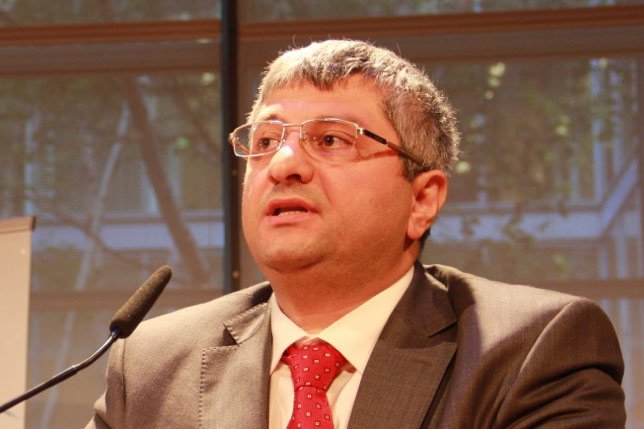
Ihsan YILMAZ, Wednesday 08 February 2012
I am critical of Jewish conspiracy theories that explain everything and also claim that Muslims are never mistaken. Nevertheless, that does not mean that a Jewish lobby that advocates for Israel, despite its fatal mistakes and injustices, does not exist. Nor does it mean that the Israeli national intelligence agency, MOSSAD, does not kill people in other countries and engage in all sorts of operations. These are known facts and not conspiracy theories. Sometimes conspiracy theories actually dilute and smokescreen the facts.
One remarkable and well-substantiated case in point is the Center for American Progress report from August 2011 titled “Fear, Inc.: The Roots of the Islamophobia Network in America.” This in-depth investigation reveals not a vast right-wing conspiracy behind the rise of Islamophobia in the USA but rather a small, tightly networked group of misinformation experts guiding an effort that reaches millions through effective advocates, media partners and grassroots organizing. The report clearly shows with robust evidence that the spread of hatred and misinformation primarily originates from five key people and their organizations, which are sustained by funding from a group of foundations. These foundations and personalities are generally linked to the Jewish lobby.
In this context, I am doubtful that the most recent media coverage of freedom in Turkey is bona fide. In almost every piece, the Hizmet (Gülen) movement is also mentioned with the AKP, even though there is no evidence to suggest that the movement tries to intimidate its critics. The Washington Post recently published a piece by the opposition Republican Peoples’ Party (CHP) leader Kemal Kılıçdaroğlu, who carefully hid from his readers what the Ergenekon terrorist organization is all about, and never mentioned the concrete evidence and testimonies against Ergenekon. Similarly, the Guardian shockingly published a very biased and distorted piece by Ece Temelkuran who, with a brazen face, implied that the AKP killed Hrant Dink; in fact, Dink was killed by Ergenekon, which targeted the AKP by killing Dink. Temelkuran knows this, as does everyone else in Turkey, but she decided to cheat the Guardian readers. I do not think that the Guardian is innocent in this game; they should not be so ignorant about Turkey. Similar pieces in an anti-Pulitzer or “Fox News-esque” spirit have also appeared in several other media outlets such as the New York Times, Newsweek and Foreign Policy.
If these Western media outlets are worried about freedom in Turkey, why do they keep publishing pro-Ergenekon pieces and never talking to those who are critical of both the AKP and Ergenekon? For instance, the Taraf daily’s editor-in-chief and chief columnist Ahmet Altan has harshly criticized Erdoğan, and Erdoğan has sued him several times on the grounds of libel. But Altan has never said that he is afraid of Erdoğan or the Hizmet movement. The same goes for Perihan Mağden, Alper Görmüş, Yasemin Çongar, Orhan Kemal Cengiz, Etyen Mahcupyan, Markar Esayan, Yıldıray Oğur, Cüneyt Özdemir, Emre Uslu, Mehmet Baransu, Cengiz Çandar, Hasan Cemal, İhsan Dağı, Hüseyin Gülerce, Ahmet Turan Alkan, Ali Bayramoğlu, Mehmet Ali Birand, Bülent Keneş and several others. These people are not unknown in the Western media. Quite the contrary. These people criticize, sometimes harshly, Erdoğan and his AKP regularly and they blame him for not reforming and democratizing enough, but they have never said that Erdoğan imprisons his critics. Yet this image is monolithically presented in the Western media nowadays.
Is it just a coincidence that Western media outlets never speak to critics of the AKP? Or do these Western media outlets fear that their one-sided and biased anti-AKP pieces will be tarnished by the comments of those who say that the AKP has made many mistakes, but that freedom in Turkey is not becoming more limited? Are they afraid to hear that AKP opponents such as the CHP, the Nationalist Movement Party (MHP), the old elite, Ergenekon and its supporters are not better democrats than the AKP? What is more, these opponents never press the AKP for more democratization, transparency, EU reforms, fulfillment of the Copenhagen criteria, a new constitution and a smaller state. They resent the fact that the old Kemalist elite are losing their privileged status in Turkey but they try to smokescreen this with distorted discussions. If these Western media outlets sincerely want their readers to understand Turkey, they should ask the critics of the AKP for their views on democratization, transparency, EU reforms, the Copenhagen criteria, a new constitution, a smaller state, Turkish foreign policy, the Assad regime, the USA and NATO, etc. And they should also ask them what they have done so far to further their cause on these issues.
These media outlets are not fundamental enemies of the AKP or Kemalists, and in the past they have published very favorable pieces on both the AKP and Hizmet. But almost all of them were published before the “one minute” incident. It is our right to hear a plausible and rational explanation of this radical change.
Source: Today’s Zaman http://www.todayszaman.com/columnist-270883-what-is-wrong-with-the-western-media.html
Tags: Defamation of Hizmet | Hizmet (Gulen) movement |