The Ideal of Serving Mankind
Date posted: January 29, 2012
Last week I was invited to speak at a panel organized for the occasion of the publication of Muslim scholar and preacher Fethullah Gülen’s new book “Yaşatma İdeali” (The Ideal of Serving Mankind), in which he explains the main principles of the faith-based social movement serving the nation and the mankind he has inspired.
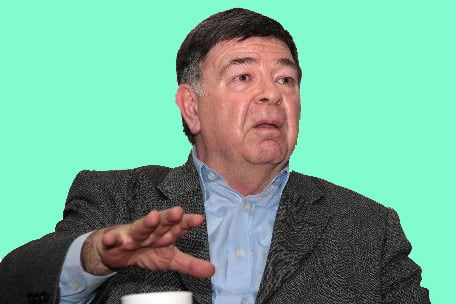
Şahin ALPAY January 29, 2012
On that panel, in the hope of contributing to a better understanding and appreciation of the movement, I presented as follows an assessment of it from a social science perspective.
I am not at all a religious person. I do, however, respect religions and religious people. I believe religious beliefs are coexistent with life, because human beings have spiritual as well as material needs and that they are, if not the only main source of moral principles that help societies stay together. I respect religious beliefs, but regard at the same time, the fight against dogmatic and oppressive interpretations of religions that infuse animosity between people as one of the main challenges of mankind. I deeply respect Fethullah Gülen’s understanding of Islam, which rejects dogmaticism and teaches love and respect between human beings. I have expressed my respect for Gülen and his work, not just since 2002 writing for the Zaman and later Today’s Zaman daily newspapers, which are products of the faith-based social movement he has inspired, but since 1995, while I was writing for the daily Milliyet, which is one of the bastions of Kemalism, that is authoritarian secular nationalism in the Turkish media.
| In Turkey, the basis of an understanding of Islam that combined Islamic values with advocacy of human rights, democracy, basic rights and freedoms, rule of law, secularism in the sense of religious rights for all, respect for cultural diversity, science and market economy was laid down by the late Said Nursi (1878-1960), a Kurd from Bitlis, while that understanding has been further developed by Fethullah Gülen, a Turk from Erzurum, living in self-imposed exile in the United States since 1998. Turkey today may be said to be in transition from an authoritarian to a liberal form of modernity. |
In traditional agrarian society, religion was the main basis of knowledge as well as morality. In the transition to a modern industrial society, dogmas of religion were challenged, science gradually replaced religion as the main source of knowledge, and the universe began to be explained in terms of the laws of nature, society in terms of the laws of history. It may be said that in the transition from the modern to post-modern society that began in the latter half of the 20th century, the validity of the theories about the laws of nature and history were increasingly challenged and limitations of science were increasingly recognized.
It may be said that there were two basic arguments put forward by the Enlightenment philosophy of the 18th century that laid the ground for the notion of modernity: 1) Critical reason is the most valuable asset of mankind. No assumption, including those of religion, is above criticism and questioning. 2) Human beings can establish heaven on earth by utilizing scientific knowledge, which is the product of human reason. Those societies that relied on the former and also subjected science to critical reason were able to gradually constitute liberal and pluralistic political regimes. In such societies, modernity was increasingly identified with human rights, democracy, rule of law, respect for diversity and market economy. (Liberal-pluralist modernity.) Those societies that relied on the latter argument of Enlightenment philosophy formed oppressive and suppressive political regimes in varieties of fascism and communism. (Authoritarian-totalitarian modernity.)
The reaction of religions and religious people to modernity was mainly of two kinds: Those that rejected modernity led to dogmatic, fundamentalist interpretations of religion, while those interpretations that aimed at adapting to modernity assumed both liberal and authoritarian forms. In the 20th century Muslim world, authoritarian modernist interpretations of Islam resulted in various radical and violent Islamisms in various shapes, including al-Qaeda’s global Islamism. There appeared, however, also interpretations of Islam that aimed at a synthesis of Islam’s teachings with liberal principles.
In Turkey, the basis of an understanding of Islam that combined Islamic values with advocacy of human rights, democracy, basic rights and freedoms, rule of law, secularism in the sense of religious rights for all, respect for cultural diversity, science and market economy was laid down by the late Said Nursi (1878-1960), a Kurd from Bitlis, while that understanding has been further developed by Fethullah Gülen, a Turk from Erzurum, living in self-imposed exile in the United States since 1998. Turkey today may be said to be in transition from an authoritarian to a liberal form of modernity. In this process of consolidating a full market democracy, besides Turgut Özal’s reforms towards liberalizing and globalizing Turkey’s economy, criticism of Kemalist authoritarian modernity by liberal intellectuals, reforms led by the Justice and Development Party (AKP) towards accession to the European Union, and the movement serving the nation and the mankind inspired by Gülen have also played a role.
Gülen’s views have surely evolved over time. That the evolution of his ideas has led him towards the ideal of serving mankind from all nations and regions is best demonstrated today by the schools he has inspired, which have spread to not less than 120 countries, building bridges of peace and understanding between Turkey and all of these lands.
Source: Today’s Zaman http://www.todayszaman.com/columnist-269906-what-does-the-gulen-movement-stand-for.html
Tags: Fethullah Gulen | Hizmet (Gulen) movement |