Turkish Islam and Fethullah Gulen
Date posted: January 30, 2004
ŞAHİN ALPAY
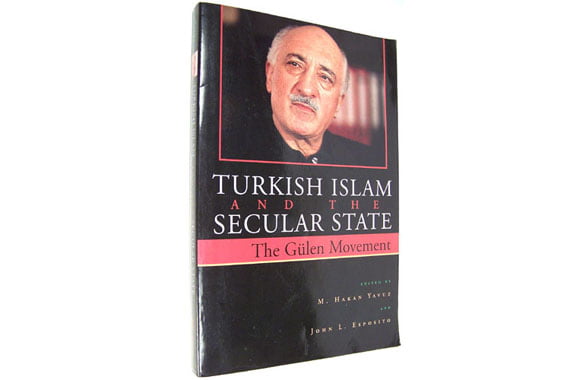
Many studies concerning Fethullah Gulen, the Turkish religious leader scholar and his movement have been published. The book published by Syracuse University in the United States last month is, however, the most important academic study so far. The book entitled “Turkish Islam and the Secular State: The Gulen Movement” is edited by John L. Esposito and M. Hakan Yavuz. Editor-in-chief of the “Modern Islam World Encyclopedia” published by the Oxford University, and a faculty member of the Georgetown University, Esposito is a well known social scientist who is distinguished with his opposition to the Orientalist tradition in his approach towards Islam and the Islamic world. There probably is no one interested in the subjects of religion, politics, Islam and Islamism who has not read any one of Esposito’s works. Hakan Yavuz, on the other hand, is a professor at the University of Utah, who at his young age has distinguished himself as one of the leading names in his field. His “Islamic Political Identity in Turkey” was published last year by the Oxford University Press. (See my review in Zaman, November 8, 2003.)
“Turkish Islam and the Secular State: The Gulen Movement” starts with the introduction written jointly by Yavuz and Esposito, and ends with a general assessment of the book by John O. Voll, another American social scientist as well known as Esposito in the field of studies on religion. The contributions by Turkish and Western social scientists mainly focus on the different aspects of Gulen and his movement. One of the most interesting articles is the one written by Ahmet T. Kuru, who is writing his doctoral thesis at the University of Washington in Seattle. In the article entitled “Fethullah Gulen’s Search For a Middle Way: Between Modernity and Muslim Tradition”, Kuru analyses Gulen’s thoughts on the relationship between four features of modernity and four aspects of the Muslim tradition: modern science and Islamic knowledge, reason and revelation, the idea of progress and conservation of tradition, and free will and destiny. Kuru concludes that Gulen has brought a dynamic interpretation to Islam, which is compatible with both tradition and modernity, but at the same time approaches both of them critically.
Hakan Yavuz’s article entitled, ‘The Gulen Movement: The Turkish Puritans,” which deals with the evolution of Gulen and his movement, is especially significant because of its critical approach to the movement. According to Yavuz: The Gulen movement appeared on the scene as a “religious-conservative community” between the years 1970 and 1983. Between 1983 and 1997, it turned into a “market – friendly religio – educational movement”, and after 1997 it abandoned its former “nationalist and statist” attitude to adopt “a more liberal and global” one. The Gulen movement while influencing Turkish society strongly on one hand, was itself deeply influenced by social change the country went through.
The virtue of the contribution by Ihsan Yilmaz, a lecturer at the University of London, entitled “Ijtihad and Tajdid by Conduct: The Gulen Movement” lies in its emphasis on the new path opened in the Islamic thought by Gulen’s interpretation, and its significance for the entire Islamic world. This article examines the role Gulen and his movement have played in moderating polarizations and eliminating radical tendencies in Turkish politics, and especially in the evolution of the Turkish Islamist movement towards adopting principles of secularism (in the meaning of separation of state and religion) and democracy.
Undoubtedly, this book will not constitute the last word on Gulen and his movement. It is, however, an extremely valuable study in terms of explaining from where did this movement start and where it has arrived, the main features of the interpretation of Islam it has developed which responds to the necessities of the modernizing, democratizing and globalizing Turkish society (and the world at large), and also why this interpretation appeals to millions of people. I sincerely hope that it will be translated into Turkish as soon as possible.
Source: Today's Zaman , January 30, 2004
Tags: Book reviews | Fethullah Gulen | Islamic World |