
Gülen movement offers real alternative to clashes and conflict in society
Date posted: November 24, 2010
CAN BAHADIR YÜCE, WASHINGTON
The Gülen movement has long been a part of Turkey’s social landscape. But in recent years interest in the movement has gone far beyond Turkey’s borders of the country, with discussions of Fethullah Gülen and his ideas in forums and platforms including the Arab League, the Russian Parliament, the European Parliament and the British House of Lords.
There have been many attempts to define this civil initiative started by Gülen, a Turkish Islamic scholar well known for his teachings promoting mutual understanding and tolerance between cultures. In his recent book, titled “100 Soruda Fethullah Gülen ve Hareketi” (Fethullah Gülen and His Movement in 100 Questions), Professor Doğu Ergil, a distinguished political scientist, defines the movement as the only civil society organization that can represent Turkey’s impact, culture and human relations to the outside world comprehensively and effectively. Rice University Professor Jill Carroll, the author of the book “A Dialogue of Civilizations: Gülen’s Islamic Ideals and Humanistic Discourse,” says the movement is open to innovation and represents a chance for humanity.
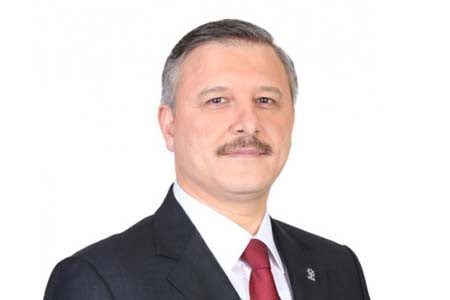
The latest attempt to understand this worldwide civil initiative has come from Muhammed Çetin. His new book, “The Gülen Movement: Civil Service Without Borders,” approaches the matter from the perspective of social movement theory and takes an insider’s view. Çetin argues that the Gülen Movement is non-contentious and that it is not a marginalized actor working on the system from the outside. Çetin speaks about his book, which is based on his Ph.D. dissertation, in an interview with Sunday’s Zaman.
Your book grew out of the research for your Ph.D. I want to ask the story behind it; why did you decide to study the Gülen movement?
The attraction of the Gülen movement, for this researcher at least, lies in its potential to show the capacity of an Islam-inspired movement to mobilize huge numbers of religiously minded and observant individuals not only to accept but to cherish a secular, pluralist, democratic social and political order.
I feel that such an understanding can help other peaceful movements to expand their repertoire of action for societal peace and inter-civilizational cooperation. My personal aim is to contribute to the vitality of civil society and to diminish polarization and fragmentation in society.
You say, “[scholarly] studies so far do not describe the movement fully.” What makes this book different from previous studies?
There has been little research into peaceful, faith-inspired social movements arising from Islamic backgrounds. The Gülen Movement as a contemporary movement concerns itself with forms of action, content and meanings that are qualitatively different from the tradition of struggle frequently seen in European societies. It does not fit into the conventional categories of the workers’ movement of industrial capitalism and modern leftist movements.
Previous studies overlook the presence of non-political elements in emergent movements. They totally ignore themes such as philanthropy, altruism and voluntarism, which help explain the dynamics of participation in activities that do not directly benefit those taking part. Such studies consistently fail to give due weight to insiders’ own conceptions of their action, or they interpret the action by discounting or analyzing the action in terms of something other than itself. But faith and empowerment by it are not a dependent variable, determined and structured by social, economic and political conditions, so religious experience cannot be dismissed as a proxy or substitute for something else like, for instance, direct or contentious political action. Nor can faith and empowerment by it be explained in terms of social, psychological and other material goals, such as conflict-evading pacifism, and so on.
What is distinctive about the movement?
The Gülen movement originated in the 1970s in Turkey as a faith-inspired initiative to improve educational opportunities for a local community. In an era when some people and organizations subscribe to the theory of the clash of civilizations, this contemporary civil society movement, which is also referred to as “hizmet,” a Turkish word meaning “service to humanity,” offers a very real alternative to clashes and conflict in society.
It is distinguished from many other faith-inspired movements by the recognition from many official bodies that its transnational and joint projects have yielded worldwide. In the four decades or so since it was established, it has grown into a worldwide educational, inter-cultural and interfaith movement, with participants numbering in the millions, as well as securely established, respected institutions of different kinds, but mostly schools on every continent.
You define yourself as an “insider.” What was the advantage of that to your research?
As an insider I could obtain the collective actors’ perspectives without causing any apprehension about the possible repercussions to individuals as a result of their answering my questions, or of distorting or dismissing their understanding of what they are doing. Being an insider researcher can be seen as a positive feature, in the sense that it is illuminating: It reveals important aspects of phenomena, such as the movement’s self-reflexive internal critique and culture, which outsider researchers, especially if they have little experience of, or little sympathy with, faith-inspired collective action, may have difficulty in seeing or understanding.
You asked some people who do not look favorably on the Gülen movement for interviews. What was your aim in doing that?
Obviously my aim was to obtain as wide a variety of perspectives on the movement as possible in the interest of objectivity. However, none of my requests met with a favorable response, so I was unable to incorporate the views of interviewees who oppose the movement. To compensate for that lack of direct response, I referred to other sources of criticism of Gülen and the movement, mostly drawn from print and other media sources.
It is worth noting that I am not the only researcher who encountered this problem. Berna Turam, who is not an “insider” researcher, has also recounted in her work the personal and professional difficulties she experienced in dealing with some of the opponents of the movement.
The movement, is in your words, a form of “collective social altruism.” What do you mean by that?
Perhaps a simpler way of expressing “collective social altruism is “offering” — the unilateral power of giving something for nothing, sometimes in defiance of immediate self-interest. This offering is neither motivated nor regulated — nor can it be sidetracked — by cost-benefit calculations. This “offering” is what participants in the movement organize to do.
So the identity or nature of the Gülen movement is pluralist, collaborative, democratic, mediating, civilizing and peaceful. It is an apolitical, philanthropic, inter-civilizational civil society actor. In all times and places, Gülen and movement participants have acted meaningfully to reduce aggression and discord and proven that they are on the side of peace and cooperation.
Do you think the Gülen movement will close the gap between the West and the Islamic world? What about the future of the movement?
First of all, Gülen himself has rejected the idea that there is these days any such thing as “the Islamic world” in any real sense. Also, the notion of “the West” as some kind of politically and culturally monolithic bloc most often functions as a negative stereotype that lacks any nuance. There is as much diversity in the notional “West”– that is, the US and Europe — as there is any other region of the world: that, is a lot. Such oversimplified thinking about ‘blocs’ is unhelpful if we seek peaceful solutions to local and global problems. That kind of thinking lies at the root of the claims that there must necessarily be a ‘clash of civilizations’.
In becoming transnational and by dint of its dialogue activities, the Gülen movement has already proved that there is no real “gap,” as you put it. Instead, we have found plenty of common ground between different individuals, groups of people and communities throughout the world. Very diverse people can pull together to achieve very valuable goals.
The Gülen movement has discovered this, reminds people of it and acts on this simple truth. For this reason, I believe that, in spite of opposition from groups that benefit from conflicts between peoples, the movement will continue peacefully and successfully in the way it always has.
Source: Today's Zaman , 22 August 2010
Tags: Hizmet (Gulen) movement | Interviews on Fethullah Gulen |


